Why is the Irish Government getting involved in a Spanish medical negligence case?
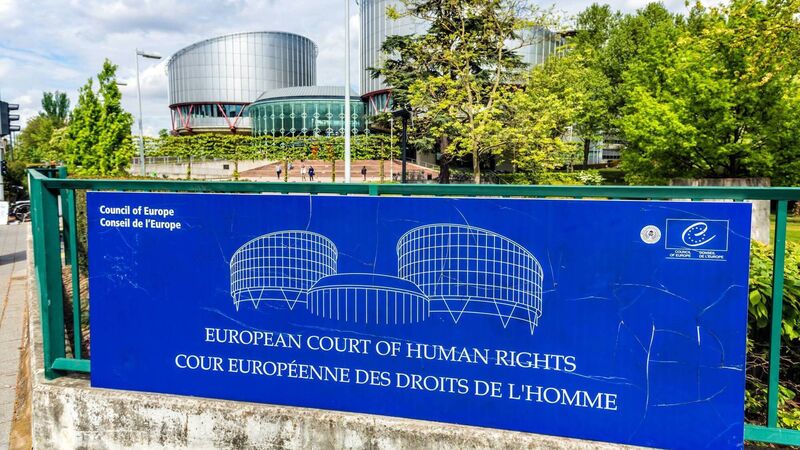
If the Government succeeds in persuading the ECHR the cancer patient in Spain should fail in her claim, it does not bode well for the development of our rights here in Ireland.
The Government is trying to restrict medical negligence claims in Ireland. This will not benefit patients. Unusually, it hopes to achieve this by weighing in on a medical negligence case against Spain in the European Court of Human Rights (ECHR).
The Government aims to persuade the ECHR to reverse its decision that a breast cancer patient’s human rights were violated when her nipple area was removed during a lumpectomy, without her consent.
Why is the Government doing this? What basis does it have? And why is it damaging to patient rights?
Even though this is a fairly straightforward case in the ECHR, the Department of Health is jumping on the opportunity to prevent new arguments based on human rights being used in Irish courts. It says it wants to avoid increasing the volume and complexity of medical negligence litigation.
The Government might argue its goal is to reduce waiting times for cases to be heard. But that is only one side of the story. The Government fails to mention patient advocates will not be represented in its submissions to the ECHR. The interests of the State and doctors will be the primary concern.
Ireland has nothing to do with this case against Spain, but member states can make submissions so the ECHR is aware of the wider effects of its decisions. Ireland has only acted as a third party like this five times.
On one such occasion in 2024, the Government was criticised for making submissions in a Swiss climate change case taken by older Swiss women. That intervention by Ireland also went under the radar.
Similar to the Spanish medical negligence case, the Government was trying to stop human rights language from entering into the climate change debate. Climate activists and TDs questioned the environment minister Eamonn Ryan, who said he intervened on the advice of the Attorney General.
Their reasoning was that Ireland’s climate change policies should be driven by the Government, because it is democratically elected, and not by individual judges.
But that was different: people suing the Government for its inaction in addressing climate change is a relatively new phenomenon. So the Government had more scope to argue the ECHR should not introduce human rights language into that issue; it was potentially more justified in restricting climate change claims.
Medical negligence, on the other hand, has always been addressed through the courts. And it already involves human rights based arguments. So the Government has no role in limiting human rights in medical negligence.
Our laws must be transparent and accessible, and justice must be administered in public. Medical negligence in particular involves a complex dynamic between patients and doctors. Judges will balance a patient’s rights with the doctor’s. They will also consider practical issues, like the effect of litigation on the HSE’s resources, or on medical insurance premiums.
Everyone has a right to make decisions about what happens to their body. So anytime we are undergoing surgery, for example, a doctor should tell us about their plan for the surgery and the risks involved. When we sign the consent form, we show agreement we have been properly informed and consent to the surgery as described.
In the Spanish case, a woman with breast cancer underwent a lumpectomy. The surgeon did not inform her her nipple area might be removed (there was no cancer present in that part of her breast). The Madrid High Court of Justice rejected her claim. It said the surgeon was allowed to remove her nipple area, even though this was not an emergency or unforeseen necessity and she had not been told about it.
The woman brought a claim against Spain to the ECHR. She was successful: her right to autonomy was violated by Spain’s national consent laws because they did not adequately protect her right to make decisions.
The ECHR said the surgeon should have warned her about removing her nipple area. It emphasised removing her nipple area in the context of a lumpectomy “bears on important aspects of a woman’s … physical and mental wellbeing, her image and self-esteem, and her sexual life”.
If that case occurred in Ireland, the woman would likely have succeeded; we have robust laws protecting our right to make healthcare decisions. The Department of Health even recognised this. It acknowledged under the current HSE National Consent Policy, which sets out guidelines around giving and getting consent, Irish clinicians believe doctors in a case like that would have to inform the woman her nipple area might be removed.
So it is unclear why the department is concerned it would need to change the national consent policy if the ECHR does not reverse its ruling. And even if it did have to be changed to better protect patients, why would that be a negative thing?
If the Government succeeds in persuading the ECHR the cancer patient in Spain should fail in her claim, it does not bode well for the development of our rights here in Ireland. Courts have become more conscious in recent years of strengthening patient rights to counter the traditional imbalance of power in the doctor-patient relationship.
It would set a dangerous precedent that the Government could limit human rights by taking one-sided action, without the input of those negatively affected. That is a dangerous precedent indeed.
It is time to call out the Government and seek further explanation ahead of the ECHR grand chamber hearing in April. Patient rights advocates should be allowed to give their views on this important issue that potentially affects all of us.
- Dr Sarah Fulham-McQuillan is an assistant professor of law at Sutherland School of Law, UCD, and deputy director of the UCD Centre for Constitutional Studies. Her book in progress is

CONNECT WITH US TODAY



Be the first to know the latest news and updates