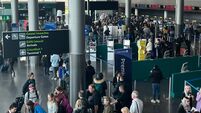
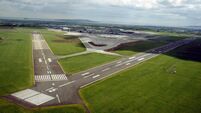
Who really benefits from lifting the Dublin Airport passenger cap?
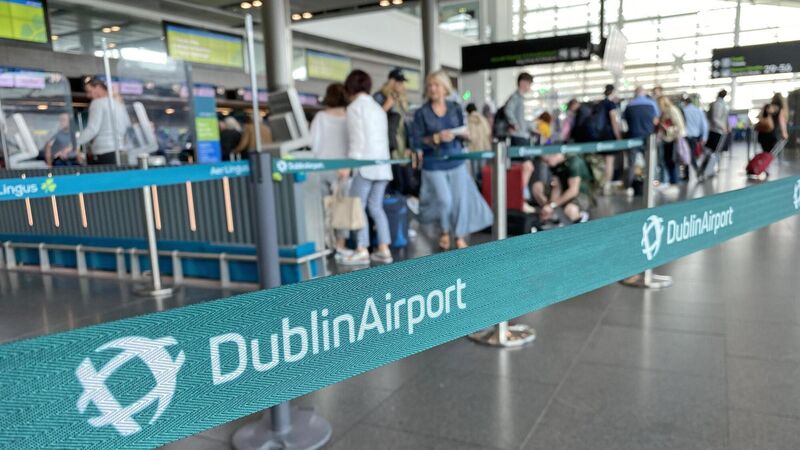
Irish tourists travelling abroad have consistently spent more money in other countries than inbound visitors have spent in Ireland. File picture: Dominic McGrath/PA
The Government announced last week it would pass legislation to remove the passenger cap at Dublin Airport. The move was described as “wildly irresponsible” by the campaign group Children’s Rights Over Flights, which is concerned at what it will mean for greenhouse gas emissions and the quality of life for future generations.
Local residents have described the move as “an absolute disgrace” amid concerns about the noise impact of increasing flight numbers. While others have voiced concerns about the impact on traffic congestion on the M50, which Transport Infrastructure Ireland advises is at capacity.
The minister for transport argues these concerns are outweighed by the need for growth in the economy which, he claims, is being inhibited by the passenger cap. But what evidence is there for this claim?
Back in 2004 when the Celtic Tiger was in full swing, 17 million passengers passed through Dublin Airport. By 2008, it had shot up to 23.4 million passengers before falling off with the impact of the financial crash.
In 2011 passengers started a slow rise, which was turbocharged in 2014 by the removal of the passenger tax. The subsequent meteoric rise in passengers could not even be stopped by the massive blow to the industry from the pandemic lockdown. Last year, 36.4 million people passed through the airport. Passenger cap? What passenger cap?
But surely a doubling of passenger numbers, over a period where the population has grown by just 33%, has brought a lot more money into the Irish economy?
Unfortunately, the evidence says otherwise. In 2004, the Central Statistics Office recorded 6.4 million overseas visitors to Ireland, spending the 2025 equivalent of €5.82bn. Last year, the CSO recorded 6.4 million overseas visitors spending €5.5bn.
Visitor numbers have remained static, and they are spending less — so what’s driving the increase in passenger numbers? Tourism spending in Ireland has been in net deficit every year from 2003 to 2023 (except for lockdown-impacted 2021).
In other words, Irish tourists travelling abroad have consistently spent more money in other countries than inbound visitors have spent in Ireland. The increase in air connectivity has done wonders for the tourism industry it seems, just not the Irish tourism industry, which makes it all the more perplexing that Fáilte Ireland have been one of the biggest cheerleaders for the removal of the passenger cap.
Now, obviously not all aviation travel is tourism related and there is a case to be made that air connectivity is important as a driver for economic growth.
A report by two independent think tanks published last year found that indeed this is the case, in certain regions in Europe. It found in Eastern Europe and in areas which are strong tourism attractors like Spain and Portugal, there was a strong causal relationship between air connectivity and economic growth.
However, in Ireland it found this was very unlikely to be the case due to a saturation in the business market and a net deficit in tourism spending. In fact, it suggested GDP growth was driving air travel demand, not the other way around.
So the claims by the Government and by the aviation industry that increasing air connectivity is essential for economic growth seem to be dubious at best, if not completely unfounded.
In the past 10 years, Ryanair has made 65 returns to the Lobbying Register. In the last 12 months alone, it has made six returns, lobbying four separate Government ministers and one MEP.
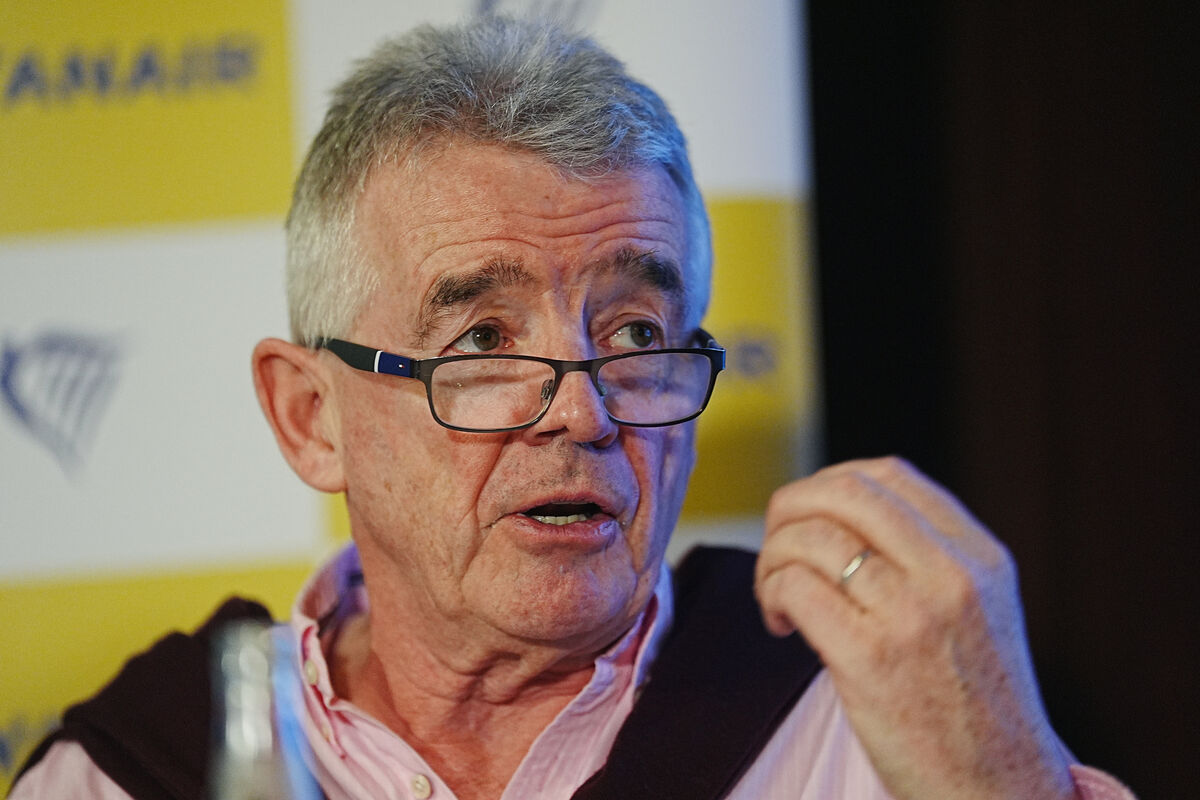
Michael O'Leary himself has lobbied transport minister Darragh O'Brien twice in the last year. In the same 10-year period, the Dublin Airport Authority has made 167 returns, and 33 since the beginning of last year. Their lobbying targets have included the Tánaiste and five separate Government ministers.
They must be very pleased with the results.
The aviation industry argues there have been significant advances in technology which have made the aircraft they use far more energy efficient. And there is some truth to this, but any gains that have been made in reducing harmful emissions have been more than cancelled out by the massive increase in air travel over the same period. A decrease in the emissions per passenger is not helpful if the passenger numbers keep rising.
According to a report this week by researchers at University College Cork, if Ireland were to fully decarbonise the emissions associated with flights from Dublin Airport, it could require diverting an area of land greater than the size of Co Tipperary for growing fuels and offsetting.
They conclude that reducing demand for flying is the most direct way to cut emissions. The Government seems intent on doing the opposite and almost entirely for the benefit of private airlines.
CONNECT WITH US TODAY



Be the first to know the latest news and updates