Morgan McSweeney isn't the first Irish person behind the scenes of British power
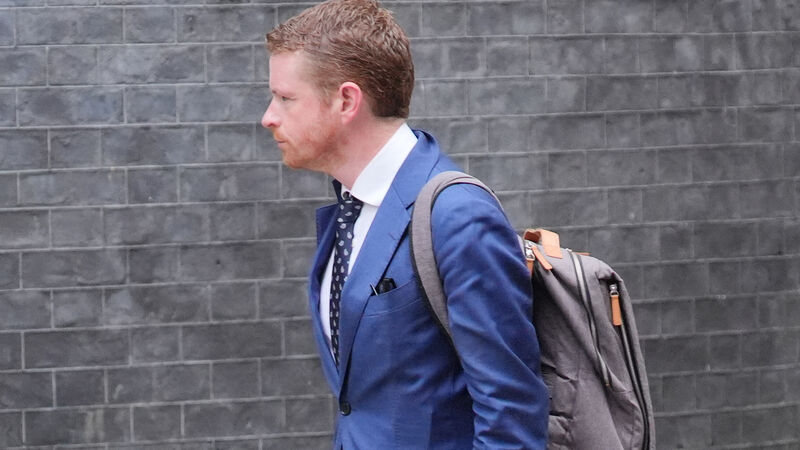
Downing Street chief of staff, Morgan McSweeney, in Downing Street, central London. Picture date: Thursday October 10, 2024.
With the relentless focus in recent weeks on the activities of Irishman, Morgan McSweeney, in 10 Downing Street and his recent resignation, one could be forgiven for thinking that the ‘Man from Macroom’ is a rarity in British politics.
On the contrary — over the centuries, many Irish people have had a considerable impact. Historically, Edmund Burke, Daniel O’Connell, Charles Stewart Parnell, Edward Carson and John Redmond are the most prominent to have helped shape political events in Britain.
Since the Second World War, it is worth highlighting several Irish people behind the scenes at 10 Downing Street who exerted considerable power and influence.
The first of real significance was Brendan Bracken, the inimitable adviser, factotum and ally to Winston Churchill before, during and after the war.
Hailing from Tipperary, he possessed a great business brain and a taste for news — he was the founder of the in the 1940s.
Being an MP for a period and Churchill’s ‘eyes and ears’, there was no one more loyal and capable of keeping Churchill out of trouble.
From Prime Ministers Eden to Douglas-Home (1955-64), Irish advisers played no significant roles near the centre of power.
However, under the premierships of Harold Wilson and Jim Callaghan, (1964-79 combined), the son of an Irishman, Bernard O'Donoghue played a significant advisory role as Head of the No. 10 Policy Think-tank toward the end of that period.
Harold Wilson was said to have been quite partial to Irish affairs as his Liverpool constituency, Huyton, had a strong Irish Catholic base. When the Troubles broke out in the late 1960s, Wilson was mindful of the potential influence his Northern Ireland policies could have at a local level.
O'Donoghue was also a minister in the Blair Government of 1997-2007. Born into poverty in a Northampton family and with an Irish father, O’Donoghue was the classic ‘rags to riches’ story. He was appointed to the House of Lords at the end of his career.
In her years as leader of the Opposition, Margaret Thatcher cherished the advice and support of another Irishman, Patrick Cosgrave.
Cosgrave was a graduate of UCD and a superb debater at the college’s debating society, the Literary and Historical Society.
He was married to writer and historian, Ruth Dudley Edwards, but the marriage was dissolved.
An alcoholic, Cosgrave eventually lost the confidence of Thatcher and was thrown on the dust heap, the fate of many others who once had got close to Thatcher.
During the prime ministerships of Margaret Thatcher and John Major, Detta O Cathain, a successful business executive was admired and listened to at the highest levels of power in the Conservative Party and Government.
She was seen as a successful and articulate role model somewhat in the mould of Margaret Thatcher.
O’Cathain was born in Cork and educated at Laurel Hill, Limerick, and University College Dublin before emigrating to Britain.
Being a woman among mainly male advisers, she was able to carve out her own distinct political role.
Although not strictly at No.10, Christopher Haskins, the former CEO of Northern Foods, was appointed by Tony Blair in 2001 as his ‘rural affairs czar’.
Haskins grew up in Ireland attending St Columba’s School in Rathfarnham in Co. Dublin and Trinity College, Dublin.
Current leader of the SDLP delegation at the Northern Ireland Assembly, Mathew O’Toole also spent time at the centre of Westminster power.
In the mid-2010s, he worked in the UK Cabinet Office when David Cameron was Prime Minister.
His main area of responsibility in that role was the 2016 EU referendum and Brexit.
It proved a good launchpad for O’Toole’s subsequent political career — following a similar trajectory to that of former political heavyweights, Douglas Hurd and Chris Patten.
Lest one forgets, the first major intervention by a group of Irishmen into 10 Downing Street was the delegation led by Arthur Griffiths and Michael Collins during the Treaty talks in 1921.
While there, they (particularly Collins) made a huge impact among UK politicians, the media and the British public. Like Collins and Sam Maguire before him, Morgan McSweeney is another Cork man to have come to London as a young man to forge a future. In his case, he stayed.
Such an historic occasion with huge ramifications for subsequent Irish history and politics, the Treaty talks were the first time that Irish affairs had entered so ‘front and centre’ into the world of British politics.
Many decades later and particularly during the 1990s peace process, 10 Downing Street again became a key focal point.
Despite these individual examples, the extent of Irish power and influence on British political events shouldn’t be exaggerated.
However, a few key individuals at critical times have been ‘in situ’ to influence key decision makers. Not bad for a small country long in the shadow of a more powerful one.
In the cutthroat world of politics, McSweeney was obliged to fall on his sword to allow the British Prime Minster to survive. We probably haven’t heard the last of him.
- Paul McElhinney is a writer living in Wexford. He has worked in the civil service and in the international oil and gas industry in London and Washington. He is the author of a biography of Air Marshal George Beamish,
CONNECT WITH US TODAY



Be the first to know the latest news and updates