Learning is complex, messy, emotional: AI can’t replicate that
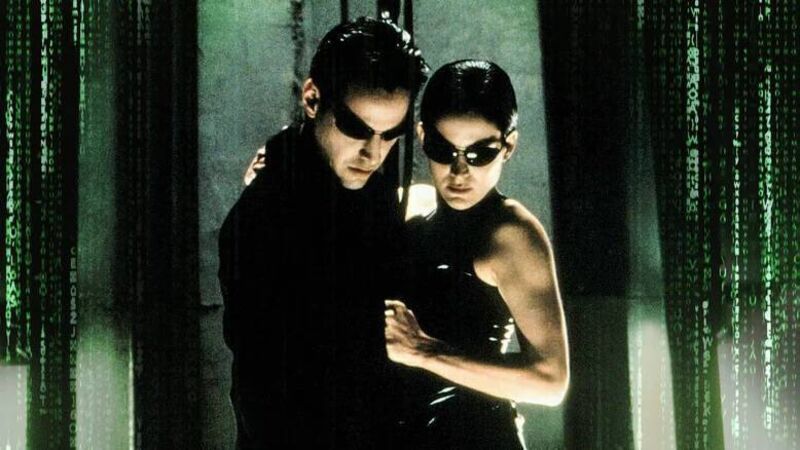
The is a scene in where Trinity and Neo are running from ‘the Agents’, and find themselves on the roof of a skyscraper with a helicopter as a potential escape. “Can you fly that thing?” asks Neo. “Not yet”, says Trinity, ringing her operator to get helicopter instructions uploaded into her brain. Her eyes flicker and within seconds she turns to Neo, saying: “Let’s go!”
In the world of the Matrix the gap between “not yet” and “let’s go”, between ‘I don’t know’ and ‘I know’, has almost disappeared.
‘Education’ is upload; ‘learning’ is bypassed; slow effort is replaced by frictionless information delivered with laser clarity. If this Matrix scene is one vision of the future, it’s time to ask: Should this be the goal of education — to find ever more efficient ways of uploading information to students’ brains?
In other words, there is so much information in the world, do we really need to take it ‘in’ to us?
The human body is an obstacle to efficiency — the limited head, the distracted heart, the tired limbs. Taking things inside saps energy and time, retaining them takes up space; and all for occasional use, if at all.
Artificial intelligence (AI) offers an irresistible solution to this quandary — a step change in the efficiency of information transfer.
It is a new way to deal with the bottleneck of the body — instead of taking things in, we can access them, use them, then leave them. Access, use, forget.
But what do we lose when we bypass the bottleneck of the body?
Some might argue that we only lose the hard stuff. After all, having to bring information from the outside to the inside takes effort. Learning is emotional.
The marketing of modern learning in higher education has underplayed this — the anodyne language of excellence and achievement has glossed over the messy human experience by which those goals are actually reached in universities.
The emotions of learning are often challenging: frustration, impatience, self-doubt — the lived experience of inhabiting the space of ‘not yet’, trying to force the head to boldly go where it has not gone before.
It is a collective struggle to decipher the meaning, the intention behind another human’s communication.
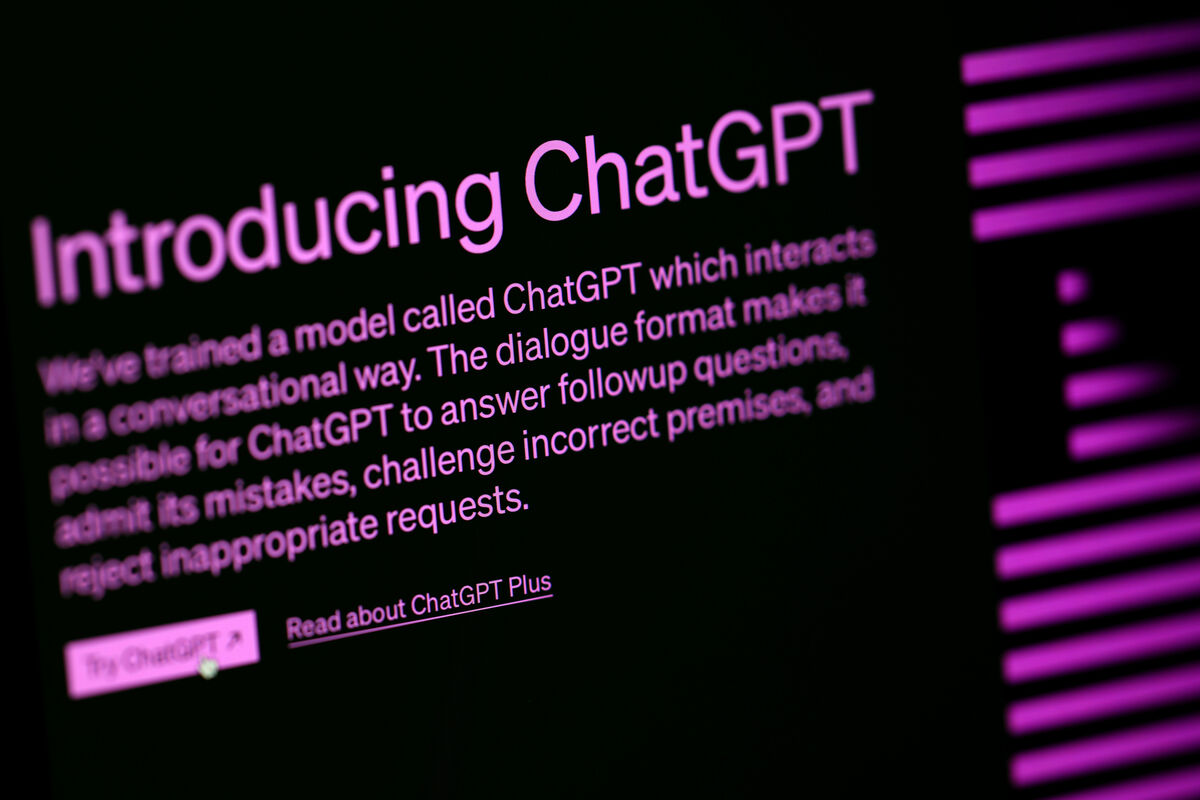
ChatGPT can spare us all that, allowing us to bypass the discomfort of the learning process.
But these emotions are not unwanted side-effects; rather they are the very medium, the vehicle through which learning goes from the outside to the inside of the human.
When it makes this passage, learning changes us. Recognising this, education does not deliver packaged goods aimed at providing some quantity of information that was missing in the learner; it sets the scene for an encounter that alters its participants. Real learning cannot be unseen, or unlearned.
It is the difficulty and friction of being changed on the inside that gives learning its value.
There were studies in the 1970s that ranked people’s possessions according to how integral they were to their sense of who they were. One’s knowledge — “I know that”, “I have read that”, “I have written that” — was one of the highest ranked. Like your name, your limbs, and your family, your knowledge is not just a possession, it is you.
Like fast fashion and fast food, AI and other profit-focused, commodified learning technologies promise expanded access and democratisation but deliver a cheapened, unhealthy, and ecologically destructive product. In contrast, real learning is slow. It is not oriented towards immediate use and immediate disposal. Learning feels slow because it is digging a deep foundation — it changes your brain in a literal sense, forging and modifying connections between neurons. It can be built on, it can withstand challenge, it inspires confidence.
Science fiction writer Kim Stanley Robinson spoke at Maynooth University last year about efficient inefficiencies and inefficient efficiencies.
Slow learning is an efficient inefficiency — the serendipitous mistake, the non-instrumental reading of a book not on the course, the conversation with friends about a class, the social rough-and-tumble of working in groups, the rapport with a teacher.

These are the learning experiences that bring the outside into the inside. To be sure, slow, deep learning limits production in one way; but in exposing learners to what is outside themselves, slow learning unveils a truth: It is in being slowed down and confronted with what doesn’t want to go in, what doesn’t want to be solved, or what puts up a resistance to cognition that we are spurred on to think more, to think better, to take in less, to be taken in less.
The philosopher of technology Lewis Mumford said all technology comes to us as a ‘magnificent bribe’. ChatGPT bribes us — it promises that we will get “ahead” by automating the drudgery, maximising our productivity, and enhancing our creativity.
But, like any Faustian bargain, the magnificent bribe requires a trade. In their rush to get ahead, educational institutions are trading away the one thing that give them their value. But the biggest loss is not the institutional one, it is the loss of learning as a slow, difficult, humbling, rewarding confrontation with the shared limitations and potential of both ourselves and the world we inhabit. It is the loss of what it means to be human. We say, “Not yet.”
- The authors are lecturers in Trinity College Dublin: Caitríona Leahy (Department of German), Norah Campbell (Trinity Business School), and Clare Kelly (School of Psychology and Dept of Psychiatry, School of Medicine). Harun Siljak (School of Engineering) also contributed to this opinion. Katja Bruisch (Department of History) provided critical feedback.
Read More
CONNECT WITH US TODAY



Be the first to know the latest news and updates