On World Cancer Day, see the individual, not just the illness

A rare genetic condition means Brian Tobin has had cancer six times since the age of 25. People can survive and thrive despite this challenge, he says 
On World Cancer Day, see the individual, not just the illness

Ireland falls short in providing an annual whole-body MRI scan for managing Li-Fraumeni syndrome. File photo: iStock

Before Christmas, it was revealed that at least 197 children across Europe were born from the sperm of a donor with Li-Fraumeni syndrome, an extremely rare genetic mutation that can lead to the development of multiple, aggressive cancers over the course of one’s lifetime, often with early-onset cancer in childhood or adolescence. 

Indeed, many of these children developed cancer, with a number dying at a very young age. In the case of these children, Li-Fraumeni syndrome was inherited from the sperm donor, who was unaware that he had the condition when donating as a university student, but it can also be identified in persons with no family history of the condition, as in my case.


Having experienced multiple cancers such as bone, skin and soft tissue cancers since 2002, I underwent genetic testing in 2019, and was diagnosed with Li-Fraumeni syndrome in 2020. At the time, the diagnosis was a relief, an explanation for two decades of aggressive cancers. 

Since the diagnosis, such cancers are emerging even more regularly, proving that, with age, living with Li-Fraumeni is a monumental challenge. I’ve had further tumours. 

However, as I settle into my fifth decade, having survived five cancers (of three different types), and successfully managing another in my organs thanks to a revolutionary, game-changing cancer medicine — once-a-day Osimertinib which has only been available in Ireland since 2020 — it’s important to point out that people with this condition can live very full lives. 

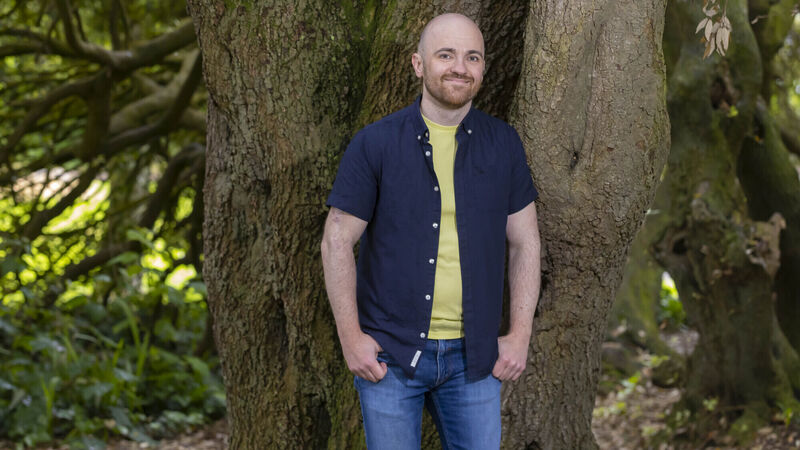
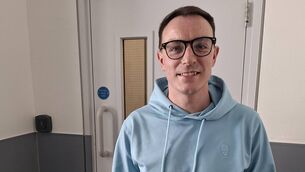
 Brian Tobin: 'In Ireland, the lack of appropriate whole-body MRI scanning facilities means the State is failing people with Li-Fraumeni syndrome.' File picture: Patrick Browne
Brian Tobin: 'In Ireland, the lack of appropriate whole-body MRI scanning facilities means the State is failing people with Li-Fraumeni syndrome.' File picture: Patrick Browne

I work full-time as an associate professor in Law at the University of Galway. I've written an academic book that was shortlisted for an international award for outstanding scholarship. 

I've won the Legal Educator of the Year award at the Irish Law Awards, was appointed to the board of the newly-established Assisted Human Reproduction Regulatory Authority (AHRRA) by the minister for health, write occasional articles for the Irish Examiner, and was invited to contribute to a law reform process for Valerie's Law, with a number of my recommendations accepted by an Oireachtas committee.

Professional life aside, the impact of Li-Fraumeni on one’s personal life can be profound, with procreation being a particular challenge. Following the diagnosis, I learned that traditional procreation brings with it a 50/50 risk of passing on the condition, although in an assisted human reproduction (AHR) setting, pre-implantation genetic testing means that embryos can be screened for the condition, greatly reducing the risk of passing it on to any children born from those embryos. 

That said, AHR procedures are costly, and the emotional trauma of deciding whether to discard any embryos with the anomaly is enormous. 

On the one hand, there is the possibility a child might live well into a productive adulthood, albeit with numerous cancers to cope with and a lot of suffering along the way, like myself, and on the other hand there is the possibility a child might die in childhood, having lived a short life filled with unbearable pain and trauma. 

An additional, significant consideration is whether a potential parent with Li-Fraumeni syndrome, who has already had multiple cancers, would be present to raise a child to adulthood.

Suggested international best practice for managing Li-Fraumeni syndrome is an annual whole-body MRI scan, as this enables early detection of new tumours wherever they might appear in the body. However, Ireland falls short in providing this service.

Obtaining such a whole-body scan at all, let alone regularly every 12 months without any delay, is a major challenge in this country. I underwent my most recent whole-body MRI scan at a specialist cancer centre in London. 

In Ireland, the lack of appropriate whole-body MRI scanning facilities means the State is failing people with this unpredictable and aggressive condition. For context, in the 12 months between World Cancer Day 2025 and World Cancer Day 2026, I developed a large soft tissue tumour in my back, and smaller tumours in my lungs and liver. 

Regular whole-body MRI screening of persons affected by Li-Fraumeni is absolutely crucial.

Next year will mark the 25th anniversary of my cancer journey beginning; I’ve now lived more of my life with cancers than without. In that time, I’ve benefited from ground-breaking limb salvage surgeries, early detection and diagnosis of the majority of my cancers, and an innovative tablet-form of cancer treatment that wasn’t even an option a decade ago. 

In the future, I’d like to see greater use of genetic testing for Li-Fraumeni syndrome in young people diagnosed with rare cancers — I was in my late 30s by the time genetic testing was even suggested. Young persons, in particular, would benefit from an early diagnosis of Li-Fraumeni syndrome and appropriate genetic counselling. 

For those diagnosed with the condition, it is imperative that regular monitoring takes place. In that regard, I’d like to see annual whole-body MRI scans become the norm in Ireland to assist with the early detection of cancers and case management of people with Li-Fraumeni. These outcomes should be a priority for the HSE.

Living with Li-Fraumeni is a challenge — each year is filled with increasing uncertainty. However, I’ve lived almost a quarter of a century experiencing, overcoming, and coping with various cancers caused by the condition, a remarkable lifetime for a person whose first Li-Fraumeni-related cancer arose in late adolescence. 

I’m a proud Waterfordian (Déise abú!) who enjoys the same pleasures in life as other people (who isn’t looking forward to the 2026 Men’s Six Nations?), and being something of an overachiever hasn’t hurt either! 

On World Cancer Day, it’s important for people to see the individual, and not just the illness.

  • Dr Brian Tobin is associate professor, School of Law, University of Galway.

Read More

More in this section

Revoiced

Newsletter

Sign up to the best reads of the week from irishexaminer.com selected just for you.

Cookie Policy Privacy Policy Brand Safety FAQ Help Contact Us Terms and Conditions

© Examiner Echo Group Limited