Young people want to speak Irish — educators need a new approach to help them learn
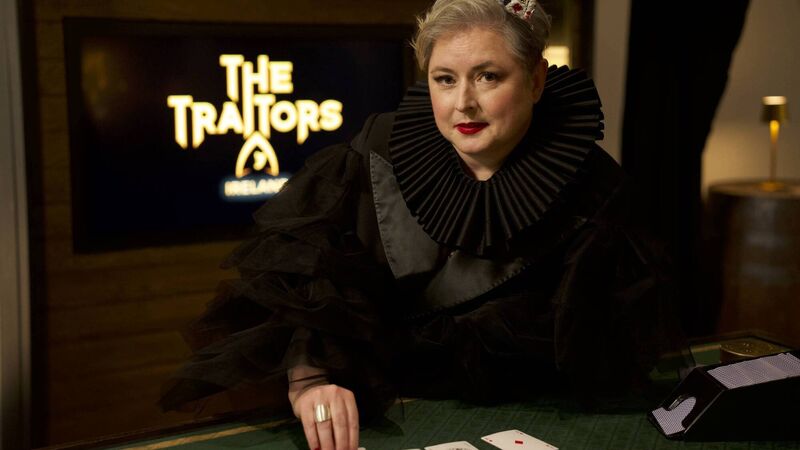
From interactions as gaeilge between Siobhán McSweeney and participants in 'The Traitors Ireland' to CMAT's Irish language lyrics, it's clear that the appeal of the language is growing. Picture: RTÉ
We have arrived at a point in time where the Irish language is thriving and its appeal is growing among younger generations.
You only have to consider the response to the cúpla focal spoken by participants and presenter Siobhán McSweeney in RTÉ’s 'The Traitors Ireland' earlier this year or the focus on spoken Irish skills among the recent presidential election debates to witness just how much the language is thriving. There has been a notable growth in podcasts through Irish, and Irish-language artists in music are reaching new heights.
It comes, therefore, as no surprise that children and young people when asked — over 200 of them across primary and post-primary schools, in fact — about their views on learning the language, that they report an overwhelming appetite to improve their ability to speak it.
This was the overarching takeaway from the Teaching and Learning of Irish in English Medium Schools consultation report carried out by Sealbhú, DCU Research Centre for the Teaching and Learning of Irish.,
The report involved consultation with students at both primary and post-primary level as well as with parents, teachers, student teachers, and principals. The report sought to understand perceptions of the language and how we teach it in English-medium schools.
The feedback was overwhelmingly positive in favour of the language, with an overriding appreciation for the potential linguistic and cultural benefits of learning Irish, as well as the cognitive benefits associated with bilingualism and multilingualism.
Yet, frustrations remain among students surrounding barriers they experience to improving their spoken language, which they suggest is rooted in reliance on text-book learning over interactive approaches and activities. We must respond to this.
Though interactive learning at the early years of learning Irish at primary school level involves rhymes, songs, language games, and involvement with cultural events such as those taking place during Seachtain na Gaeilge, there was a notable shift away from spoken language skills at middle and senior classes where many children reported a focus on and difficulty with reading, writing, grammar and spelling.
They report this continuing into post-primary years where students wish for opportunities to enhance their ability to speak the language but instead feel resigned to note-taking and memorising due to the pressure of State examinations. A clear desire for opportunities to speak the language inside and outside the classroom came through from students. Many students found literature and textbooks to be demotivating. They expressed frustration around their poor understanding of grammar as well as a lack of progress in developing communicative proficiency during their time in education.
Over 100 parents, teachers and principals took part in the consultation for this report too. They echo the same frustrations.
Primary teachers report high levels of engagement with Irish in the early years of the primary school, in particular, when play-based approaches and rhymes and songs were used but report a difficulty in motivating older children to learn Irish where there is a greater reliance on textbook-based reading.
Teachers at second level emphasise a commitment to teaching Irish in an enjoyable way but feel a focus on literature reduced the time available to spend on language and oral skills. Their views reflect those expressed by principals too.
Parents raise a concern that time spent on literature and poetry is taking from the opportunity to develop language skills at post-primary level. Those who participated speak of aspirations for their children to be able to converse and communicate in Irish and cite considerable stress around spelling tests at primary level.
What this tells us is that we must meet our students where they are, both inside and outside of the classroom.
Forty minutes of language learning in a lesson is not sufficient to ensure competence in oral language skills, nor is it that what our children or young people want; rather they want to experience the language through speaking it in a meaningful way in real-life contexts. We must meet them there.
The Department of Education’s newly published Action Plan for Irish in English-medium schools and the commitment to establishing more experiences of the language as a living language outside the classroom is most welcome.
The importance of additional supports and resources and provision of guidance and teacher learning opportunities cannot be understated but developing these resources must occur in conjunction with interactive opportunities with the language in our school communities, and indeed outside of them.
We must meet our children and young people at cultural and sporting events that encompass Irish language components.
We must give them the opportunity to engage with the language at those places where they are. This won’t just translate into greater spoken language, but it will foster a command of the language that motivates them in other areas of learning including reading and writing.
- Aisling Ní Dhiorbháin and Patrick Burke are researchers at DCU Sealbhú
Read More
CONNECT WITH US TODAY



Be the first to know the latest news and updates