'Major public health achievements' seen across the world despite cuts to humanitarian funding
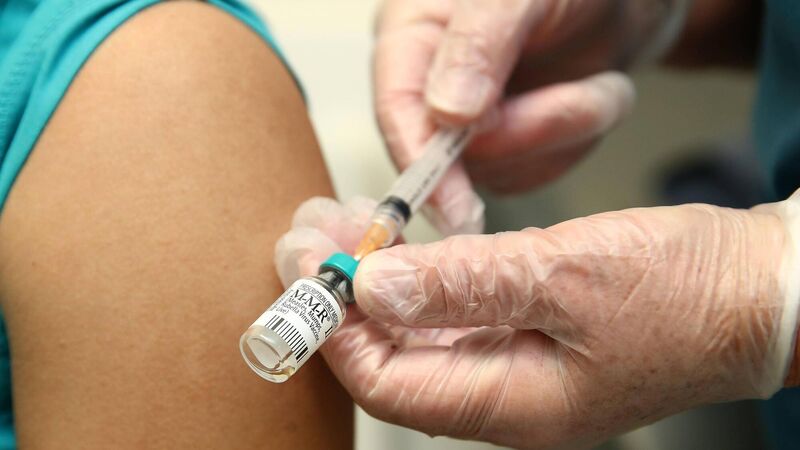
A target to protect 86m girls against cervical cancer by the end of 2025 was achieved ahead of schedule, boosting hopes among experts that cervical cancer can be eliminated within the next century. Picture: Getty
With humanitarian funding slashed by the US and other countries, this year’s global health headlines have made grim reading.Â
But good things have still been happening in vaccine research along with the development of new and improved treatments for some of the most intractable illnesses.
A target to protect 86m girls against cervical cancer by the end of 2025 was achieved ahead of schedule, boosting hopes among experts that cervical cancer can be eliminated within the next century.
Gavi, the vaccine alliance, launched its human papillomavirus (HPV) vaccination programme in 2014, when vaccine coverage in Africa was just 4%.Â
By the end of 2022, it was only 15%. However, scientists had discovered that a single dose could give comparable protection to the two doses originally used. That would make it simpler to deliver vaccination programmes, and stretch supplies twice as far.
In 2023, Gavi announced its ambitious target to protect 86m girls by 2025 and a concerted push saw coverage in Africa rise. By the end of 2024, it was at 44% — higher than Europe’s 38%.
In November, Gavi chief executive Dr Sania Nishtar credited “countries, partners, civil society, and communities” for reaching the 86m target early, and “driving major global progress towards eliminating one of the deadliest diseases affecting women”.
A jab against the virus can avert 17.4 deaths for every 1,000 children vaccinated, according to Gavi, meaning the 86m vaccinations will prevent an estimated 1.4m cervical cancer deaths.
After successful clinical trials, the first new type of malaria treatment in decades is to seek regulatory approval.Â
GanLum, from pharma company Novartis, outperformed the standard treatment by demonstrating a cure rate of 99.2% compared with 96.7% from the standard treatment.
Crucially, it should also be effective against malaria parasites that have developed resistance to artemisinin — a component of the current standard treatment.
Drug resistance to artemisinin is a growing concern. In the 1990s, resistance to chloroquine, then the standard malaria treatment, led to millions of deaths, says Dr George Jagoe of the Medicines for Malaria Venture. The prospect of an antimalarial such as GanLum gives a “sense of relief”, he said.
Cape Verde, Mauritius, and Seychelles became the first three sub-Saharan countries to officially eliminate measles and rubella.
The milestone came despite a surge in measles cases worldwide, with an estimated 11m infections in 2024. In November, the Americas region lost its measles-free status because of outbreaks in Canada, while the US is facing its worst outbreak in decades.
The three African countries’ success was described as “a major public health achievement”.
“It shows what’s possible when countries put prevention first and make vaccines a priority,” says Dr Mohamed Janabi, the World Health Organization’s director for Africa.
“We must build on this success so that every child in Africa can grow up healthy and protected.”
A drug described as a potential “gamechanger” for the HIV epidemic arrived in sub-Saharan Africa within months of its approval in the US.
Lenacapavir, given as an injection twice a year, can almost completely prevent HIV infection. It was approved by US regulators in June and recommended by the WHO in July.
Manufacturer Gilead has signed agreements with six manufacturers of generic drugs, allowing them to produce cheaper versions for use in 120 countries. Those will be provided at about $40 for each patient for a year under deals struck with Unitaid and the Global Fund.
Until that production comes online, Gilead has committed to providing lenacapavir at no profit for up to 2m people over the next two years.Â
In November, the first shipments arrived in Eswatini and Zambia. Rollout is expected to begin in early 2026.
Since it was named in 1882, tuberculosis has killed more than 1bn people. It remains the world’s leading killer from infectious disease.
However, treatment options are advancing at pace. Four vaccines are in their final testing stages; easier to use tests, including simple tongue swabs, could improve detection; and a new treatment could boost cure rates and shorten the time needed to treat TB.
A new antibiotic, sorfequiline, showed stronger action than existing treatments in trial results presented at the Union World Conference on Lung Health in November.
The advance builds on a new regimen for people with more complicated forms of TB, introduced in 2019, which itself shortened treatment from more than 18 months to six.
Replacing one drug in that regimen with sorfequiline could shorten treatment further, with more trials planned for 2026.
- Guardian