Nowhere in Ukraine is safe, now Ireland's new rules mean the doors are shut
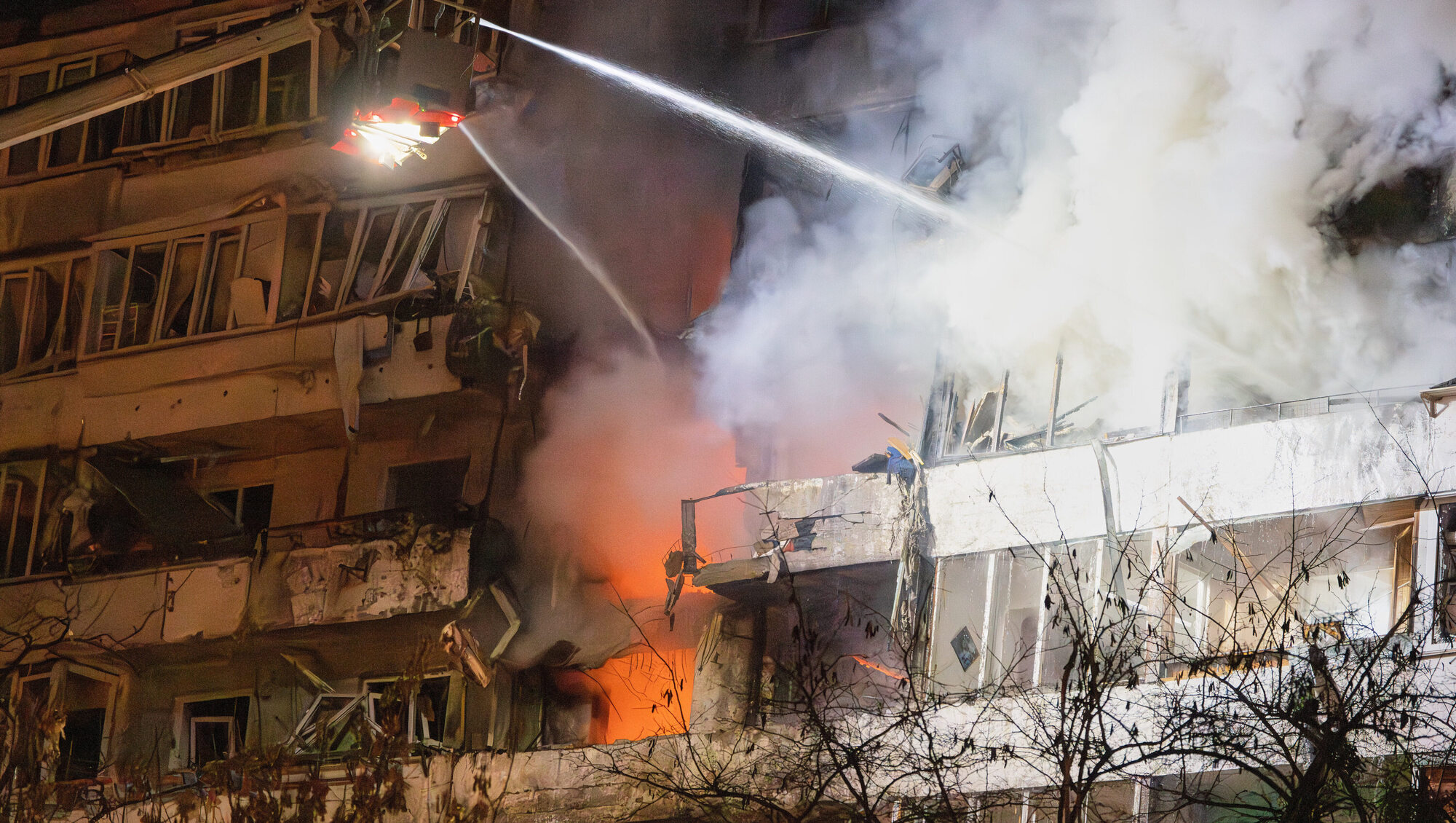
Firefighters put out the fire after a drone hit a multi-storey residential building during Russia's night drone attack in Kyiv last week. Picture: AP /Efrem Lukatsky
In recent weeks, the Government has flagged significant proposed changes to entitlements for Ukrainians living in Ireland under the Temporary Protection Directive. These include reducing State-provided accommodation from 90 days to just 30 and lowering the Accommodation Recognition Payment for hosts from €600 to €400.
These discussions are taking place as Russian attacks on Ukraine intensify to a level that makes daily life increasingly unbearable. Before making decisions that may push Ukrainian refugees away, people need to understand the reality of what life in Ukraine is today. The question is not whether Ukrainians still need protection — but whether they now need it more than ever.
As the fourth year of the full-scale invasion approaches, Ukraine lives under constant bombardment. The intensity has not faded with time, it has grown. Russia launches Shahed-type attack drones — small, fast aircraft carrying explosive charges powerful enough to destroy homes.
In recent years, Russia has modernised these drones, making them more lethal, more difficult to detect and shut down, and now uses them alongside ballistic missiles and, in cities closer to the border such as Kharkiv, glide bombs.
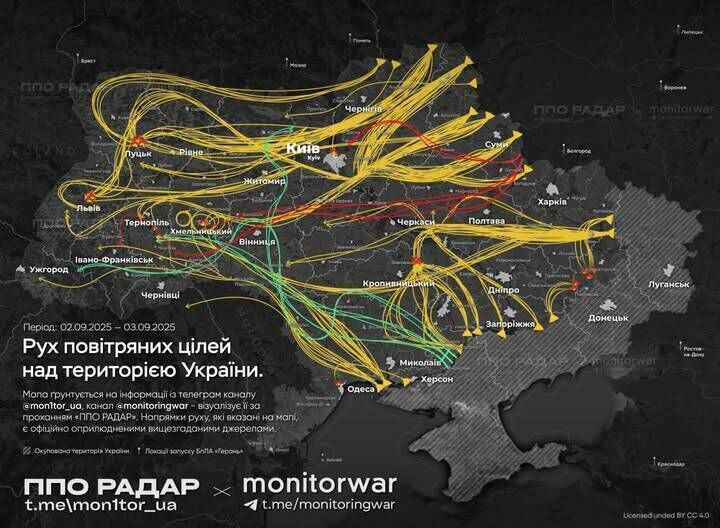
Where widespread attacks once happened every few weeks, now the pauses last only a few days. According to the Institute for Science and International Security, Russia launches between 150 and 200 drones every night — more than 5,000 per month — and about a thousand reach their targets. These weapons can hit any region, regardless of proximity to the frontline.
Maps tracking a single mass attack show drone trajectories stretching across the entire country. There are no geographical limits to danger.
Photos widely disseminated show mainly the ground combat zones and front lines — these may be the source for the belief that "only 30% of Ukraine is affected by the war". The aerial targets map shows a far more widespread conflict.
In 2025, every one of the 22 Ukrainian-controlled regions experienced strikes.
Even the west of Ukraine, often imagined in Europe as peaceful, is not safe. Ternopil recently suffered a devastating strike on a residential building, killing 34 people — six of them children asleep in their beds. Lviv has endured repeated attacks on homes and energy infrastructure. Even Mukachevo, long considered protected by the Carpathian mountains, has been hit.
There are no safe places left in Ukraine.
Statistics describe scale, but not the exhaustion Ukrainians live with. Nightly strikes prevent sleep. Daily life revolves around planned and emergency power cuts introduced to stabilise a heavily damaged energy grid. Electricity can disappear several times a day for hours at a time. Water and, most dangerously in winter, heating can disappear without warning.
Communication networks, maintained with layers of backup power, have become one of the few anchors of normality. They allow people to receive air-raid alerts, work and study online, shop, and stay in touch with the outside world.
Small and medium-sized businesses also keep society functioning. When electricity fails, the streets fill with the sound of generators. It is noisy and polluting, but shops and cafes continue operating. This hum has become a symbol of resilience: life continues until night falls and the next wave of attacks begins.
Children still attend school, but lessons can be interrupted by air raid sirens. When that happens, students and teachers go to shelters — often adapted basements rather than fully protected bunkers.
But the greatest danger arrives at night. At home, people are almost defenceless. Walls cannot stop the shockwave of a missile. Most buildings lack proper shelters nearby, and even when shelters exist, many residents simply cannot reach them in time.
Those seeking real protection often spend nights in underground car parks or metro stations. One of my friends in Kyiv leaves home well before the first siren and sleeps on a station platform in a sleeping bag. Only there, deep below ground, can she have a proper sleep without being woken up by explosions.
For a working mother or a single parent, every part of daily life and every parental responsibility demands immense effort — all while living with the constant fear of losing what she holds dearest.
It is no surprise so many women with children have come to Ireland seeking protection. The same is true for other vulnerable groups — older people, those with disabilities or serious illnesses, and people who fled frontline or recently occupied cities, leaving behind not only their homes but also their social networks. For them, life in Ukraine has become almost impossible to bear.
It is for these people — as a priority — that temporary protection was created, and why it must continue to exist.
In this context, reducing State accommodation from 90 days to 30 becomes a serious barrier. No one fleeing a war zone can stabilise, register for services, secure employment and find housing in that time. Even 90 days is unrealistic. Thirty days, effectively, means “the door is closed”. Refugees with no plan, no contacts, no relatives or friends able to host them simply will not risk coming to Ireland.
Reducing Accommodation Recognition Payment will have similar consequences. Lower payment may force host families to end hosting or ask Ukrainians to move into private rentals. And again, how can a single mother who can work only part-time, or an older woman with health issues, possibly secure housing privately when they have no means to do so?
It seems reasonable to reduce support for those who have already had time to adapt and are able to work full-time. But newly arrived people need some form of housing support for at least six to 12 months, until they can find their footing. And the most disadvantaged groups may need ongoing housing support altogether.
Some Ukrainians I have spoken with would welcome the idea of a fair contribution for long-term State accommodation — especially if it brought greater security and predictability to their housing situation. In Ukraine, social welfare standards fall far short of people’s real needs: benefits are minimal and social housing does not exist, so self-reliance is the norm. Those who can work, do work.
But changes must be proportionate and directed toward those who have already had time to adapt — not at people who have just escaped a war zone and need time to find their bearings.
If they are not given that possibility, then applying for international protection instead of temporary protection may become the only option left to them.
I arrived in Ireland in March 2022 with my 11-year-old daughter. We were welcomed by an extraordinarily kind family near Youghal, and the local community supported us from the first days. The warmth we received, and the fact that I was able to return to work quickly, made me think that perhaps I was meant to be here at this point in my life.
Because I know how welcoming Irish people are, I feel able to ask the Government some direct questions.
What is the true purpose of temporary protection? Who is it meant to help? And is offering only 30 days of accommodation to people arriving from a war-torn country genuine help — or a refusal disguised as assistance?
Only honest answers will lead to policies that are fair, humane and effective. Ireland does not have to choose between supporting its own citizens and supporting Ukrainians. With cooperation between Government, Ukrainian organisations and local communities, it is possible to design solutions that meet the needs of everyone.
- Olena Gorb is a marketing and communications professional from Ukraine, living in Cork, and working in community development

CONNECT WITH US TODAY



Be the first to know the latest news and updates