Inclusive education schemes must go on so more first-generation graduates can change their family stories forever
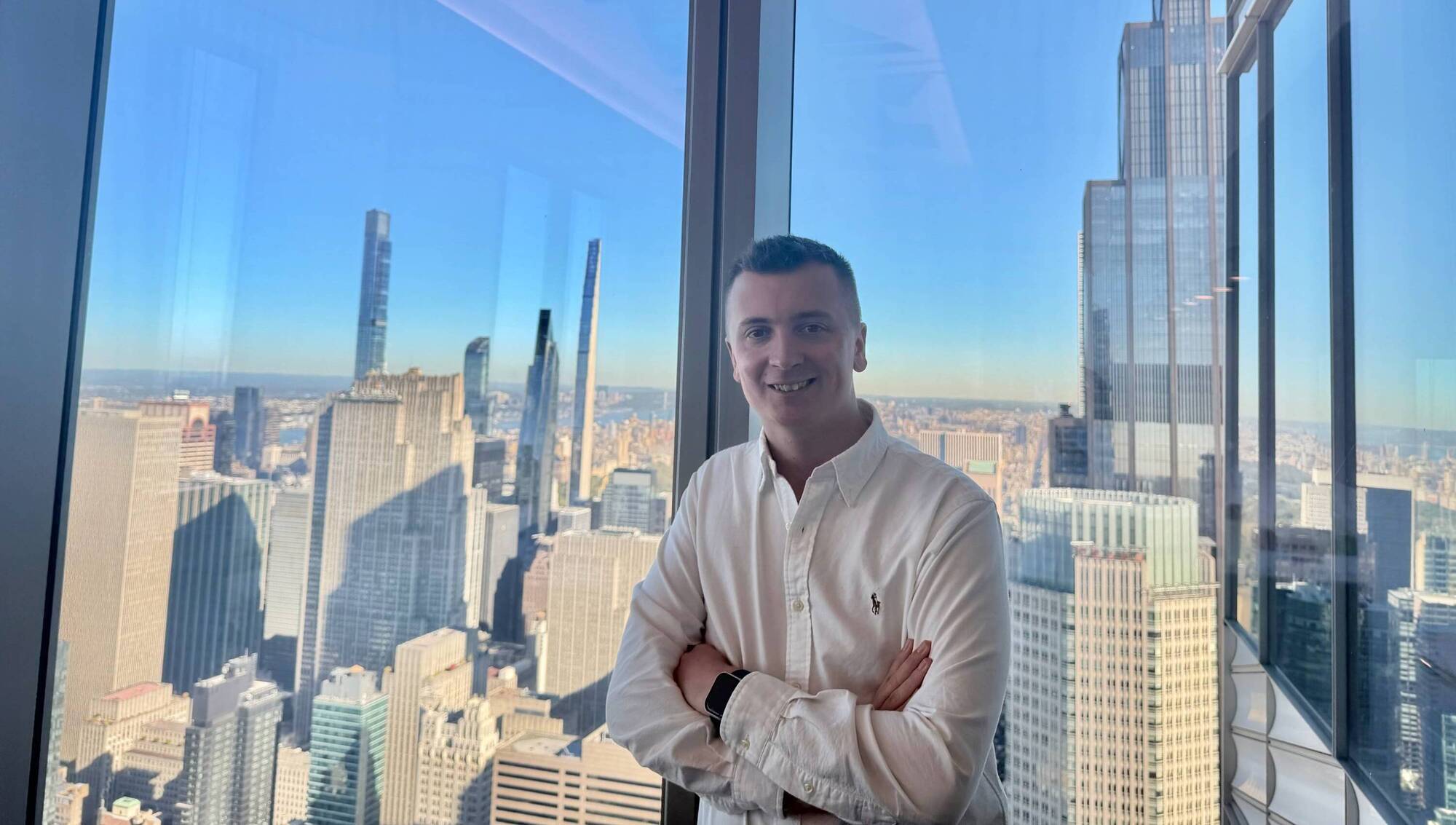
Cian O'Donnell: 'Sometimes I look out the window of my office on the 63rd floor of a Manhattan skyscraper and think about how much it took to make that moment possible — not just my effort, but the sacrifices of so many in my family. Countless hours of work that allowed me to do what once seemed out of reach.'
I was the first in my family to go to university.
It’s a sentence that looks simple on the page, but in reality, it carries years of hope, work, sacrifice, and quiet belief. My parents never measured success by salary or status. They measured it by effort — by doing your best and doing it honestly. That belief became the foundation I carried with me from Limerick to the United States, and it still shapes how I see the world today.
Growing up, university felt distant — a place for other people’s children. We weren’t a family with connections or college traditions. My mam, who left school early, didn’t always know how the system worked, but she knew what it could unlock. My dad, a toolmaker, worked hard all his life before passing away in 2016.
In 2023, I received the Father John M. Conlisk Scholarship, which brought me from the University of Limerick to Fairfield University in Connecticut to pursue a Master’s in Business Analytics.
Being a first-generation student means learning to live between two worlds. You belong to where you come from, yet you’re also trying to navigate spaces your family never had access to. There’s pride, but there’s also pressure — the quiet need to prove that the opportunity was worth it.
But that tension becomes a strength. It builds empathy, awareness, and resilience — qualities no classroom can teach.
When I began studying analytics, I thought I was choosing a career for security — something that would “future-proof” me. But as I learned more, I realised data wasn’t just about numbers. It was about people. It was about finding patterns in human behaviour, understanding decisions, and using information to make workplaces fairer, more transparent, and more humane.
That insight led me into HR analytics, where I now work in the energy sector in New York. Every day, I see how data can shape better decisions — and improve the experience of employees.
Sometimes I look out the window of my office on the 63rd floor of a Manhattan skyscraper and think about how much it took to make that moment possible — not just my effort, but the sacrifices of so many in my family. Countless hours of work that allowed me to do what once seemed out of reach.
It all came together last May when my family and closest friends flew to the US for my graduation. It was more than a ceremony; it was a celebration of everything that led there — the culmination of years of perseverance.
My mam reminded me of when I was 11, begging for New York-themed wallpaper from Woodie’s to hang in my bedroom. Embarrassingly, it’s still there.
But this story isn’t just about me — or about technology. It’s about access. Because none of it — the degree, the scholarship, the job — would have been possible without Ireland’s investment in education and the social-mobility programmes that made university accessible to families like mine.
Schemes such as the Higher Education Access Route (HEAR) and Student Universal Support Ireland (SUSI) have been lifelines for thousands of students. In 2023 alone, SUSI awarded grants to over 72,000 learners, many of whom were the first in their families to attend university.
Programmes like DARE for students with disabilities and the 1916 Bursary Fund, which offers €5,000 per year to those from under-represented backgrounds, continue to open doors that would otherwise remain closed. These aren’t just financial supports — they are engines of equality, enabling students to see education not as an impossible dream but as a reachable goal.
And yet, the challenge is far from over. The cost-of-living crisis, soaring accommodation prices, and regional disparities risk reversing the very progress these initiatives created. Too many talented young people are being forced to make choices not based on ambition, but affordability. Talent is everywhere, but opportunity isn’t — not yet.
If Ireland wants to sustain its progress, we need to protect and expand these programmes, not quietly underfund them. We need more outreach to rural schools, better mental-health supports for students adjusting to college life, and stronger communication about what help exists before it’s too late to apply.
Because being “the first” shouldn’t feel like a miracle. It should feel normal. Every student, regardless of background, should see themselves reflected in the lecture hall, the internship programme, and the graduate class. That visibility matters. Representation tells the next young person — the cleaner’s son, the builder’s daughter, the carer’s child — that there’s room for them, too.
The stories of these people rarely make headlines, but they ripple quietly through our towns and families, changing what each generation believes is possible. They’re not just individual achievements; they’re collective progress — living proof of what happens when a family, and more importantly a country, chooses to believe in potential rather than privilege.
Because when one person becomes the first, they rarely stay the only. A first-generation graduate doesn’t just earn a degree — they change a family’s story. My mother’s hands built her life through work; my father’s through craft. Mine, somehow, through education — but all shaped by the same belief that effort matters.
That’s the thread that connects generations, and it’s one Ireland should never lose sight of. Every scholarship, every grant, every small act of belief gives rise to another story like mine — another door opened, another story rewritten.
If there’s a legacy worth protecting, it’s that: the quiet, unstoppable rise of those who begin with little more than belief and turn it into possibility. And if Ireland continues to believe in them — in us — that rise will never stop.
- Cian O'Donnell is a HR data professional, originally from Thomondgate in Limerick City. He is also Secretary of the Irish Network NYC.

CONNECT WITH US TODAY



Be the first to know the latest news and updates