We must stop victim blaming after road deaths
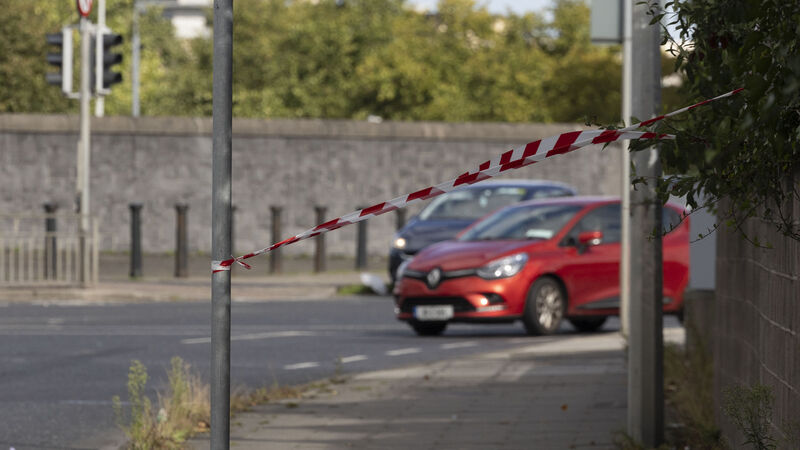
Road deaths are often not random, inevitable events but are a result of choices. If reported as the latter, accountability becomes possible. Picture: Sam Boal/Collins Photos
Cyclists and pedestrians are too often portrayed as the agents of their own tragedies, while drivers vanish from the story. Ireland urgently needs its own reporting guidelines to ensure fairness, accountability, and respect.
In recent days, we have been deeply saddened by the deaths of three cyclists and two pedestrians on Irish roads.
The news coverage that followed was depressingly predictable. Reports described a “cyclist in collision with a truck” or a “pedestrian struck by a bus”. In each case, the driver was absent from the account. The vehicle was given agency, while the vulnerable road user was positioned as the active party.
This is not merely clumsy writing. It is a subtle but powerful way of shifting blame, shaping how we think about road deaths, and diminishing accountability.
In the UK, road policing experts, road safety professionals, and the National Union of Journalists’ (NUJ) ethics council, have worked together to produce a set of road collision reporting guidelines. They reflect journalistic principles of accuracy, fairness, non-discrimination, and justice.
They call for language that recognises human agency, avoids speculation, and refrains from calling collisions “accidents” unless they are demonstrably unavoidable. They remind journalists not to present vehicles as if they act independently, but to identify drivers where appropriate.
These are modest shifts, but they matter. They keep responsibility visible, and they help avoid unfairly casting suspicion on victims.
Ireland should now treat those guidelines as a resource, but not as an off-the-shelf solution. We need to develop our own reporting standards, rooted in our national context and created in collaboration with the Road Safety Authority (RSA), An Garda Síochána, and the NUJ.
Such a process would ensure that new guidelines are informed by international best practice, but also reflect the realities of Irish journalism, policing, and road safety.
At present, our reporting habits risk obscuring the truth. When a headline declares that a cyclist “was in collision with a truck”, it subtly suggests the cyclist was the instigator — while the person driving the truck disappears from view. Readers are left with a story in which tragedy simply happens, as if by chance — rather than one in which human decisions and behaviours can be examined. Was the driver speeding? Were they distracted? Did they fail to yield? Such questions are much harder to ask when the driver is written out of the account.
This matters because language influences how we think about prevention. If crashes are reported as random, inevitable events, then all that remains is condolences.
But if they are reported as the outcome of choices — by drivers, by engineers who design unsafe junctions, and by policymakers who fail to reduce speed limits — then accountability becomes possible. Prevention becomes possible too.
It also matters because the people who die in these crashes are almost always the most vulnerable: People walking and cycling, children, and older people. They have no protective shell. A moment’s inattention by a driver, or a few kilometres per hour over the limit, can mean the difference between life and death.
To describe such deaths in language that erases the driver is not only misleading but unjust. It compounds the grief of families who see their loved ones depicted as somehow the agents of their own demise.
Irish journalism has a proud tradition of fairness and accuracy. Developing national guidelines for road collision reporting would strengthen that tradition — ensuring the words we use respect victims, reflect reality, and promote accountability. Done properly, with the involvement of the RSA, gardaí and NUJ, it would create an Irish framework built on the best of international practice but tailored to our own needs.
Words shape culture, and culture shapes behaviour. By reforming how we report on road deaths, we can foster a culture of responsibility, encourage safer driving, and create the conditions for systemic change. The alternative is to keep using language that normalises tragedy and obscures responsibility.
- Ciarán Cannon is president of Cycling Ireland and a former minister of state.
CONNECT WITH US TODAY



Be the first to know the latest news and updates