Cormac O'Keeffe: Intrigue of Agent Cobalt spy drama further deepens
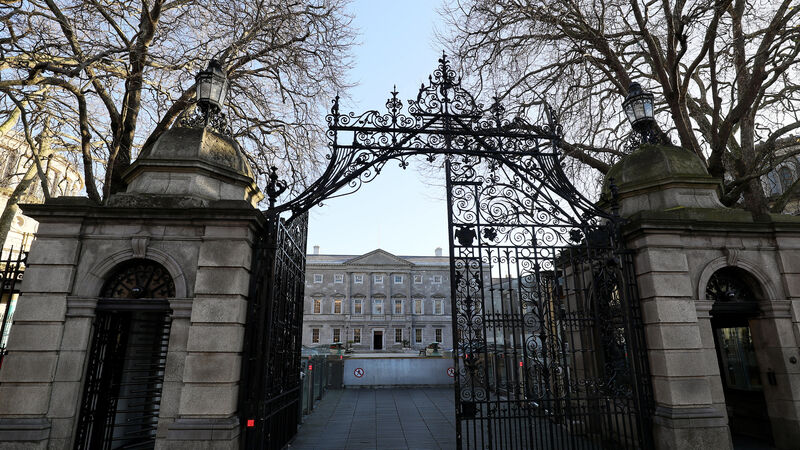
Leinster House, Dublin, the seat of the Oireachtas, the parliament of Ireland.
The controversy surrounding allegations of a Russian agent in the Oireachtas has deepened, after the media outlet which claimed so-called ‘Agent Cobalt’ had been cleared doubled-down on the accuracy of its report by detailing what it claims to be a supporting document.
first published a story on Tuesday stating that there was “no Agent Cobalt” and that a garda investigation had “exonerated” him. It suggested that the politician was “sent confirmation” of this in writing.
That sparked a strong statement later on Tuesday from Garda HQ, which said there was an “ongoing active criminal investigation” into the case.
Senior garda sources told the that no letter from gardaí was sent stating the politician was in the clear and stressed gardaí would not do this.
responded to the Garda HQ statement by publishing a second story, on Friday night, citing what it claimed to be a “document compiled following a meeting” between gardaí and lawyers for the politician.
It said the document “unequivocally states that the politician has no case to answer”.
It contends the document is a “memorandum” of a meeting held between gardaí and lawyers for the politician held after The Sunday Times published a story last October alleging there was a Russian agent in the Oireachtas.
is expected to publish more details tomorrow to support its original reports, further deepening the controversy.
The controversy has yet to drag in politicians, who are on holiday, with the Oireachtas not returning until September 17.
Garda Commissioner Drew Harris managed to deflect involvement on Friday by stating he would not comment on matters of national security. He departs at the end of next week and the new commissioner, Justin Kelly, starts.
The politician has not yet commented publicly on the allegations and has continued being an active member of the Oireachtas.
article published on Friday evening claims that the document was “drawn up after a number of meetings” between gardaí attached to the Special Detective Unit (SDU) and the politician and their legal representatives.
The article said that one paragraph of the document alleges that the SDU “reiterated clearly and unambiguously that the [politician] was never a person of interest nor was he under investigation or suspicion regarding the subject matter of the Sunday [newspaper] article”.
The article also states that the document notes apparent discussions about a related garda investigation into the source of the information on the politician that made its way to The Sunday Times.
It said that, according to the document, detectives believed “undoubtedly” the information came from within the Garda organisation.
Other possible sources of the information that have been speculated on previously have also included senior figures in the Government and civil service, British intelligence, and even Irish military intelligence.
Again, there is little publicly known evidence that could potentially back up any of these theories.
Security sources have told the that meetings have been held between the SDU – the operational arm of the Garda’s Security & Intelligence Service - and the politician's legal team, although they stress no assurances as claimed would have been given.
The Garda Press Office declined to provide the with details as to when the garda criminal investigation began and whether or not the sole suspect in the investigation has been arrested or interviewed voluntarily.
Prior to the criminal investigation, the politician would have formed part of a much wider counter-intelligence operation by both Garda Security & Intelligence and the Irish Military Intelligence Service, who were monitoring people linked to Russian intelligence services operating in Ireland.
The Garda Press Office told the there was no further comment following the latest article by and referred back to their statement on Tuesday.
CONNECT WITH US TODAY



Be the first to know the latest news and updates