'Cork hurling is much more than just a game — it helped me bond with my dad’
As his father faces motor neurone disease, James O'Sullivan reflects on Cork hurling, memory, masculinity, and the love passed down through sport
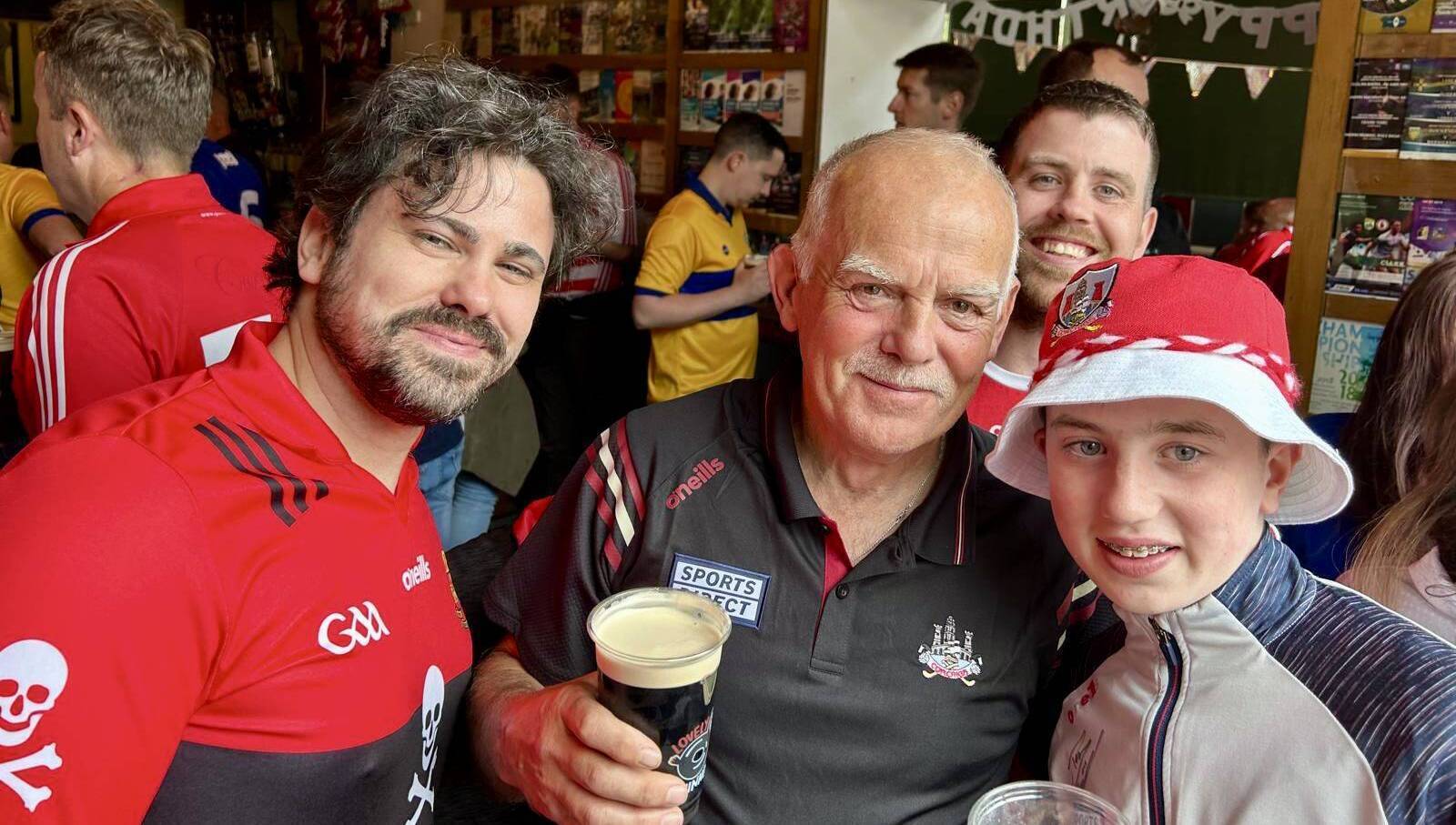
James O'Sullivan, his father John, brother Jonathan (back), and nephew Matthew in Gill's Cornerhouse before last year's All-Ireland final
James O'Sullivan, his father John, brother Jonathan (back), and nephew Matthew in Gill's Cornerhouse before last year's All-Ireland final

Last summer, my father was diagnosed with motor neurone disease, a progressive neurological condition that damages the motor neurones in the brain and spinal cord, leading to muscle weakness, atrophy, and eventually paralysis.

It is a rare and incurable disease, well-known here in Ireland as the cause of Charlie Bird’s passing. The average survival rate is typically two to five years from the onset of symptoms. Although some people live longer, many go far more quickly.

Dad drove us to last year’s All-Ireland hurling final. When Cork play Tipperary this Sunday in a bid to end our 20-year famine, he won’t be travelling. The round trip to Croke Park would be impossible for him.

It will be the first time that my brother Jonathan and I go to an All-Ireland final without our father. 

We suggested that the three of us stay at home to watch the game together, but dad wouldn’t have it — his voice might be fading, but he still calls the shots. 

“Go and shout for three,” my mother instructed.

However the match goes, it will be a hard day. The recent Munster final was very difficult. When Cork beat Limerick on penalties, it was the first thing we acknowledged, that it’s just not the same without our dad.

That’s the thing about hurling — it’s more than just sport, not just a game.

Dad took me to my first All-Ireland final in 1999. Cork beat Kilkenny by a point, 0-13 to 0-12. I have no idea how he managed to turn up the tickets — two for the Hill — but he did (I still have the stubs).

This was before the motorway, when the drive from Dublin to Cork took you through every town and village in between. We arrived in Rathcormac to bonfires on the road — literally on the road — as thousands of Corkonians took to the streets to celebrate and welcome home the travelling fans.

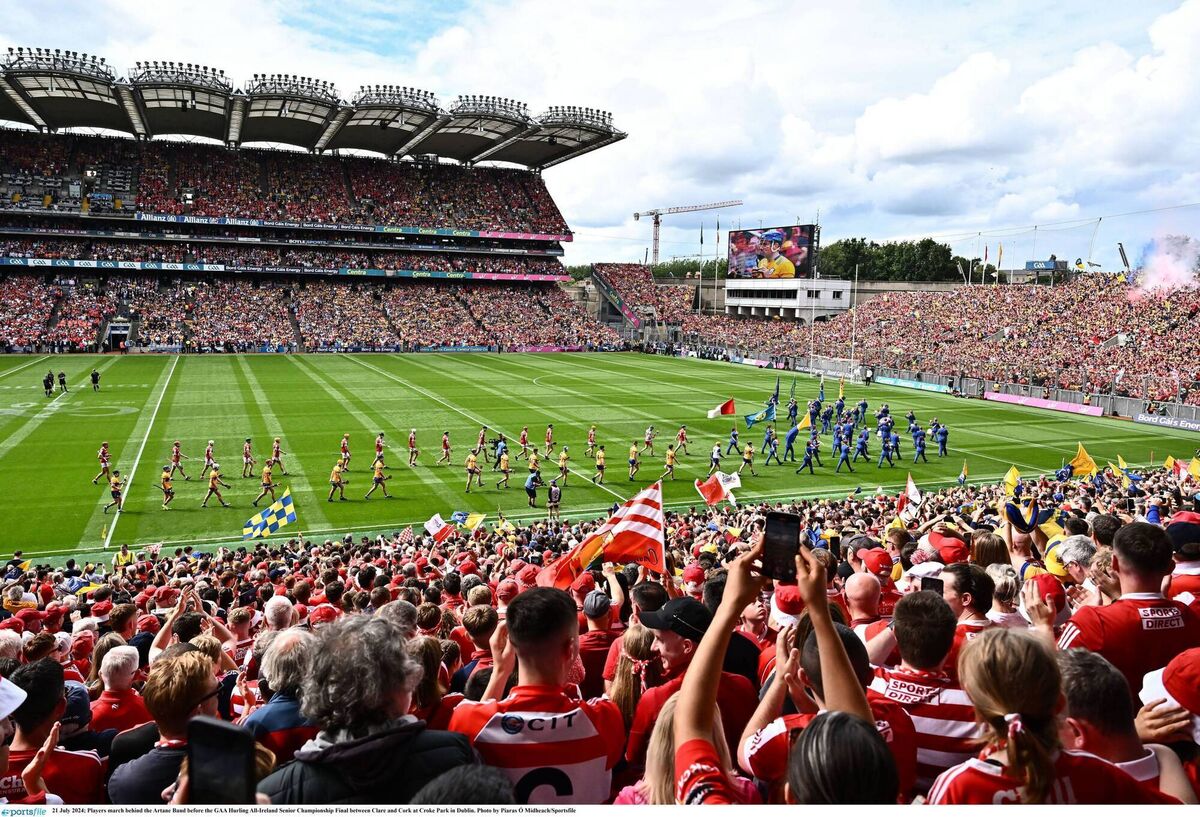
James's father was able to attend last year's GAA hurling final between Clare and Cork. Picture: Piaras Ó Mídheach/Sportsfile

Dad told me to get out the sunroof with my flag. I’m sure my memory has embellished the scene, but when I think back, I see thousands of people, the road to Cork city barely visible through all the red and smoke. I was sat atop the car, waving my flag while dad bate the horn. And for a few moments, I felt like some king of rebel king — the world was mine.
That’s what culture is — it’s visceral, something felt in the gut. I never chose Cork hurling, it was passed down to me. That’s what a father gives a son, a sense of something greater than themselves to which they can belong — culture, their culture.

And that’s why sport is more than just competition, it’s a sophisticated framework for masculine intimacy and the delicate choreography of connection across generational divides.

The relationship between my father and I followed a typical trajectory: first, childhood admiration, then, adolescent rejection, and eventually, adult reconciliation.

I was a furious young man, full of fear and confusion. Nothing seemed bearable. One night, dad asked me to come for a walk with the dog. He told me it was okay to be angry. “Everyone goes through what you’re going through,” he said. “What matters is who you are when you come out the other side.” I said something naïve about wanting a better world for myself and for others. “Then go out and change it,” was his response. I think about that conversation a lot.

James O'Sullivan: 'Hurling helped me to open up to my father. We had conversations during hurling that we wouldn't have had otherwise.'

Do fathers remember all of the little things they tell their sons, the brief, offhand comments and remarks that take on permanence, becoming rules and values that shape lives? Education has been my life, not just as a profession, but as a principle — it’s how I try to do some good in the world, if only just in our small corner of it. And that personal philosophy and political belief system all started with a short conversation with my father, while walking the dog.

This was back before men were allowed to talk about mental health — I’m open enough to admit that, were it not for dad, I might not be here now.

We’d not have been able to have those conversations were it not for hurling. It was the thing that bonded us because it was ours and ours alone — just him and me, and later, Jonathan. Just the lads, a father and his sons.

The human need for belonging finds profound expression through sporting communities. 

The degree to which the GAA provides social capital is not unproblematic, and local clubs can be very cliquey, anachronistic spaces. 

But for many people, especially those who are lost, this shared belonging creates psychological scaffolding that supports identity development, social integration, and intergenerational continuity.

Eimear Ryan writes about this in The Grass Ceiling, one of the most important books ever written on gender in the context of Irish sport. 

Eimear explains how hurling was the vehicle through which she learned who she was, who she wanted to be. 

I was probably the most useless — I was certainly the laziest — player to ever wear the royal blue of St Finbarr’s, and like Eimear, I often felt like an outsider, feeling the need to hide parts of myself, like a burgeoning love of literature (Eimear on the other hand is a brilliant hurler who won an All-Ireland with Tipperary).

But as useless as I might have been, I loved certain aspects of my playing days, if only just pucking balls with dad and Jonathan.

The father teaching his son to strike a sliotar passes on muscle memory that connects to an older Ireland, to resistance and revival — it’s sport functioning as a field of cultural production, where identity is actively constructed through embodied practice.

Learning to hurl isn’t just about the mechanics, it requires absorbing deeper lessons about competition, failure, resilience, and, perhaps most notably for men, emotional expression.

In a changing, multicultural Ireland, hurling has the potential to be a shared tradition, a common language that can weave new identities into the fabric of local life.

All of this is why hurling is so important.

Shared emotional investment in collective success and failure generates bonds that transcend the selfishness that is rampant in contemporary Irish society. And the physical presence in meaningful spaces—the stands and terraces of Páirc Uí Chaoimh, Semple Stadium, and Croke Park—creates place attachment, where location becomes inextricable from identity.

Whatever else might be said about Corkonians, we cannot be accused of having no sense of ourselves. But all jokes about the Real Capital and People’s Republic aside, being from Cork does give many people a deep sense of belonging, even a sense of privilege. For many, that exceptionalism is born on the Blackrock End terrace.

The shared experience of walking to grounds, the familiar smell of league nights in winter, the collective intake of breath before a crucial strike—these moments weave people into larger narratives of place and history.

It’s not always easy for fathers and sons to express their love for each other, so hurling can act as a substitute. In the pride in one’s colours, fathers and sons find a vocabulary for love that transcends words, that transcends their relationship.

The coming final won’t be the same without my dad. I’ll never forgive Conor Leen for pulling the back off of Robbie O’Flynn last year, when dad was well enough to travel.

But I also remind myself that there is no point trying to restage the past, that the best moments between father and son can never be recreated. Even if dad had been with us for the Munster final, it wouldn’t have been the same — it wasn’t Thurles, Mark Landers wasn’t the captain, and the game wasn’t won by Joe Deane (who I chose that day as my all-time favourite) when he buried Seánie McGrath’s endline flick beyond Davy Fitz.

Hurling reconnects us to the dead. In every glory and heartbreak we find shared memories, and in ritual we meet with those who have gone before us. Every walk I take to Croke Park is taken with my grandmoher, who would meet me and Dad outside Arnott’s for a feed before games (I’d always get chicken, mash, and gravy—it made me feel like a millionaire).

So when Cork and Tipperary meet in Croke Park, it will be hard, but it will still matter, because hurling is about being part of something that was here before us and will go on long after we’re all gone.  

It’s hard to believe that I was only 19 the last time Cork lifted Liam McCarthy—so much has changed in the two decades since. But whatever the outcome of this game and the outcome of contests to come, I’ll forever carry the memory of all those days I had with my father, every score and every bonfire.

Because, fundamentally, that’s what hurling is — it’s the way we remind ourselves that we’re never alone.

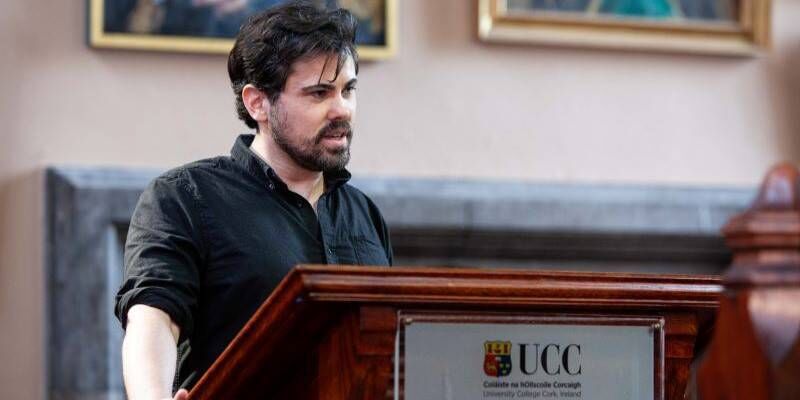
  • James O’Sullivan is senior lecturer in the School of English & Digital Humanities at University College Cork.
  • jamescosullivan.substack.com

A collection of the latest sports news, reports and analysis from Cork.

More in this section

Revoiced

Newsletter

Had a busy week? Sign up for some of the best reads from the week gone by. Selected just for you.

Cookie Policy Privacy Policy Brand Safety FAQ Help Contact Us Terms and Conditions

© Examiner Echo Group Limited