Some of us are born with the safety net of privilege, others with the trapdoor of poverty
Consider the child who grows up without ever feeling safe, who doesn’t believe the world is on their side. How can we expect that child to act as if the world is fair?
We don’t get to choose where we are born. We don’t choose the area we come from, the people, or the circumstances that will define the early years of our lives.
Whether we take our first breath in a home filled with love and security or one marked by high stress and instability, is not in our hands. We don’t choose whether our childhoods are defined by books or burdens, by dinner tables or by social workers.
And yet, these unchosen conditions shape so much of what follows. They quietly influence our education, our health, our opportunities, and our place in society. They determine how others see us, and, just as powerfully, how we come to see ourselves.
We like to believe hard work is all it takes to succeed, that grit and determination will level the playing field. It’s an ideal we hold onto tightly because it offers hope.
But the truth is, the field was never level to begin with. The myth of meritocracy comforts those who benefit from it while obscuring the systemic inequalities that others face. This myth tells us that if we just try harder, we can overcome anything.
But for many, it’s not about trying harder, it’s about fighting an uphill battle with boulders put in their way that others never have to face.
Some children are born into families where support is assumed. Where opportunities are endless, and second chances are guaranteed. They grow up in environments where mistakes are treated as learning experiences, and failure doesn’t carry a lifelong stigma. These children are equipped with safety nets — strong, invisible ones that cushion them from life’s hardships.
Others, though, are born into families under constant surveillance, where their every move is scrutinised and judged. They are forced to navigate a world filled with instability and social stigma, often long before they even understand the language of inequality.
For them, life isn’t about having a safety net. It’s about survival. The difference between these realities can be measured in more than just academic outcomes or employment statistics — it’s etched into mental health, into the likelihood of encountering the criminal justice system, into life expectancy itself.
We rarely speak honestly about how deeply luck shapes life outcomes. How the family we are born into, the early adversities we face, the trauma we inherit, and the systemic biases that exist can determine what is possible for some, and what is not for others.
We talk about success as if it’s always the result of individual effort, and failure as if it’s entirely the fault of the person who fails. We ignore the scaffolding that holds some people up, and the cracks that others fall through.
In many ways, society criminalises the symptoms of poverty, trauma, and exclusion. We pathologise the pain that comes with a life of hardship, while often excusing or overlooking the misdeeds of those who hold power.
Corruption, exploitation, and financial misconduct are often overlooked in high places, while those struggling to put food on the table are held accountable for every minor infraction.
When a young man from a disadvantaged background makes a mistake, his entire history is often ignored. His circumstances, his struggles, his battles, none of it matters when he is judged.
But when a wealthy politician misuses public funds or a corporate executive engages in misconduct, the conversation shifts. We talk about "context", about "complexities", about "technicalities". We create excuses where none should exist. This isn’t just a flaw in the system, it is the system.
We need to stop pretending we all start from the same place. The truth is, we don’t. Some of us are born with safety nets that catch us when we fall. Others are born with trapdoors that open beneath us, setting us back with every step.
Some inherit security, while others inherit systems that never even recognised their worth. The consequences of these inequalities are not only felt in our lifetimes, they ripple across generations.
Consider the child who grows up without ever feeling safe, who doesn’t believe the world is on their side. How can we expect that child to act as if the world is fair?
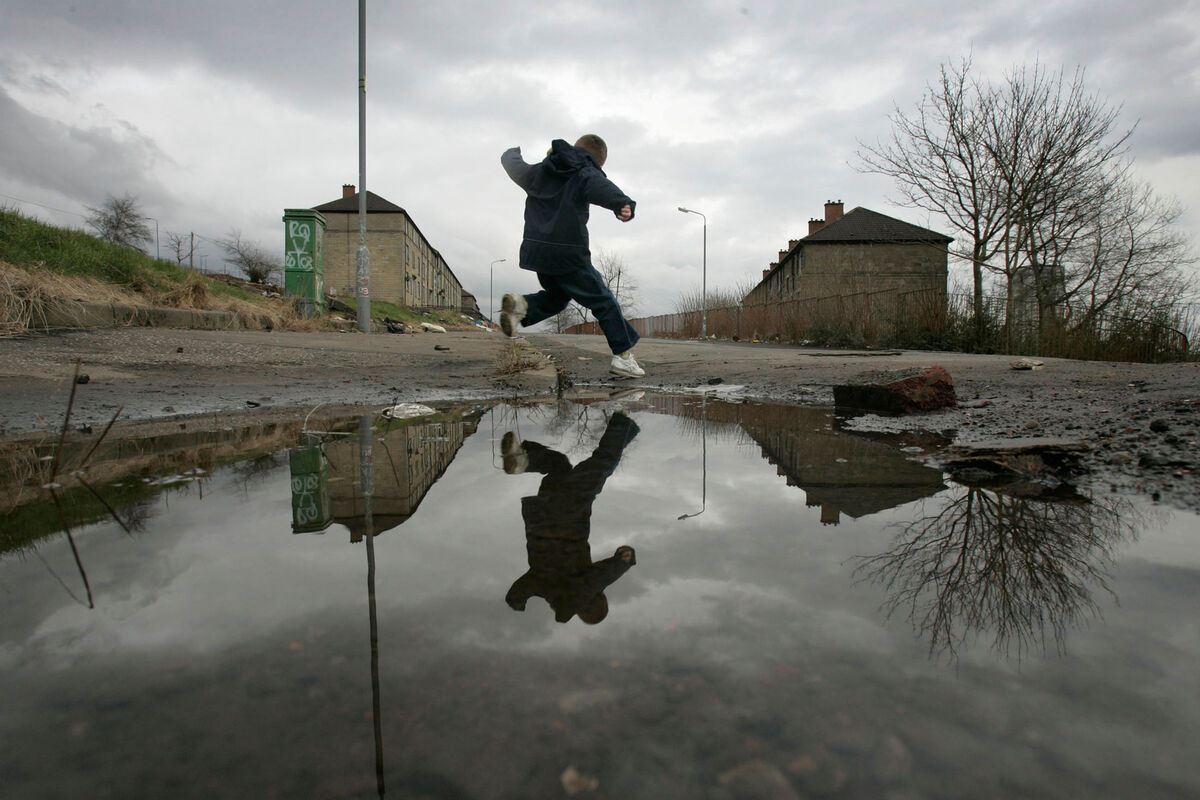
More importantly, why do we respond to that pain with punishment rather than protection and safety? We talk about personal responsibility, yet fail to recognise not everyone is given the same opportunities or choices to begin with.
There is nothing fair about being born into chaos. And there is nothing just about a society that blames individuals for what they’ve had to survive. Structural disadvantage isn't a moral failing, yet we continue to moralise poverty, addiction, homelessness, and mental health challenges.
Privilege, after all, speaks in silence. It doesn’t need to defend itself. It moves through systems designed for its comfort, not its correction. But for those on the margins, every mistake is magnified. Every struggle is scrutinised. Instead of support, they face surveillance. Instead of understanding, they face judgment.
What if we built systems that do the opposite? What if, instead of punishing people for their pain, we focused on recognising their potential? What if we saw trauma, not as defiance, but as something that needed healing? What if we saw need as something to be met, not something to be feared?
Building such systems would require a radical shift. It would mean investing not just in reacting to crises, but in preventing them in the first place. We’d need universal access to quality education, healthcare, housing, and mental health services.
It would mean building pathways for healing, repair, and reconciliation rather than isolation and punishment. And it would mean recognising that trauma is not just personal, it is often collective and generational.
We need to involve communities in the creation of solutions, not impose them from above. We need leaders who are informed by lived experience, not insulated from it.
Justice cannot be something reserved for those who can afford it. Equity must be baked into the very fabric of our systems. This means we need to rethink how we define success, how we measure wellbeing, and how we hold those in power accountable.
We cannot create a fair society by punishing people for the circumstances they were born into. We build fairness by recognising that inequality of outcome begins with inequality of condition. We build fairness by confronting uncomfortable truths and refusing to look away.
Instead of asking who is at fault, we need to start asking who has been failed. Until we do that, privilege will continue to operate with quiet impunity, and too many lives will be written off before they even begin. We owe each other better. Not as an act of charity, but as a matter of justice.
- Thomas O’Driscoll is a social worker who grew up in residential State care in Kerry


CONNECT WITH US TODAY



Be the first to know the latest news and updates