More can be done in the face of powerlessness over Gaza
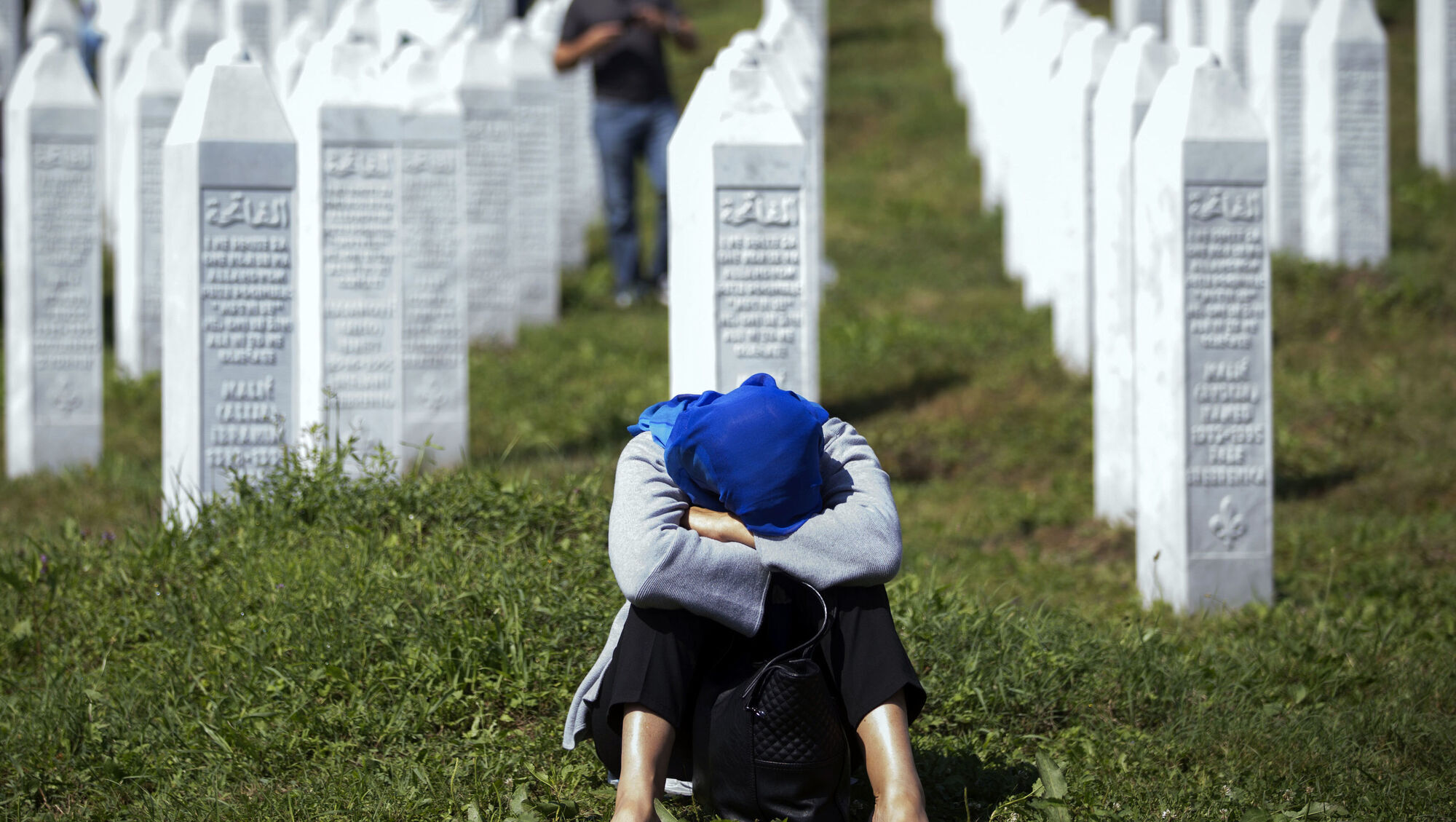
The memorial cemetery of 33 victims of the Srebrenica massacre of 1995 — a human rights catastrophe similar to what is occurring currently in Gaza. Picture: Darko Bandic/AP
The sense of powerlessness is overwhelming when it comes to Israel’s genocide in Gaza.
Tens of thousands of Palestinians are simultaneously mourning the deaths of children, family, and friends — having been rendered homeless by artillery strikes — and many are now forced into starvation.
The UN has said that 14,000 babies could die within 48 hours without meaningful access to aid.
This is on top of at least 53,000 reported deaths so far, and the almost total devastation of civilian infrastructure. Gaza is a man-made catastrophe.
Meanwhile, the Israeli government operates with total impunity, in flagrant violation of international law, emboldened by its American allies. It does so while shamelessly labelling any criticism as antisemitic, a quite effective way of shutting down dissent and avoiding responsibility.
As we sadly saw with the horrendous murder of Israeli diplomats in Washington DC last week, antisemitism is still prevalent, and all forms of discrimination, intolerance, racism, and xenophobia must be consistently denounced.
However, the misuse of the term against all critics of Israeli state policy is an act of political cowardice by a state that is knowingly punishing an entire population and deliberately unravelling international humanitarian law. Its minimalist offer to allow a trickle of aid into Gaza in recent days, as it steps up its ground offensive and evacuation orders, is indicative of its dehumanisation of Palestinians and weaponisation of humanitarian assistance.
The Food and Agriculture Organization reported that the ongoing constraints on humanitarian food access in Gaza risked deteriorating into catastrophic famine. The entire population of Gaza is now facing high levels of acute food insecurity, with 500,000 people (one in five) facing actual starvation — despite aid trucks lined up at the border ready to enter and relieve some immediate suffering.
If this were a movie plot, it would frankly seem too morally repugnant to be credible.
However, this isn’t fiction. It is the lived reality for more than 2m people, half of whom are children. These children, powerless to change their fate, will carry unimaginable trauma for the rest of their lives.
The world lamented that more wasn’t done to prevent the Srebrenica massacre in 1995. Yet we have watched — with a mixture of apathy and outrage — the systematic bombardment of a trapped Palestinian population by one of the world’s most advanced armies for over 18 months. It is just not credible to say nothing more can be done.
More can be done by all of us, if we choose to do so.
Every voice and action counts when humanity is faced with a genocide. Those with public mandates, influence, and economic leverage have a special kind of responsibility. There is a fine line between individual perceptions of powerlessness and complicity. The failure by the Government and Oireachtas to progress the Occupied Territories Bill is pushing Ireland across that line.
In July last year, the International Court of Justice declared Israel’s presence in the occupied Palestinian territories to be unlawful and obliged all states not to “render aid or assistance in maintaining the situation”.
It is obvious that enabling trade with those businesses present in occupied territories is directly contributing to a continuing illegal situation. Progressing the bill is an unconditional international legal obligation and an urgent moral necessity.
It is the very least we can do, and further delays are unjustifiable. Yet, the Government has done more than most.
It has shown admirable political leadership by eventually recognising the state of Palestine in 2024 and consistently speaking out about the deteriorating situation in Gaza.
It has provided humanitarian aid and facilitated some medical evacuations. It has absorbed absurd criticism by Israeli politicians with stoic maturity, maintained a steadfast position in favour of humanitarian access; contributed to legal proceedings; and championed efforts for UN Security Council reform.
We must be relentless in the pursuit of justice, for the sake of international peace and security. This should include sanctions against Israel in the short term. Those who choose to wilfully commit gross violations of international law must also be held accountable, politically and legally.
The International Criminal Court requires our full support in this regard.
This October, we will mark the 80th anniversary of the UN — in a year overshadowed by the abject failure of the UN Security Council; delayed and deeply inadequate international political responses to Israel’s genocide; as well as to other conflicts such as Ukraine, Sudan, and Ethiopia. The system of international law is imperfect, but it remains our bulwark against injustice.
Ireland has a crucial role to play in rebuilding trust and effectiveness in that system. It has the power to do so, but does it have the courage?
- Dr Andrew Forde is an assistant professor of European human rights Law at Dublin City University and a member of the Dublin European Law Institute


CONNECT WITH US TODAY



Be the first to know the latest news and updates