Mick Clifford: Government needs to come clean on housing numbers
In a housing crisis, information should be power — but murky statistics and unanswered questions are blocking public understanding
Mick Clifford: Government needs to come clean on housing numbers

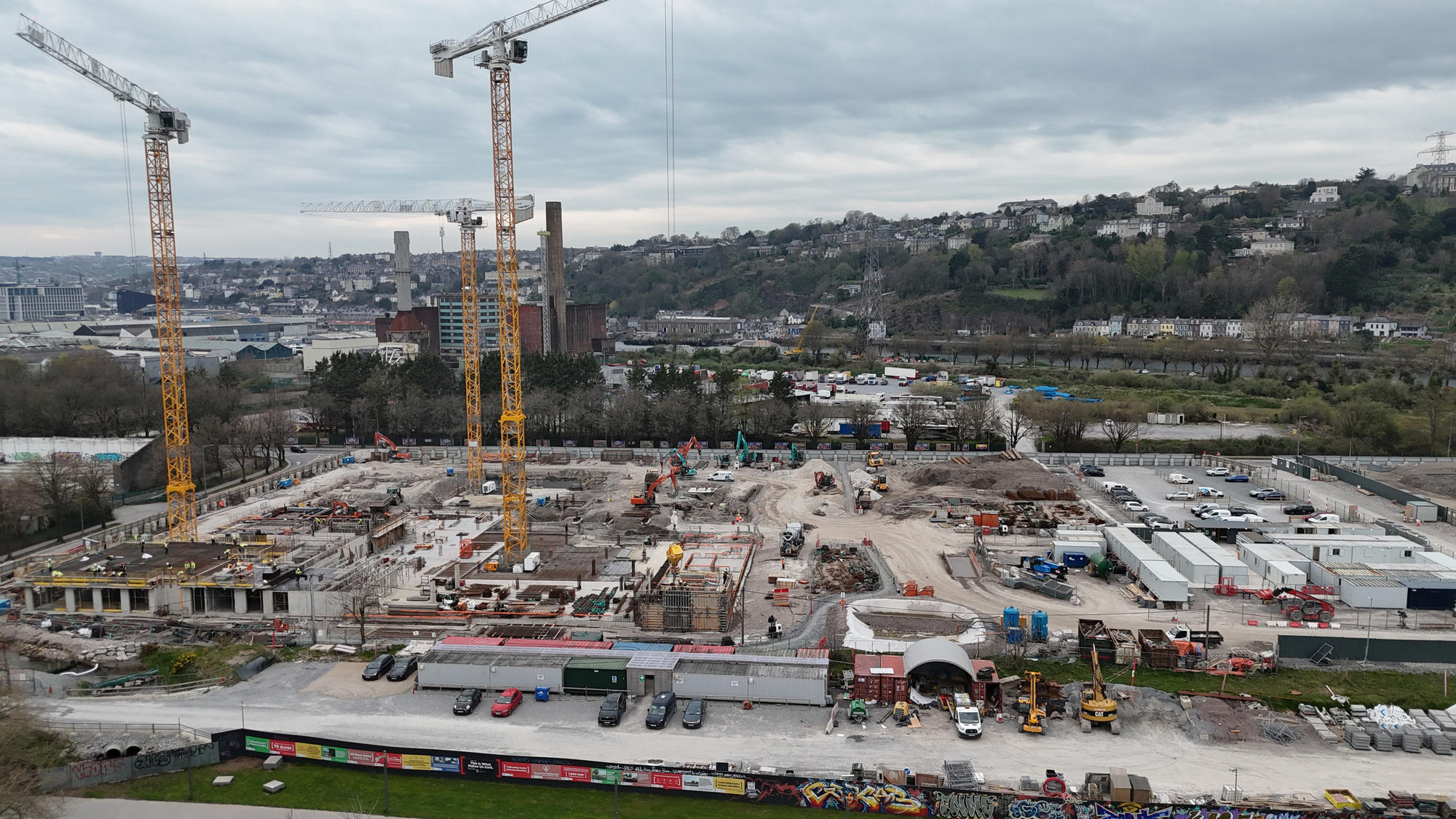
The first apartments at Cork City’s Marina Quarter are due to come on stream early in 2027, as part of an estimated €525m development of more than 1,000 homes. Picture: Larry Cummins

Numbers are potent in politics. Numbers are easily presented, easily understood. So we have a big emphasis on matters like the number of gardaí who are employed by the State. More recently, we have been getting numbers on how much crime has been committed by people who are out on bail.

Numbers in both these issues don’t tell a full picture. How exactly gardaí are deployed is as important as how many are employed. Policing with smarts is much better than having a bumped-up complement who are not being used to the best effect.

Similarly, numbers concerning the amount of crime committed by people awaiting trial can be wholly misleading. One person could be, and often is, responsible for multiple crimes.

The nature of the crimes is also telling. A person out on bail engaging in serious assault or robbery is categorised in the same way as one who has been stopped for driving without a tax disc or a minor public order incident.

But numbers provide headlines, whether it be from Government bigging up their performance or opposition attacking the lack thereof.

In one area right now, numbers are more than just a potent political weapon

Housing is the great political issue of today. On one level, it can be measured simply by how many houses are being built and put into use.

The now notorious election pitch that 40,000 homes were or would be completed last year shows how massaging can go on — even when dealing with an easily measurable quantity.

Only after the election, and following the replacement of Darragh O’Brien as minister at the time, did it emerge that the real figure was a mere 30,300, which reflects very badly on the Government.

Things haven’t improved much since.

On Monday, the Department of Housing published data showing that the number of new homes applying for commencement notices this year is at its lowest level since 2016.

Just 3,945 notices were lodged with local authorities, compared to 30,689 for the same period last year. There was an extraordinarily high number of notices last year as builders rushed to get a notice in order to avail of a waiver in development levies before the deadline for ending the waiver.

That still doesn’t explain why the notices this year are even lower than in 2022, or right through the slowdown of the covid years. The numbers are stark and clear

Not so clear are the numbers provided by the department for its Social Housing Construction Projects Status Report Q4 2024. This 460-page report is supposed to tell you exactly how many and what kind of social housing was built or purchased in the year of our Lord 2024.

Before entering it, one would need to acquire snorkelling gear and leave word with a loved one that — if you’re not back in six hours — they should call the emergency services.

Architect and housing analyst Mel Reynolds went to the trouble of taking it apart and putting together a short analysis of what exactly the figures mean.

In particular, the presentation would give the impression that social homes are being built by local authorities when, in fact, they are turnkey acquisitions.

On one level, a home is a home.

However, in terms of policymaking, this is supposed to be the kind of data used to inform new directions.

Reynolds wonders whether the opaque presentation was done by accident or design.

“What they don’t do, and should do, is provide a detailed breakdown where you can see what is the waiting list in each local authority, and then that can be seen in light of the housing presented,” he says.

“When you talk to councillors, they don’t know what the breakdown or what’s being produced, and that’s because of how it is presented.

“They don’t make it easy at all.”

Then, we have the scenario where simply no information — to which the public nominally at least have a right — is produced at all.

This week the Irish Examiner reported on how Sinn Féin’s housing spokesperson Eoin Ó Broin felt compelled to make a complaint to the ceann comhairle over the failure of the minister to answer parliamentary questions.

The questions related to how many social and cost-rental housing projects have received funding since the Cabinet announced in mid-February that €450m was being released. There had, since September 2024, been a large backlog running into at least 3,000 units of such projects which had approval but had to wait on funding.

The minister’s replies to Ó Broin went around the houses rather than providing numbers of them. Ceann Comhairle Verona Murphy has determined that Ó Broin is correct, and she is now examining the issue.

The question remains: Why?

Why, when housing is in crisis, do we have a Government — both elected and permanent — that prefers to play ducks and drakes with vital statistics?

The matter is way too important to be reduced to either a weapon or a tool, depending on who is wielding it, to further political agendas rather than coming clean with the full story.

As Enda Kenny once famously — or infamously — said: “Paddy likes to know.”

x

More in this section

Revoiced

Newsletter

Sign up to the best reads of the week from irishexaminer.com selected just for you.

Cookie Policy Privacy Policy Brand Safety FAQ Help Contact Us Terms and Conditions

© Examiner Echo Group Limited