Grace Callaghan: My scoliosis scars are a testament to strength and resilience
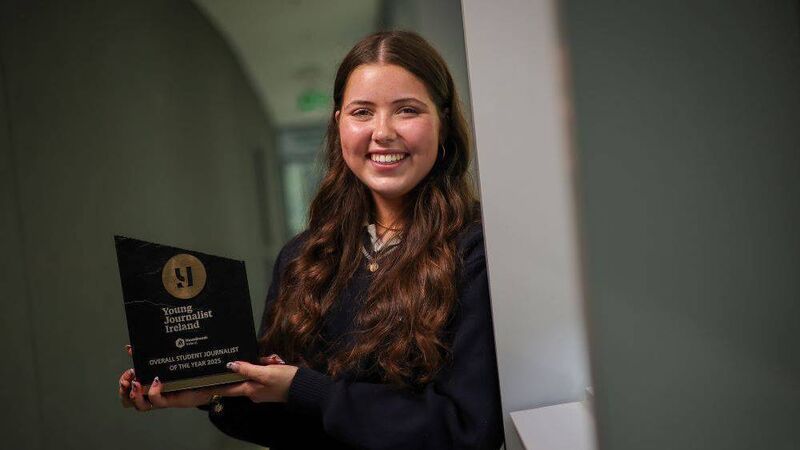
Grace Callaghan was named the winner of the Student Journalist of the Year award in the Young Journalism Awards organised by NewsBrands Ireland.

IT WAS a cold November day, sitting in the Crumlin hospital room as we stared at the photos of my spine.
The curve of my spine at 63 degrees. It was a shock to the system to see a photo of it like this. It made it seem all too real. Listening to all the questions my parents were asking, but when it was my turn my mind went blank. On the way home I googled the surgery. What popped up was no less than terrifying.
But here I am today, nearly two years post-op after a long journey of recovery and learning to embrace my scars.
Scoliosis is often perceived through a narrow lens — as a medical condition that causes the spine to curve sideways, an ailment that many people associate with discomfort and distress. However, for millions of individuals worldwide, scoliosis is not just a condition to be managed: it’s a journey of resilience, transformation, and ultimately, empowerment.
For those living with scoliosis, such as myself, the physical aspect of the condition — from the twisting of the spine to the visible scars left behind by surgery — can be a constant reminder of the trials we’ve faced. Yet, there is an overlooked beauty in the scars left by this journey. These marks are symbols of courage, of survival, and of triumph over a condition that often requires not only physical strength but also mental and emotional fortitude.
Appointment after appointment. Physical therapy. Back braces. Pain. Surgery. More physical therapy.
You name it, I’ve been through it. Scoliosis can manifest at any age but is mostly diagnosed during childhood or adolescence. I discovered at the age of 12 that I had the condition after getting injured in a camogie match. The curvature of the spine can range from mild to severe, and while some cases remain manageable with physical therapy and braces, others may require invasive surgery to prevent further damage and alleviate pain.
This was the path that I took, after multiple doctors’ appointments to confirm this decision. These surgeries often involve the implantation of rods and screws to straighten the spine, and the process leaves patients with visible scars.

However, what many people should realise is that scoliosis is not just a physical challenge: it is an emotional and psychological one too.
For adolescents, in particular, the impact on body image can be significant. The appearance of the back, the way clothes fit, and the perception of ‘normality’ can all affect self-esteem. Many young people with scoliosis experience bullying or teasing, and the mental and emotional toll can be just as heavy as the physical discomfort.
For those who have undergone surgery or intensive treatment, the scars that remain on the body can evolve from symbols of struggle into marks of pride.
Looking in the mirror after going through probably the biggest surgery I’ll ever have was hard, but after reflecting on my journey and how far I had come, it only made me more confident that I would come out the other side stronger, and I was right. I am now the most comfortable in my body that I have ever been.
In a world obsessed with perfection, it’s easy to see scars as imperfections, something to hide or feel ashamed of. However, for those with scoliosis, these scars can be seen as evidence of strength, and of an unyielding will to live life fully. Each scar represents a moment in time where a person fought back against pain and uncertainty and came out the other side stronger.
In a society where external appearance often defines self-worth, it’s important to challenge the conventional standards of beauty and strength. Beauty is not confined to flawless skin or perfect symmetry — true beauty lies in authenticity, in embracing the part of ourselves that makes us unique.
Scoliosis scars are a testament to this authenticity.
The reality is that these scars are not something to hide.
They are a part of who we are, a physical representation of our journey. A single, long scar down the back after scoliosis surgery can tell a story of resilience — of navigating endless doctor’s appointments, wearing a back brace for years, and enduring the anxiety of surgery. Yet, these same scars become a point of pride as they reflect the success of treatment and the determination it took to get there.
In a world obsessed with perfection, it’s easy to see scars as imperfections, something to hide or feel ashamed of
Take Princess Eugenie, for example, as she showed off her scar with pride after wearing a low-backed wedding dress. She said at the time, “I think you can change the way beauty is” and that her showing her scars was “a way of standing up for young people who also go through this”. This was a groundbreaking testament to all those who may be ashamed of their scars.
Headlines such as “Fiercely private Princess Eugenie breaks her silence about scoliosis battle in rare social media post” show us that although she is a private person, she felt that this was a critical topic to speak out on.
Another scoliosis ambassador is Aimee Connolly, Irish influencer and entrepreneur. She openly talks about how ”corrective surgery enabled her to live a full and active life”. This is such an important message to send to young people as she uses her platform for good.
To be proud of your scars is to accept your body and all it has been through. It is a declaration that you will not let a condition define you, nor will it make you feel ashamed of the marks that symbolise your journey. The power in embracing your scoliosis scars lies in the freedom to embrace beauty and strength on your own terms.

One of the greatest gifts that comes from living with scoliosis is the community you become a part of.
There is an unspoken bond between those who have walked this path — a shared understanding of the trials and triumphs, of the ups and downs, and of the scars that tell the story of resilience. I have met so many new and amazing people who have had similar experiences with scoliosis and this has also been a crucial part of my journey, helping me heal in the mental aspect rather than the physical.
As more people with scoliosis step into the spotlight and share their stories, there is hope that the stigma surrounding the condition will continue to diminish. It is time for society to embrace the beauty of these scars and to recognise that strength and beauty are not defined by perfection but by the ability to rise above adversity. This is also what I hope to do with this article. I feel that reading about other people’s experiences helped me embrace my scars.
In the end, the scars left by scoliosis are not just physical. They represent a deep emotional and mental strength that should be celebrated, not hidden. To walk proudly with scoliosis is to honour the journey, to recognise the courage it takes to face daily challenges, and to love yourself — scars and all.
Wear your scars with pride. They are a mark of your resilience, your growth and your incredible strength. Embracing them as a unique part of you will build your self-confidence and help you live life to the fullest.
Grace Callaghan is a student at Pobalscoil na Trionóide, Youghal. She won Overall Student Journalist of the Year 2025 at the recent Young Journalist Ireland awards.
CONNECT WITH US TODAY
Be the first to know the latest news and updates