Paul Hosford: Not even the penguins escape Trump's tariffs
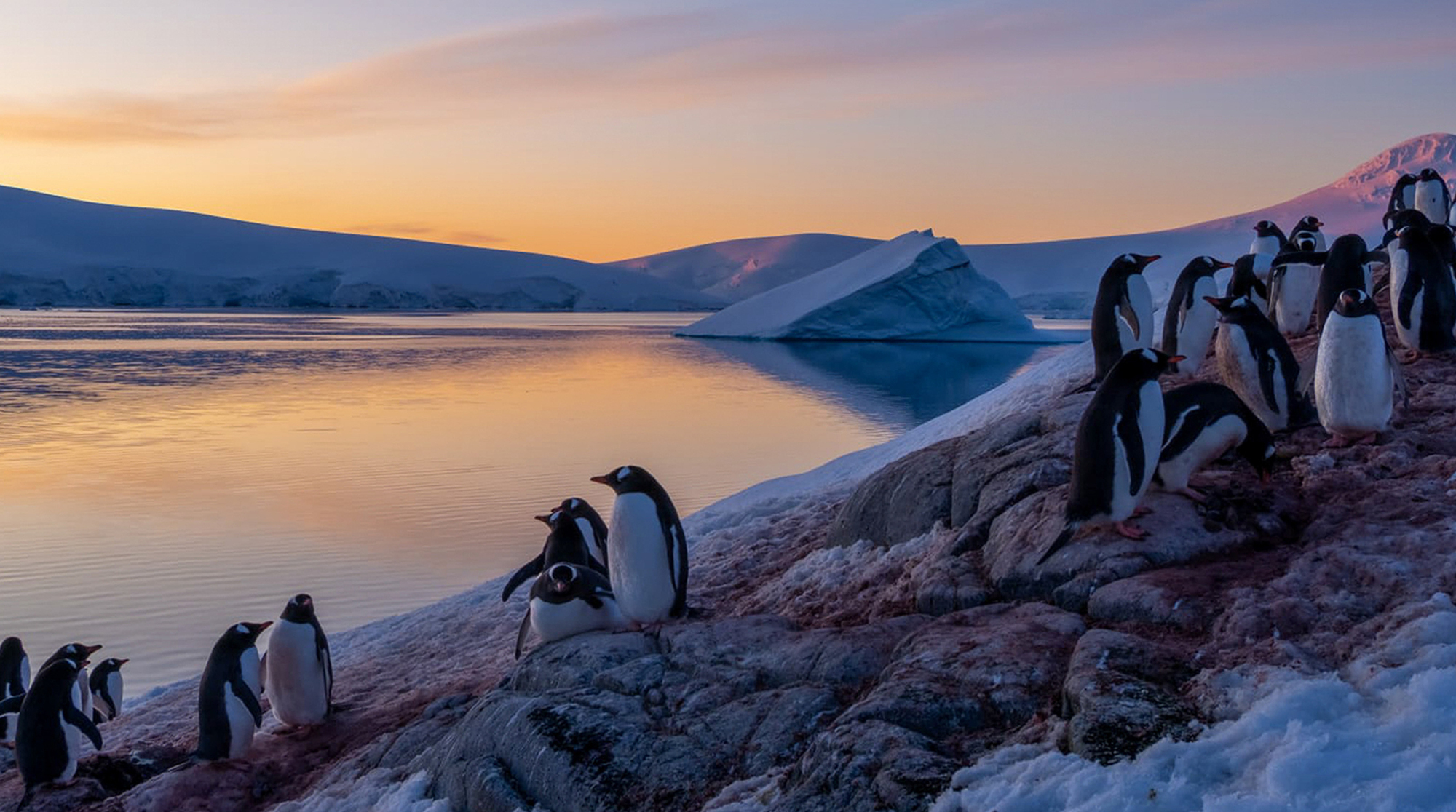
The territory of Heard Island and McDonald Islands in the Antarctic is not inhabited by any humans, so it is uncertain what products it could export to the US that could attract any of Donald Trump's new suite of tariffs. File picture: Jerome Viard/UKAHT/PA
Penguins aren't known for their trading capabilities.
They generally focus on more immediate concerns, like catching fish, or gifting stones to prospective mates.
But in the brave new world of Donald Trump, even those penguins will find themselves hit with tariffs if they try to export products to the US.
Mr Trump's announcement that his country will impose sweeping new tariffs of at least 10% on global imports has the potential to upset not just the global economic order, but very many real lives.
Included on the tariff target list is a group of barren, uninhabited, volcanic islands near Antarctica, home only to glaciers and penguins.
The residents of Heard Island and McDonald Islands are no doubt all aflutter after hearing that their home — accessible only by a 10-day boat from Perth, Australia — is included on the list of countries to face America's tariffs.
Indeed, a 10% levy has also been imposed on the British Indian Ocean Territory, home only to US and UK military service members at the Diego Garcia US Air Force Base.
Trump has made clear that nobody is safe.
While he spoke of having some form of respect for countries who had "stolen" American industries, he promised to levy tariffs on friend and foe alike.
He has been clear in the past that he views Ireland's pharma industry — a key driver of both exports and corporation taxes here — as stolen.
While Ireland was not singled out in Trump's speech that should not be taken as a major positive and there is acceptance in Dublin that further measures are coming.
Mr Trump's performance was typically performative, but there was also a kernel of truth to what he said.
America no longer makes enough antibiotics to treat its people, he told the audience.
Its cars are not bought abroad by its citizens who drive Japanese and German motors.
When Trump railed against adversaries, like China, and traditional allies, like Canada and Europe, on the global trade practices to "steal America's wealth", there is an understandable point there.
America has long given more favourable terms to its trading partners than it gets in return.
But, as has been pointed out by numerous trade experts, Trump's claims go both ways and the true size of the tariffs paid on both sides is far lower than he claimed.
In Canada's case, Trump has likened it to having China's trade barriers to US goods when it is, in fact, extremely open to US goods, bar a few sectors.
When Trump raged at the loss of manufacturing from the US, he never once criticised the companies that had moved factories abroad for cheap labour.
America has lost tens of thousands of factories and the relative size of manufacturing as a part of the US economy has shrunk, but Trump has never pointed the finger at companies who fled to places where workers are paid a pittance.
Likewise, Trump did not mention a major elephant in the room: The flood of imports into the US market has largely made things cheaper for US consumers.
When Simon Harris meets with EU trade ministers in Luxembourg on Monday, they will seek to pull together a co-ordinated response at EU level to Trump's announcements.
But, while all 27 countries will face the same storm, the shelters and boats vary.
For Ireland, there will be much focus on how pharmaceuticals are handled, but also about how the EU responds to US tech firms.
Should the EU attempt to make tech firms a target for tariffs, Ireland could be impacted more than most.
The Irish Farmers Association has already warned that the difference between the 20% tariff being imposed on the EU and the 10% being levied on the UK will mean exporters here are less competitive in the US market.
Kerrygold butter, for example, is the second best-selling butter brand in the US but will now be 20% more expensive overnight.
The Irish Whiskey Association has said the impact will be immediate on its products too.
Throughout his speech, Trump said that he was giving a tariff discount of some goods because he is "so kind".
For large portions of the population, waking up to an upended global order, it certainly doesn't feel that way.
Read More
CONNECT WITH US TODAY



Be the first to know the latest news and updates