Cork city rose to the occasion during covid, but is starting to lose its shine
How we use our city and town centres changed a lot during the pandemic — and they haven't fully recovered
Cork city rose to the occasion during covid, but is starting to lose its shine

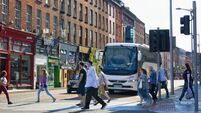
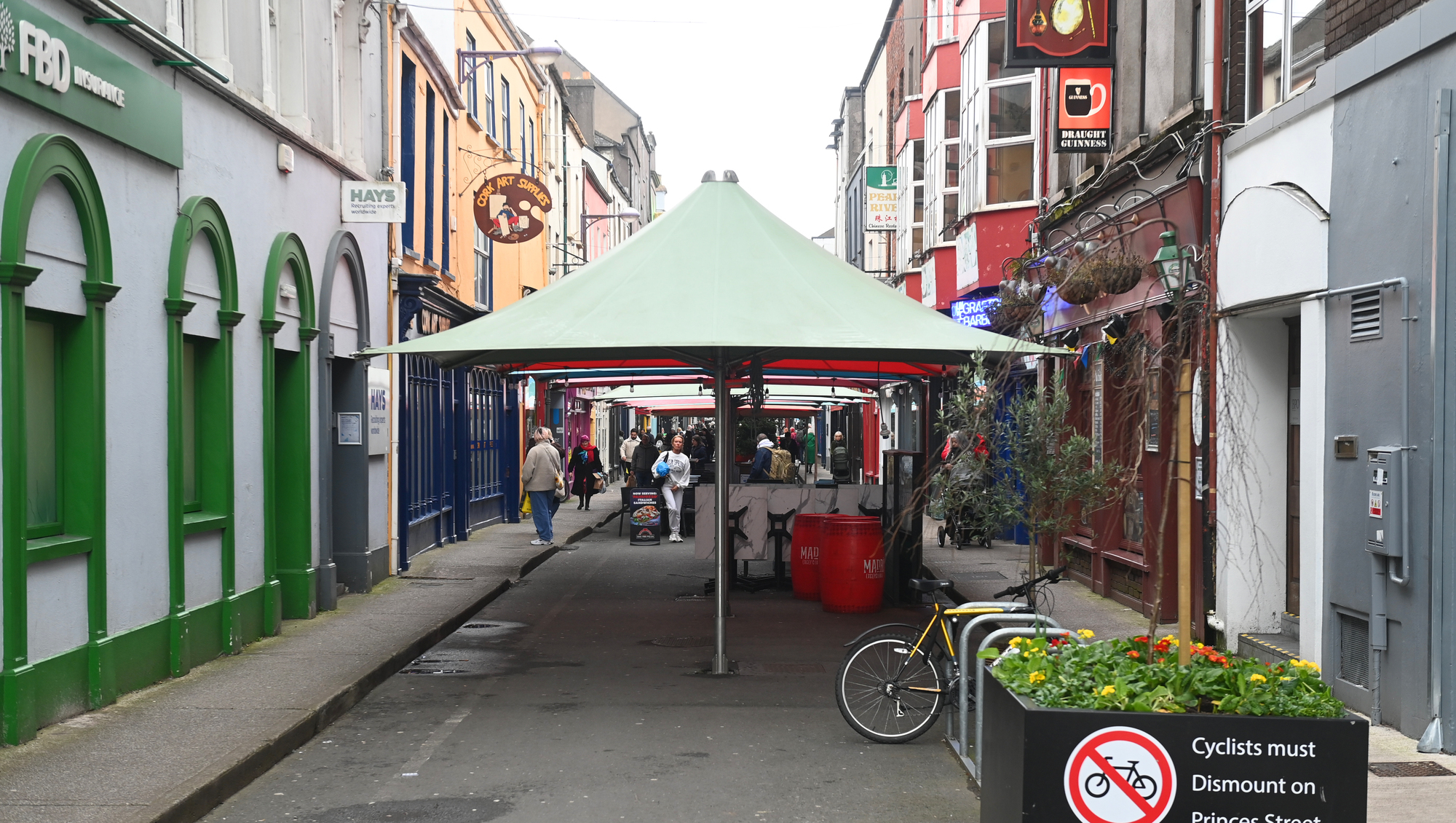
Princes Street in Cork City has lost some of its vigour since its outdoor amenities were installed during the pandemic. Picture: Larry Cummins

Two years out from the most significant global health scare in a century, what are the consequences of covid on the wellbeing of Irish towns and cities?

Cork is generally perceived to have had a good covid. The city embraced public dining and increased pedestrianisation. In contrast, the narrative in Dublin is of the capital abandoned to antisocial behaviour and fighting a rear-guard action to win back civic control. The recent Dublin task force report noted that ‘every stakeholder group reports that Dublin feels less safe, is heavily littered, and visibly rundown’. Is the future Mean Streets or Emily in Paris?

Speaking to Cork Healthy Cities coordinator Denise Cahill, she said the stark inequalities highlighted and exacerbated by the pandemic have not gone away. The most vulnerable in our urban communities continue to show markedly negative mental health, housing, and educational impacts compared to wealthier citizens. 

These challenges are complex, often chronic, and requiring inter-agency responses.


It’s ironic that two of the most celebrated covid inspired place-making schemes in the country are located in the wealthiest suburbs — the walking and cycling transformations of the Marina in Cork and in Dun Laoghaire/Sandycove. A New York High-Line style approach to urban generation can’t just drive gentrification. Every suburb should have a High-Line.

What do we know of Irish towns and cities in 2025? Dublin Town CEO Richard Guiney, drawing on detailed economic and consumer data collected by the business lobby, noted that “the headline facts are that footfall is down 13% during the week, due to increased working from home, but unchanged at the weekend. Fear of crime is markedly up amongst older people whilst recorded crime is actually flat.”

Their perception surveys reveal surprising and encouraging findings as to why people are heading ‘into town’. “Shopping is but fifth on the list. People are coming in for a meal, to gather with friends, or to meet for a pint”. Anecdotally, given an almost complete absence of data, these findings map to Cork.

Cork on a Fork attendees enjoy outdoor dining in  newly-pedestrianised Princes St in 2022. Picture: David Creedon

Is this where the city stole a march on the capital? The council pedestrianised 17 city centre streets and redesigned Princes St, near the English Market, with a much photographed al fresco focus. The Cork on a Fork Festival was created to celebrate the city as a gastronomic mecca. This is a status it might justifiably claim and should embrace and pursue rather than the ‘real capital’ nonsense.

The standout event was the McCurtain St shared-table experience for four hundred diners hosted by the diverse excellence of the Victorian Quarter’s restaurants and bars.

But marketing isn’t enough. Properly funded urban management and capital investment must be the order of the day. Princes St has since fallen from its perch. January 2024 saw the much-lamented closure of the cosmopolitan Nash 19 due to the exhausting financial pressures of running a restaurant in Ireland. 

The rainbow umbrellas and street seating design are starting to look shabby. The rightly celebrated redesign of McCurtain St is diminished by the illegal pavement parking that is allowed flourish in contradiction of the accessible and welcoming city it is meant to celebrate.

The elephant in the room of Irish towns and cities is that Ireland has the weakest local authority structure in the EU. Indeed the very need for a Dublin task force, no mind how sensible its findings, is symptomatic of the failure of urban governance in this country to deal with the scale, complexity, and investment requirements of the modern city. 

Whereas French cities with a population of over 150,000 have or can expect to see the implementation of multiple tram lines, Cork may well miss the boat again for a generation if recession looms its ugly head. Private wealth, public poverty?

There is a parallel here in the office market. Whether you are in Cork, London, or Sydney you will hear of the much heralded ‘flight to quality’. 

Basically, if you’re going to entice highly mobile ‘talent’ (that awful word) back to the office, it pays to kit it out like a 5-star hotel with grade-A environmental credentials. Penrose Dock and Navigation Square in Cork’s docklands are exemplars in this regard. But it may well leave for dust the traditional Georgian business district in South Mall. Might not the State partner with private owners to refurbish these beautiful heritage properties as homes in the very heart of the city?

A bustling Cork City street during Cork on a Fork in 2022.  File picture: Joleen Cronin

For too long we’ve treated our cities as glorified shopping centres or mono-cultural business districts. 

Indeed, this article, with its focus on Dublin and Cork, is symptomatic of the wider societal neglect of the character and potential of Irish towns. What of the future for Miltown Malbay or Longford town? Empty historic and storied villages in an age desperate for neighbourhood and community? Vacant and derelict shops and homes in a housing crisis?

We don’t celebrate our towns or cities in Ireland on stage or screen. An articulation of a new narrative is key to how we might reimagine the future, given that some 60% of us live in towns.

In this I turned to Cathal Mulry, director at A Playful City and UCC lecturer in urban design futures. He cited the ‘Reimagining Sheriff Street Park’ project as showing “how community-led, co-created changes to the public realm can positively impact the people of the community. By embracing a collaborative approach, underutilised areas can be transformed into dynamic, inclusive, and engaging public spaces.”

The Dublin task force recommended the “total regeneration of social housing complexes in the city centre”. That would mark a radical change to Irish urban policy. Cities with happy children, running free in high-quality playgrounds, watched over by well-housed grandparents, in thriving, green and safe neighbourhoods is a future worth investing in. In Dublin, in Cork, in Miltown Malbay.

  • Shane Clarke is the CEO of Garden City Culture

Your home for the latest news, views, sports and business reporting from Cork.

More in this section

Revoiced

Newsletter

Sign up to the best reads of the week from irishexaminer.com selected just for you.

Cookie Policy Privacy Policy Brand Safety FAQ Help Contact Us Terms and Conditions

© Examiner Echo Group Limited