Weight-loss ‘wonder drugs’ show a darker side as some fall into illness
Incorrect use of drugs such as Ozempic or Mounjaro can carry a big risk, writes Liz Dunphy
Weight-loss ‘wonder drugs’ show a darker side as some fall into illness

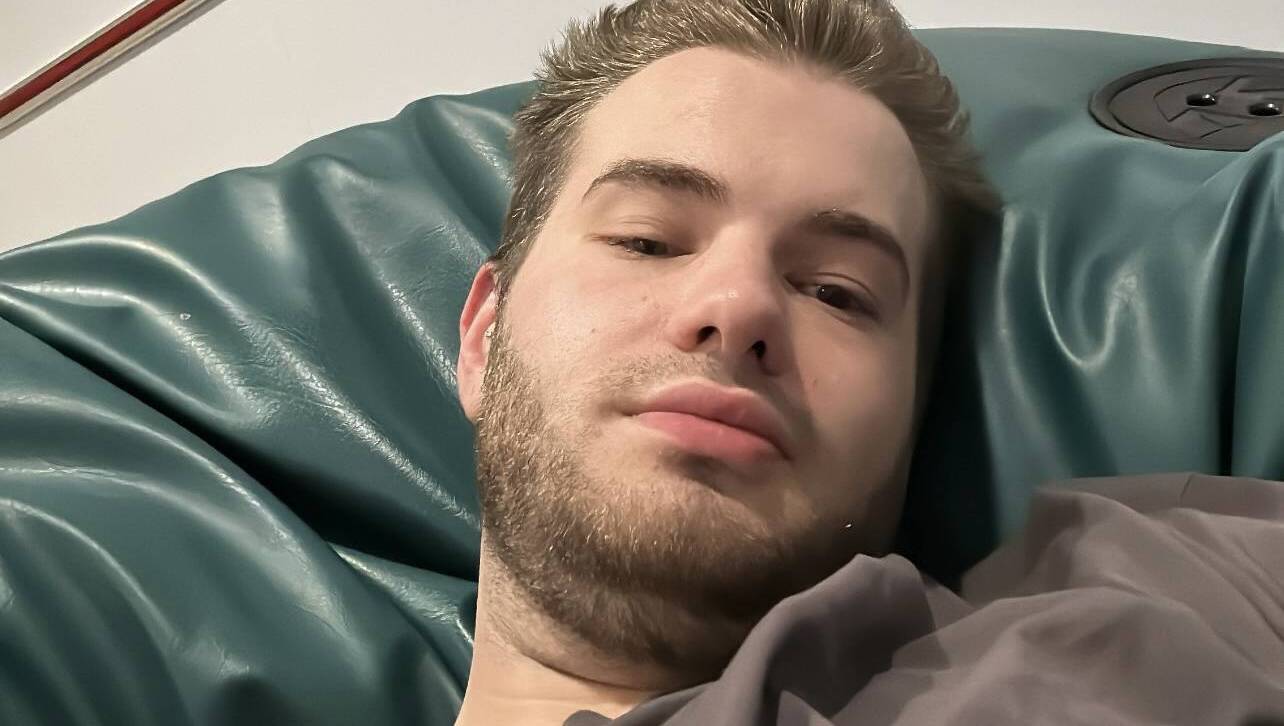
Georgie Aldous, an activist, model, and influencer who is campaigning for tighter regulations around the prescribing of tirzepatide, sold as Mounjaro,  after he became extremely unwell on the drug. 

‘Wonder drugs’ like Ozempic, hailed by celebrities and some medics as a cure for an ever-mounting list of conditions, most notably obesity and diabetes, have started to appear in darker headlines linked to death and disease.

In January, a grandmother in Cork died after vomiting so much on the drug that her blood pH balance became “profoundly” disarrayed and triggered organ failure less than three months after starting it.

Singer Avery took to social media in recent days to say that she developed osteoporosis age 30 after taking a drug for weight loss — something it is not licensed for and which she bought online without a prescription — after allegedly being dropped by a record label for being too fat.

Ozempic is medicine for adults with type 2 diabetes. It is not licensed for the treatment of weight loss. Picture: Steve Christo/Corbis/Getty

"Please please please be careful with Ozempic if you are not someone that needs to take it (it is only meant to treat diabetes and obesity),” she urged fans. “I’ve done a lot of damage to myself."

“I DO have an eating disorder, and I did NOT get Ozempic from a doctor. It is very easy to get now days, and many people with eating disorders are getting their hands on it.” 

Ozempic is not licensed for the treatment of weight loss.

Georgie Aldous, activist, model and influencer is now campaigning in the UK to make regulations stricter around the use of these drugs after he ‘thought he was going to die’ while taking the drug on prescription.

The drug is a glucagon-like peptide-1 (GLP-1) — a hormone that is produced and secreted by the intestine and the brain upon food consumption.

GLP-1 products include medicines that contain semaglutide, liraglutide and tirzepatide.

Unregulated, online sales are a problem. The Health Products Regulatory Authority (HPRA) which regulates drugs in Ireland detained some 1,469 units of illegal GLP-1’s by the end of November 2024. This compares to 568 units in 2023 and just 40 in 2022.

In 2024, up to November 30, 456 URLs linked to GLP-1 products were removed or amended, more than double the 172 URLs removed or amended in 2023, the HPRA said.

The HPRA also issued health warnings about the use of GLP-1 medicines, including semaglutide, liraglutide and tirzepatide — sold illegally online.

But the drug is also popular through legal channels.

Latest figures from the HSE as of October 2024 show it received 5,149 Semaglutide claims on the General Medical Services Scheme (GMS) and 30,207 Semaglutide claims on the Long Term Illness Scheme (LTI).

In Ireland, Semaglutide 1mg (Ozempic®) is licensed and reimbursable for Type 2 Diabetes, not obesity management, the HSE said.

Professor Carel le Roux, Irish Society for Clinical Nutrition and Metabolism president, who also sits at international advisory boards with pharmaceutical companies which manufacture these drugs, said there are currently too many dangerous misconceptions about their use.

But once used correctly, these drugs are incredibly safe and can be lifesaving, he said.

These medications are very effective for treating obesity but they should not be used for weight loss, he said.

And side effects — such as nausea — are not what cause the medication to work, he said.

“That has been shown scientifically in the major studies to be untrue," Prof le Roux said. “Patients who have vomiting do not lose any more weight than patients that don't have vomiting.

But what is happening is patients are so enthused by the concept that they will lose weight they will put up with almost anything. And that shows you how bad it is and how stigmatized a disease [obesity] is that they don't want to tell people they're having complications.

“We need to get the message out there that if you have complications, then most likely the dose of the medication is too high. Nobody should vomit on this medication. If you vomit, something is wrong and we need to fix it.

“We do these major clinical trials and about 70% or 80% of patients just fly up on the dose no problem. But about 20% to 30% of patients are sensitive as regards to the side effects."

The medicine can bring major benefits when prescribed correctly, he said.

“These medications reduce heart attacks by 20%, reduce kidney failure by 25%, reduce diabetes by 80%. That's why we use this. And you're not going to achieve any of those benefits if people only use it for six months and stop because they have side effects.

“But these are long-term medications for the rest of your life and we need to increase it gently, slowly so that you can tolerate it for the rest of your life."

He said the clinical advice is ‘do not increase the dose if you have any side effects’.

Medical supervision and dosage is vital for those prescribed the drugs for diabetes or obesity. 

“Weight loss has to do with how many fat cells you have under the skin. The treatment of obesity has to do with treating a disease that sits in the middle part of the brain that controls how many fat cells you have under the skin.


"For people who have the disease of obesity, the middle part of the brain is dysregulated and it wants you to carry a large amount of fat cells. This medication works by fixing that middle part of the brain called the hypothalamus and now suddenly the body wants you to carry two stone fewer fat cells.

“If patients think about it in the right way and if doctors think about it in the right way, these treatments are incredibly safe and effective.

“If you think about it in the wrong way and you use it in the wrong way, then tragedies will occur. Taking this drug you must feel healthier every step of the way.

“If you take a medication and you do not feel healthier, that medication is not working for you.

 “[Obesity is] a disease with so many complications. And by treating it really easily and effectively, we are able to prevent the complications, which are the things that kill people.

“There's nothing wrong with the medication. This is probably as safe as you can get, it’s a natural hormone — you have it in your body. All we do is give you more of the hormone. But if we use it in the wrong way then we can harm people.” 

Inquest into death of Breeda O’Donoghue

On Thursday, an inquest heard how a Cork mother-of-two died from total organ failure less than three months after starting Ozempic.

Breeda O’Donoghue, 66, from Carrigtwohill, suffered “profound vomiting” after increasing her Ozempic dose in line with her prescription which interfered with her blood pH level so acutely that she suffered organ failure and died.

Breeda O’Donoghue of West End in Carrigtwohill, Co Cork died on December 9, 2023 at Cork University Hospital (CUH) having been hospitalised three days earlier.

The family of the mother and grandmother have called for more awareness around the potential side-effects of the popular but relatively new drug.

Ms O’Donoghue was “struggling to lose weight” and was prescribed Ozempic by her GP on September 19, 2023.

She said she was doing well on the drug and was losing weight and her dose was increased in line with protocol. But she became unwell, “vomiting profoundly” and was hospitalised on December 6, 2023. She died in hospital three days later.

Pathologist Dr Margot Bolster said that Ms O’Donoghue died of total organ failure due to profound electrolyte abnormalities.

The body has a very precise pH level to maintain — a balance between acid and alkaline — for cells to function, Dr Bolster said.

Vomiting profusely changes the pH level in the blood and cells then cannot function properly and when the pH changes too much, a patient suffers complete organ failure.

Gastrointestinal side-effects are a well-recognised problem of semaglutide, Cork City Coroner’s court heard.

But neither the State laboratory, nor any other laboratories contacted, could check Ozempic levels in the blood in 2023 because the drug was still relatively new. 

Georgie Aldous — 'I thought I was going to die' 

Activist, model and influencer Georgie Aldous thought he was “going to die” while taking another of these medications called tirzepatide, sold as Mounjaro.

He is now calling for tighter regulation of the drug so that those taking it have more medical oversight, particularly when sold by legitimate online pharmacies.

Georgie Aldous: 'It's something I would never, ever want to go through again or anyone else, that's why I'm campaigning for stricter regulations [on tirzepatide, sold as Mounjaro].' 

Mr Aldous lost 3.5 stone over five months while taking Mounjaro which he bought from a reputable online pharmacy in the UK for £1,000 (almost €1,200).

When he ordered Mounjaro in March 2023, the screening process required him to show his ID and submit a video of himself standing on weighing scales. He chose not to inform the pharmacy that he sometimes binge-ate. 

Five hours after submitting the application, his request was approved.

For the next five months, Mr Aldous took weekly injections of the drug with his first dose costing £188.99.

But he became increasingly unwell until he was hospitalised with heart palpitations. He was suffering tachycardia — rapid heartbeat that is out of proportion to age and level of activity — and severe panic attacks.

“I thought I was going to die," he told the Irish Examiner

"I’ve always had issues with dieting and the view I have of food. A lot of that comes from pressures of society, having to be a certain way. 

"The gay community is very judgmental in terms of body image as well, so there's a lot of pressure all the time, especially in the field of work I'm in [social media and modelling]. 

"For the first few months it did work, it did what it was supposed to,” he said.

But he then started to feel very unwell. 

I felt weak and that I was going to faint all the time. I couldn't work out anymore, I was not eating a lot of food. I just felt very ill on it.

“You go up in 2.5 milligram doses every month if you want to. You don't have to but when you order it online, the pharmacy does say ‘do you want to move up the doses?’ And that's not really monitored as such by any doctor.

“I believe if they had done blood tests — I’m pushing for blood tests to be mandatory now — they probably would have seen that my body wasn't coping too well with it and they wouldn't have allowed me to go up a dose. But because they don't do that I did keep moving up and I was slowly making myself very, very ill.

Georgie Aldous says now of his strong drive to lose weight, leading him to take tirzepatide: 'The gay community is very judgmental in terms of body image.'

“I went to my doctor when I fell really ill and was having panic attacks and they told me I had a nutrient and vitamin deficiency. But they said it was not linked to the injections and I could carry on.

“I wish I didn't listen to that advice but I did. I told the online pharmacy and they told me ‘well follow your doctor's instructions and carry on’.

“So that's exactly what I did and I moved up a dose and that is when it rapidly went downhill. From that point onwards I had panic attacks, non-stop shaking. I had three trips to A&E in about 48 hours. I thought I was going to die.

“I've never had a panic attack before being on this.

“I'm very confident and outgoing I've never avoided people before. But I avoided plans when I was falling ill on that injection.

“I felt empty. I was like a shell of a person. 

“I went to A&E for the final time and they kept me in with tachycardia because my heart rate was through the roof for no reason.

“It does say on the medical records that it's from a side effect of the Mounjaro. 

“The hospital told me to take all these vitamins because I was low in folic acid, vitamin D, calcium. There were a lot of abnormalities on my blood results."

“I lost my mum to cancer a few years ago in that hospital so when I was in there I was crying saying 'I'm gonna die in here like my mum did'. It was very traumatic. 

It's something I would never, ever want to go through again or anyone else, that's why I'm campaigning for stricter regulations.

“I never slated the drug. I do believe if people need to take it, they can take it.

“But there need to be stricter regulations.

“I don't want the drug to be cancelled. I just want more checks for the people that are on it so they can stay healthy on this journey."

While on the drug, Mr Aldous would “eat very little”.

“Some days at work I would have a banana and a coffee for lunch because I had no hunger.

Towards the end, I was trying to force myself to eat but I was heaving.

The thought of food would make him nauseous.

“It’s like that feeling when you’re so full you can’t even look at food. And then you're so ill you don't want to eat because you're just so drained and sick.

“It was a nightmare but if I had a doctor properly monitoring me on a monthly basis that may have been different.” 

To get the drug from a reputable pharmacy online, Mr Aldous had to give them his weight and a video of him standing on the scales showing the weight.

But online forums advise people on how to trick this process, carrying weights so that the prospective patient looks heavier — and therefore more suitable for the drug — than they actually are.

“And they ask you about your diet and exercise. But it’s basic, I think there should be more questions about your mental health, about how you feel about your body and food.” 

The stigma that still exists around weight is very damaging, he said, and pushes people towards drugs like these as a quick fix.

How many people will it take to pass away before there is change? I wish people would think twice before doing something like this, unless it's entirely medically necessary.”

In Ireland, the HPRA has issued warnings about buying these drugs illegally online.

It said the demand for these medicines is being driven by their global promotion as products for weight loss, typically via social and other online media. 

"This trend is not specific only to the Irish market. The criminals behind the production of falsified and counterfeit versions of these medicines are also using social and online media to target individuals who are seeking the product for cosmetic rather than medical use. 

"The medicines purchased online or from other unregulated sources may be falsified, counterfeit and contaminated as well as being improperly stored and transported. This poses a significant risk to the health of those who use them."

"GLP-1 products are prescription only medicines, not authorised for short-term use and, as with all medicines, there are known side effects. 

"We urge the public to protect their health and to only use prescription medicines under the supervision of a trusted prescriber and to obtain product authorised for the Irish market from a registered pharmacy."

  • This article was originally published on February 1, 2025.


x

More in this section

Revoiced

Newsletter

Sign up to the best reads of the week from irishexaminer.com selected just for you.

Cookie Policy Privacy Policy Brand Safety FAQ Help Contact Us Terms and Conditions

© Examiner Echo Group Limited