'There’s no water, no power, no supplies, no food, no light, no life'
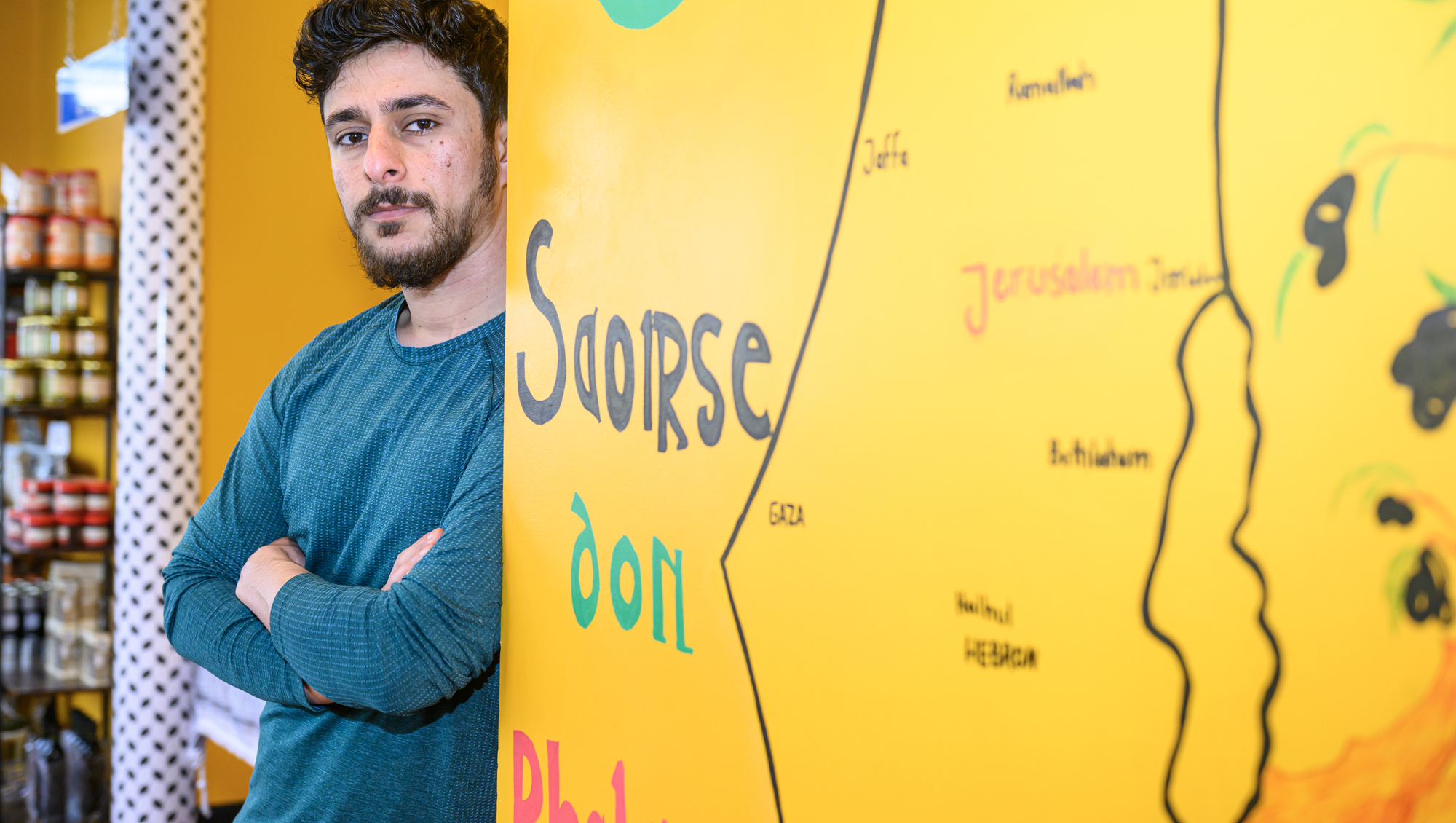
Habib Al Ostaz is looking for the Irish Government to help his family escape from Gaza. Picture: Dan Linehan
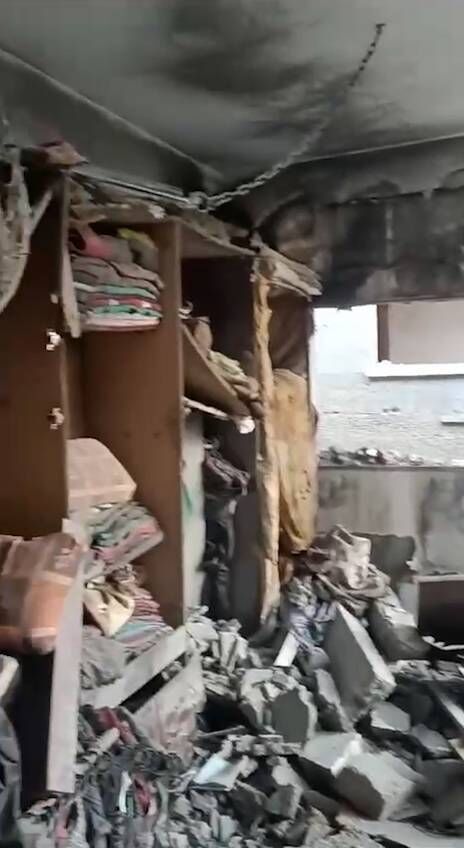
An empty missile shell lies amongst the rubble in Habib Al Ostaz’s mother’s bedroom in their badly damaged home in north Gaza.
His 21-year-old brother has returned to try to clear the mounds of rubble and make it safe since the ceasefire so the family can return after living as refugees for the past 14 months.
They have sheltered in cramped schools for many months with thousands of other hungry and terrified displaced Gazans. And many more months they have spent in tents, deafened by bombs exploding far too close to their flimsy tarpaulin walls.
Escaping Gaza was almost impossible, many Gazans have no passports and Israeli authorities trapped them in the warzone anyway, permitting very few to leave as bombs rained down on their homes.
Mr Al Ostaz and his brother had been living and working in Cork before the war broke out. He is studying in UCC and working in Izz café while waiting for a decision on his asylum application.
Despite repeat requests to the Irish Government to accept his family temporarily with visas for the duration of the war, with documentation to prove they could be housed and funded by their family here, the applications were never granted.
And with family members now very ill and no hospitals left to care for them, Mr Al Ostaz is very concerned for their survival.
But the ceasefire has brought some reprieve for now and a fragile peace to the region.
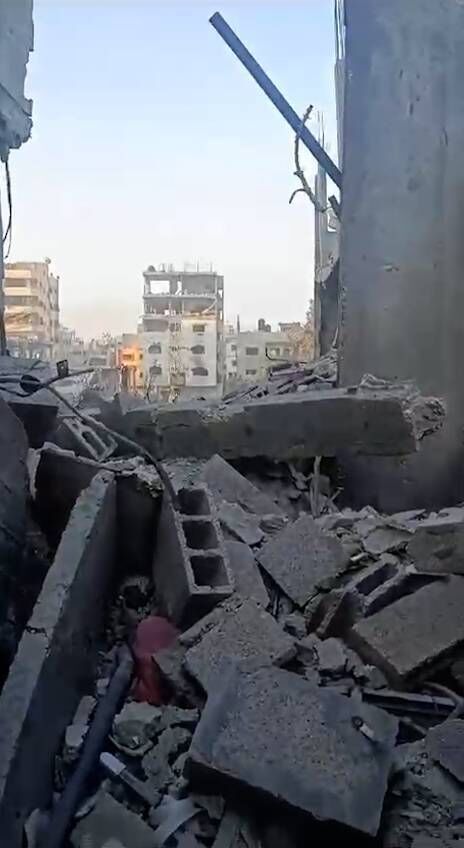
Shattered concrete, pieces of roofing and toppled concrete blocks now litter the floor of the Al Ostaz home.
The second floor of their house, once immaculately kept with comfortable textiles and well-tended plants, is now uninhabitable, with a large hole in the roof where a missile struck.
But the downstairs is salvageable, he hopes.
And the Al Ostaz family is lucky. Their neighbour’s house has been completely obliterated, giant piles of rubble, dangerously tilting slabs of concrete and shards of metal are all that remain from where their neighbour’s home once stood.
People’s bodies are likely hidden under some of the rubble in their neighbourhood. As is unexploded ordinance, making the clean-up operation not just difficult but potentially deadly.
“My brother went back to prepare the house, to clear out the rubble,” Mr Al Ostaz said.
“There’s no water there, no power, no supplies, no food, no light, no life. So many structures, so much infrastructure has been damaged.
“My brother was the only one who could walk there so he went alone.
“There’s more food in the south so the rest of the family stayed in Deir al-Balah in central Gaza.
“But they hope to go back in two weeks when my brother has removed the rubble,” Mr Al Ostaz said.
“I have been trying to call my brother to see how things are there. But there’s no connection.
"I’ve been sent videos of the damage though. It’s bad. But at least the war has stopped."
Mr Al Ostaz said it was impossible to know what it will take to rebuild his country.
“Some bombs are not exploded yet so that is a risk with the rebuilding.
“I heard that it will take 15 years just to remove the rubble,” he said.
Mr Al Ostaz is still waiting on a decision to grant him asylum or leave to remain in Ireland. A decision was due eight months ago but he has heard no news.
“I remain hopeful and I am doing all that I can,” he said.
After 14 months of bloodshed, a ceasefire began on January 19.
“It’s really hard to express your feelings [on the news of the ceasefire]. I didn’t feel happy or sad. It was mixed,” Mr Al Ostaz said.
“I’m sad about all the people we have lost, but happy that no one else is dying because of this war.”
But the war has sown deep seeds of anger and hate amongst Palestinians for all the lives lost.
“I can’t see a relationship between Palestinians and Israel now.
“Almost 50,000 people have been killed, that we know of so far. What can our relationship be after that?
“For us as a nation there’s no way to be in a relationship after that.
“We will never forget.”
US president Donald Trump's comments on moving Gazans to Jordan or Egypt since the ceasefire are "idiotic", he said.
Some 47,000 people have been killed in Gaza during the 14-month Israeli onslaught that has decimated large parts of the territory, although many more bodies may still lay undiscovered under rubble and collapsed buildings.
The bloody conflict was triggered by a Hamas attack on Israel that killed 1,200 people, according to Israeli tallies, and saw more than 250 taken hostage.


CONNECT WITH US TODAY



Be the first to know the latest news and updates