Clodagh Harrington: The honeymoon is over — can Harris keep up her momentum?
Voters in the US should ask themselves, which of the two candidates would they rather commit to on November 5?
Clodagh Harrington: The honeymoon is over — can Harris keep up her momentum?

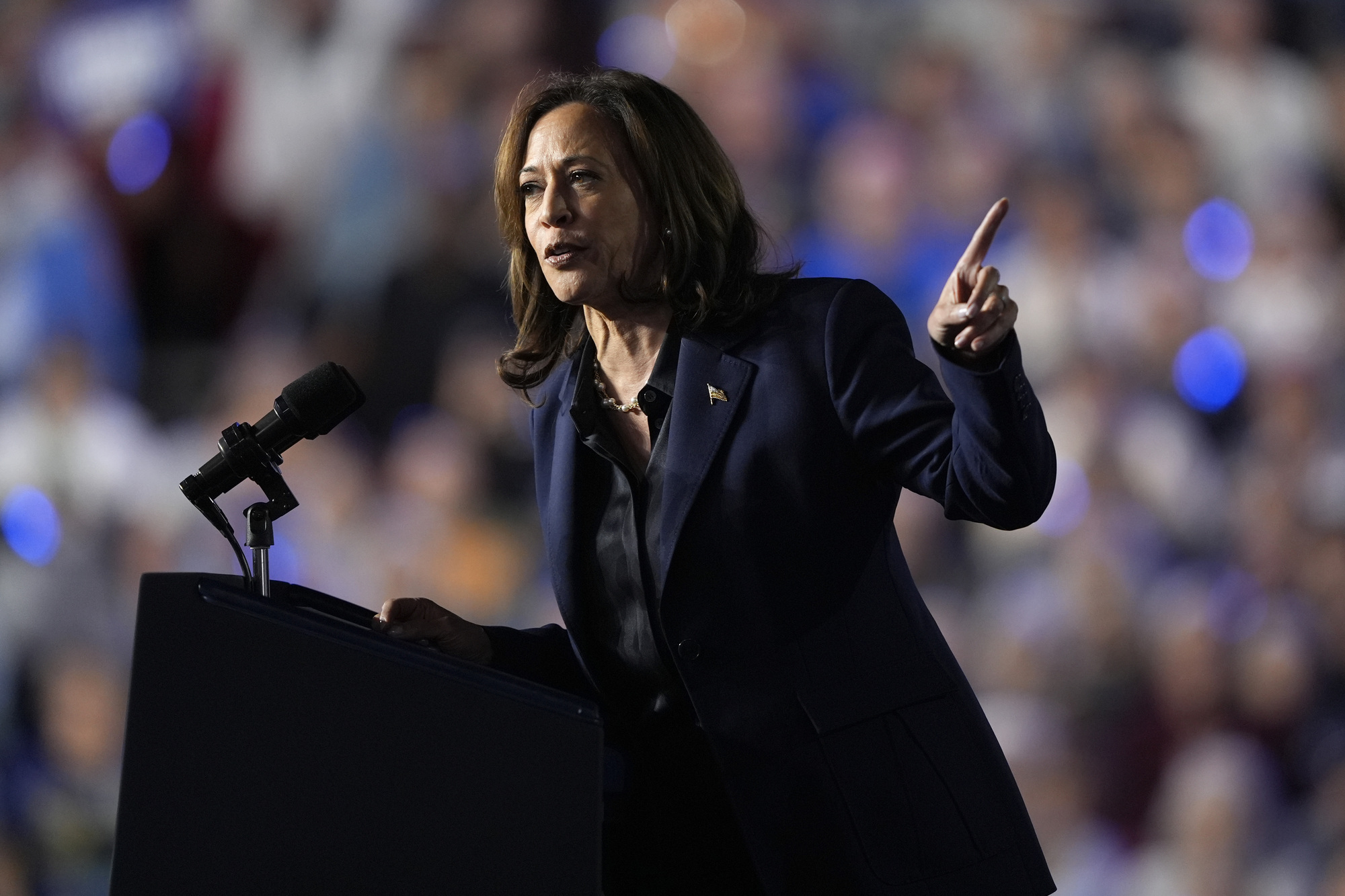
Democratic presidential nominee Vice President Kamala Harris. Since early September, we have heard from US election observers that the ‘Harris honeymoon’ is no more. Photo: AP/Susan Walsh

VOTING is not like marriage, we are told. It is more akin to taking public transport. We are advised to choose the bus, or politician, that will take us nearest to our destination.
This is sound advice, and yet political punditry is awash with romantic references. Candidates are expected to woo the public, they are entitled to a (brief) honeymoon and then the hard graft of relationship compromise and perseverance must ensue.

Since early September, we have heard from US election observers that the ‘Harris honeymoon’ is no more. This may be so, but it is also true that she had a strong political wind behind her almost from the moment that incumbent Joe Biden announced that he would not seek a second term in office.

Within 36 hours of the president’s announcement on July 21, Kamala Harris had raised over $100m. The August Democrat National Convention was considered by most measures to be a resounding success, and the choice of classic ‘Minnesota Man’ Tim Walz as running mate was deemed a smart ticket balance to the women-of-colour candidate.

Next came the much-anticipated television debate, considered a ‘win’ for the Democrat, as her Republican opponent presented as somewhat incoherent. Therefore, by even the most critical measure, the Harris summer romance had an uninterrupted run until mid-September. This was long enough to sufficiently garner those crucial electoral features of money, media, and momentum.

After basking in the cultural cachet of Charli XCX Brat Summer, Harris inevitably had to turn her autumn attention to the more challenging post-honeymoon task of developing her relationship with the US public.

As any Veep will testify, being in a job only a heartbeat from becoming the leader of the free world does not guarantee high-profile coverage. Therefore, Harris faced a challenge that her GOP counterpart did not — that of improving her public recognition. 

This was no mean feat when facing up against one of the most recognised brands on the planet, that of Donald J Trump.

Polls

Pollsters offered micro-assessments of every electoral twist and turn, with media outlets racing to report the latest adjustment in the horse-race lead. However, as any political scientist will attest, polls only matter in the aggregate.

Historian Allan Litchman reminds us that individual polls offer little more than an ‘ephemeral snapshot’. Hence, drawing predictions from a group of high-quality polls can be a useful exercise, but a single poll cannot be a predictor of anything meaningful.

And, even when they are accurate, polls do not account for the truly odd feature of US elections that is the electoral college. Briefly put, this anachronistic element, whereby each US state has a number of electoral voters, can result in a candidate winning the popular vote but losing the election. 

Hillary Clinton and Al Gore can testify to the consequences of this constitutional nod to limited democracy, both having won the popular vote but lost their respective presidential elections.

Policies

Keeping with the marriage theme, some key features of voter concern before entering into a long-term relationship with an individual (in this case, a four- or possibly eight-year commitment between the voting public and Harris) may include money and family.

On a policy level, these translate to the economy and reproductive rights. It may no longer be accurate to state that elections are won or lost on ‘the economy, stupid’ as per James Carville’s famous Clinton-era catchphrase. Nonetheless, pocket-book issues are still of significance, even as the culture wars rage at deafening levels.

As an election issue, the economy falls broadly into two categories, facts and feelings. The first is straightforward. By mid-2024, under the Biden-Harris administration, the US economy grew 10.6%, reaching (as reported by Fortune magazine) an inflation-adjusted high of $22.9 trillion.

In addition, GDP per capita reached a record high and 16.2 million jobs were added. Such figures would make most economists sing. And yet, the facts do not convince a majority of the public.

Opinion polls show that a majority of voters do not feel that the economy is performing well. As a result, when Donald Trump utilises fearful rhetoric on the state of the nation’s purse, people listen. The Republican candidate polls stronger than his opponent in relation to the public confidence in the economy.

Another fear-based policy issue is immigration. This is undoubtedly a weak spot for Harris, as the reality of how to deal with the influx of those seeking a better life in the US chimes more authentically with voter feelings than the health of the economy.

The situation on the southern border has remained deeply problematic, encompassing concerns from national security to humanitarian challenges. This is a realm where voters can (and do) ask why team Biden-Harris have not done more.

The answer is complicated and there is no quick fix, despite what Donald Trump claims. However, his rhetoric on the matter is effective and his promises (however empty) to ‘Build a Wall’ have served him well in the past.

Beyond these significant stumbling blocks for the Democrat candidate, she has issues on which she inspires confidence and polls well. These include reproductive rights and democracy promotion.

The former is an issue where a half-century of judicial calm was upended in 2022 when the historic Roe v Wade decision was overturned. Since then, concerns about abortion access have been high on the minds of female voters, and not just Democrats.

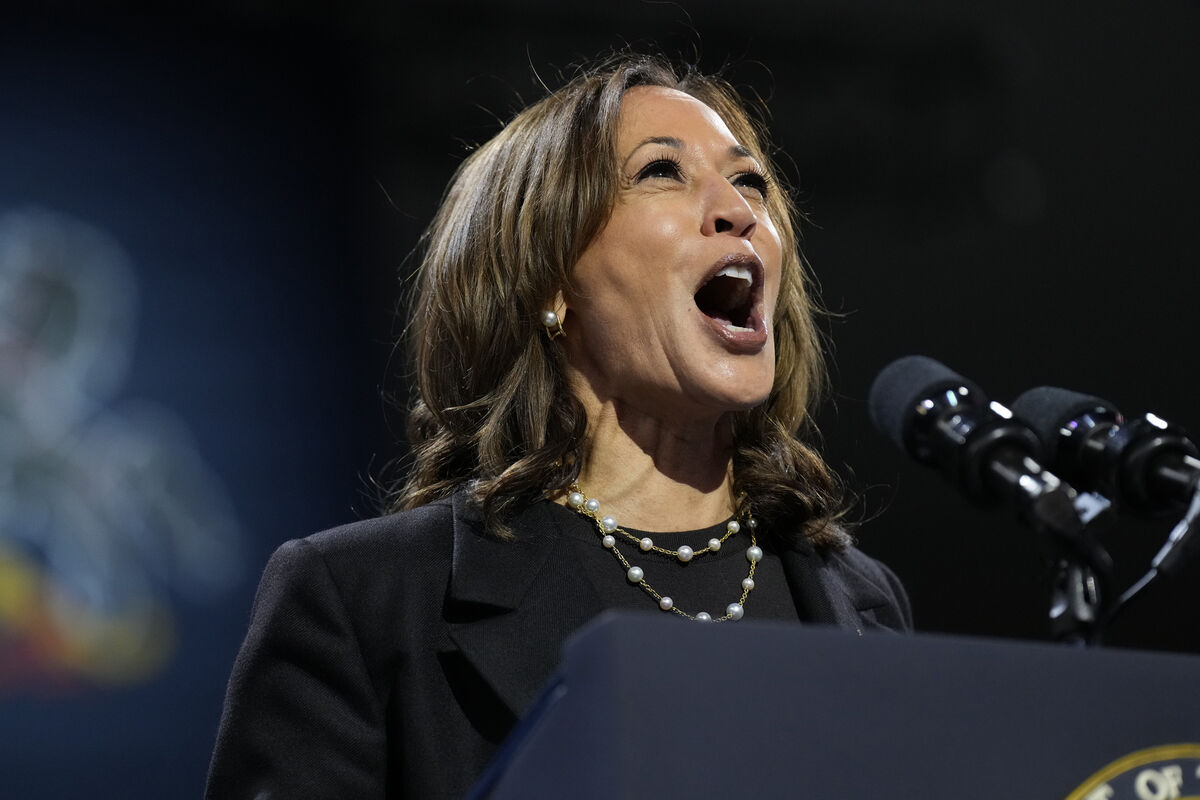
Within 36 hours of the president’s announcement on July 21, Kamala Harris had raised over $100m. Photo: AP/Jacquelyn Martin

Campaigning on the somewhat abstract issue of democracy promotion was, also until recently, not necessarily a vote-winner but after the profound shock of the January 6 assault on the Capitol in 2021, the public is aware that such norms cannot be taken for granted.

Voters should not wait for ‘the one’ who is absolutely perfect. They don’t need to fall in love. They just need to end up in the vicinity of their chosen political destination.

As it happens, the marital histories of the candidates are quite different. One, a serial philanderer whose character has been called into sharp question is on his third marriage. The other appears to be happily betrothed to her first, and to date, only spouse.

With a view to colliding analogies, voters should ask themselves, which of these two buses would they rather marry on November 5?

  • Dr Clodagh Harrington teaches at the UCC Departments of History and Government and Politics

More in this section

Revoiced

Newsletter

Sign up to the best reads of the week from irishexaminer.com selected just for you.

Cookie Policy Privacy Policy Brand Safety FAQ Help Contact Us Terms and Conditions

© Examiner Echo Group Limited