Ciara Reilly: Budget makes private care slightly more affordable, temporarily
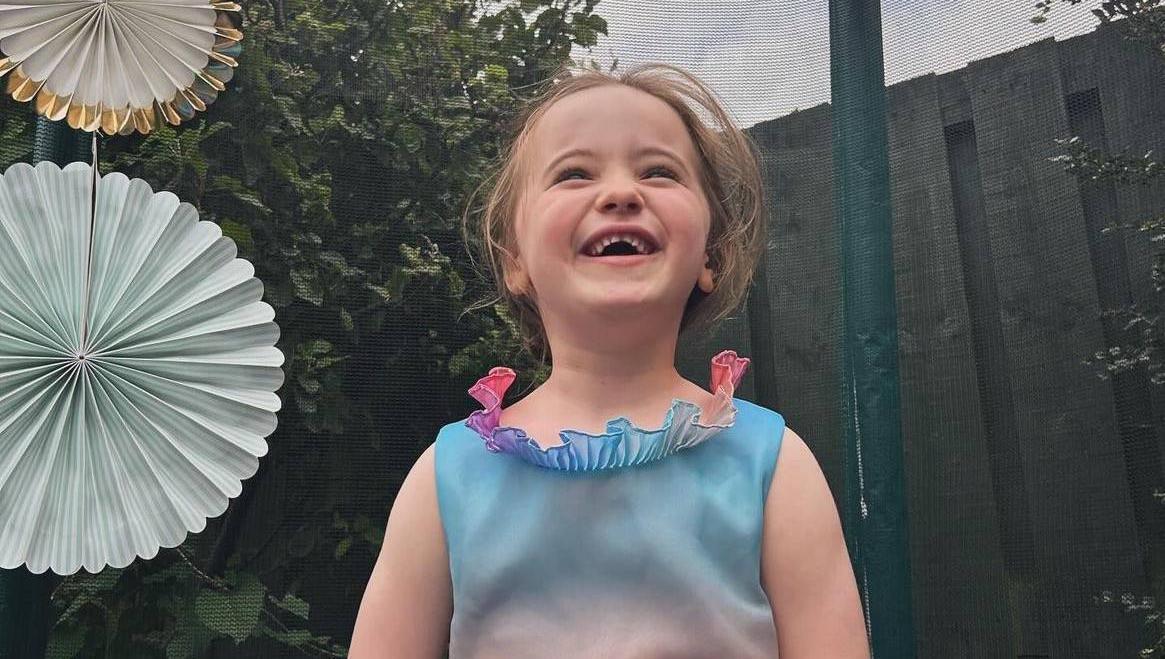
Occupational therapy alone for my daughter Doireann costs €95 a week — that’s €5,000 a year, writes Ciara Reilly.
We’re a working family with two good salaries, so Budget 2025 should be a win for us.Â
However, as parents of a disabled child, it doesn’t feel like much help at all.
It’s been barely six months since the Government took a kicking over the referendum on care. For many, that no vote was a reflection of growing frustration with the State’s indifference towards disabled people and their carers.Â
Instead of acknowledging its responsibility to support disabled people as citizens, with equal rights, the referendum portrayed care as primarily a family duty.Â
The inference is that families like mine, caring for disabled children, were to be left to fend for themselves.
This is the everyday reality for people in my shoes. The eloquent words of John Fogarty in recent weeks, on the unaddressed needs of his daughter Grace, ring true for so many families: His Grace is our Doireann and is the story of many other Graces and Doireanns across the country.Â
As well as being autistic, Doireann has a significant intellectual disability and needs an overwhelming level of everyday, ongoing, care.Â
However, we have zero expectation of receiving any therapeutic help from the public system, now or in the future. Budget 2025 did nothing to change that stark reality.
An expansion of training places in key therapy disciplines, announced last month ahead of the budget, is piecemeal and insufficient.Â
The scale of the problem is immense: There are simply far too few psychologists to conduct assessments of need, and far too few therapists to deliver essential services like speech and language therapy, occupational therapy, and physiotherapy.Â
The budget creates 85 more positions in community disability teams — a nudge in the right direction but barely scratches the surface.Â
Families like mine cannot afford to wait years for the system to catch up when we’re already dealing with long waiting lists and limited-to-no access to state-funded services.
The only option for families like ours is to pursue staggeringly expensive private therapies.
 Occupational therapy alone for my daughter costs €95 a week — that’s €5,000 a year, after tax, from our own pockets, on just one therapy that the public system simply can’t offer.Â
Then add the costs of speech and language therapy, dietician care, and the separate courses I’ve pursued to try to learn to assist her at home.
We can’t go without these therapies: They’re weekly, essential, and lifelong. Pursuing them has allowed Doireann to develop in her way, as best she can, blossoming with the care and attention of her loyal and brilliant teachers and SNAs.
Lump sums in domiciliary care allowance or child benefit in the run-up to Christmas are well and good, but as one-off pre-election lump sums they do nothing to fix the underlying structural shortcomings — and, in truth, are immediately earmarked to meet private therapy bills or the bills for the health insurance that, eventually, refunds a small fraction of those costs.
So even after the ‘biggest giveaway budget ever’, the State is effectively telling us: We can’t (or won’t?) provide adequate services to meet your child’s needs; here’s money to pay for it yourself. It’s privatisation by stealth: A quiet acknowledgement that families are being left to shoulder the burden alone.
All of the above presumes you can even find, or can afford, private therapy to begin with. There’s a serious shortage of practitioners across the country — even getting a private appointment for a diagnosis takes months  — and rural families often travel long distances for the help they need.Â
Instead of addressing the root of the issue, the State offers inadequate alternatives like online webinars or group sessions that don’t meet the needs of children like mine.
There’s no creativity; no real plan; no ambition to solve the shortage of therapists. We need a comprehensive strategy, not piecemeal solutions that barely make a dent in the problem.
Families are stuck in limbo, waiting years for assessments or therapy, forcing many towards costly private alternatives.Â
The budget makes private care slightly more affordable, temporarily, but does nothing to increase availability or reduce waiting times for therapies our children need.
With the State having effectively privatised disability services, families navigate an inequitable system: Those with money can access better, faster care, while others are left waiting, often with no help in sight.Â
We've come to accept that our Doireann will get little to no support from a public health service that doesn’t prioritise children like her.
Ireland doesn’t just need incremental change, it needs a radical overhaul of public therapeutic services, to a system where services are tangible rights, not privileges for the privileged.Â
Without serious investment and reform, this budget is a sticking plaster on a much deeper national crisis. Our Doireanns and Graces shouldn’t have to wait.