Lebanon under fire: Death rains down on the 'Land of Cedars'
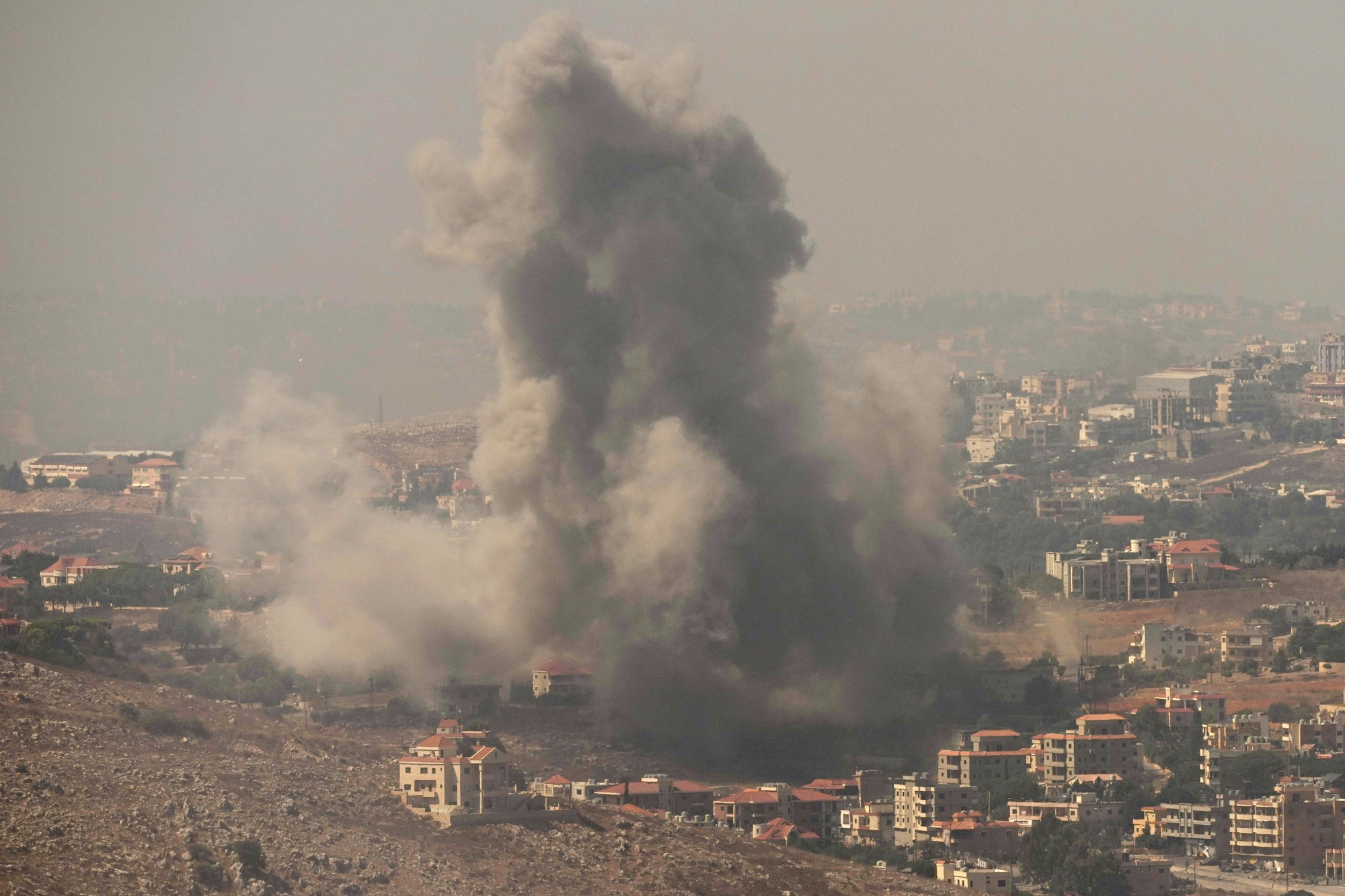
Smoke rises from Israeli airstrikes in the southern village of Kfar Rouman, seen from Marjayoun, south Lebanon, on Wednesday. Photo: AP/Hussein Malla
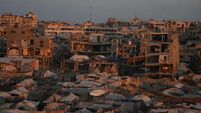
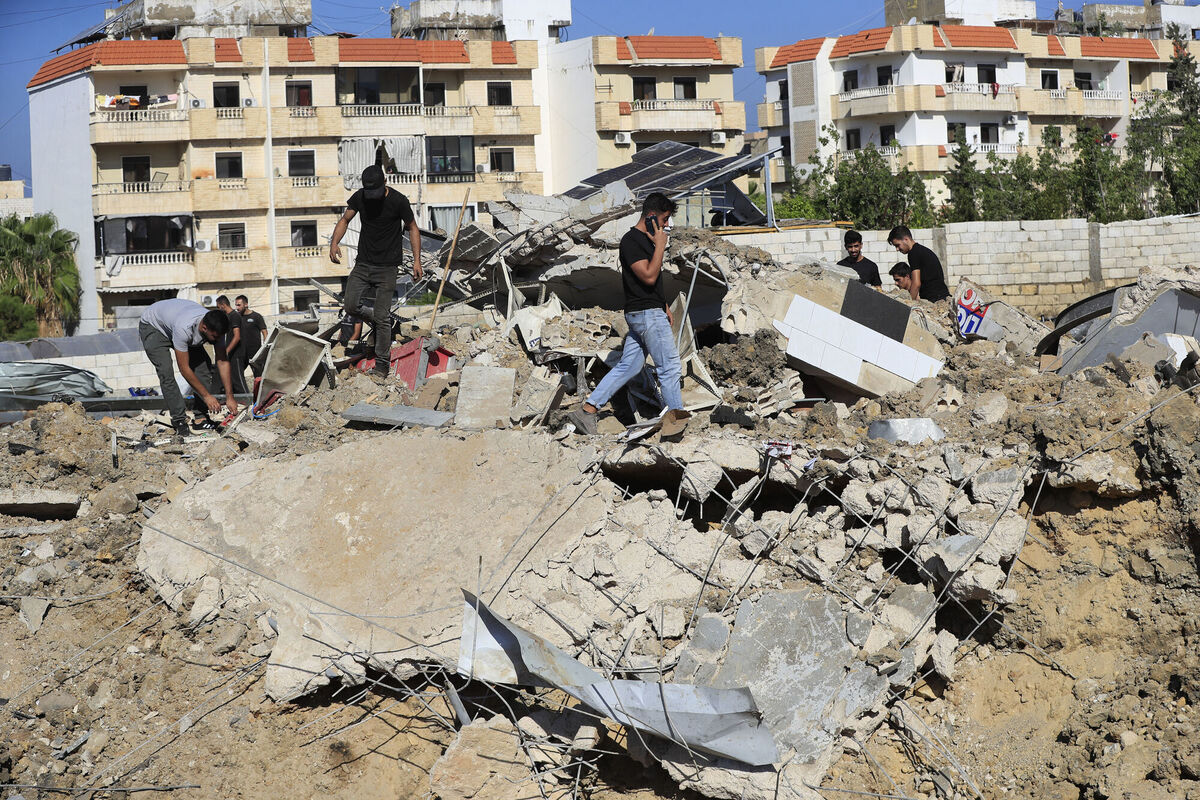
By Wednesday evening, Lebanese authorities reported that 620 people had been killed and more than 1,800 injured in Israeli air strikes. As in the 2006 Israel-Hezbollah war, they did not reveal how many of the casualties were Hezbollah fighters.
On the other hand, the IDF spokesman, Rear Admiral Hagani, would have us believe that all the target hits were legitimate Hezbollah positions. This begs the question, is Israeli intelligence so good that it can identify such a large number of civilian houses in Southern Lebanon hiding Hezbollah rockets, and yet fail to predict Hamas’s capability to launch its devastating attack on October 7, last year?
But blaming Hezbollah and the IDF, alone, for the latest disaster to affect Lebanon is far from the whole truth. Successive Lebanese governments, all the way back to independence in 1943, have neglected to invest properly in national defence.
In 1966, Lebanon was, per capita, one of the richest countries in the world. Beirut was known as the Paris of the East, with a beautiful coastline on the Med. Travelling North from Beirut, the summer palaces, of ex-patriate, rich potentiates, faced the setting sun, overlooking a breathtaking seascape.
Tourists thronged Beirut’s Place des Martyrs, took tour coaches to the ancient Phoenician cities of Biblos and Baalbek and checked out wineries along the Damascus highway. In winter it was possible to go skiing in the mountains and less than an hour later be lying in warm sunshine on the beach.
The country’s wealth was based on its financial centre and trade. Its society was multi-cultural and tolerant, but with a complex confessional constitution that favoured the Maronite community. For historical reasons, and to protect their interests, communities had their own militias.
However, like Ireland today, the nation itself was militarily defenceless. Its army was small and lightly equipped. In that summer of ’66, on a visit to Lebanon with other Irish UN officers serving in Cyprus, we passed by an air base with a row of military aircraft parked close to a perimeter fence. There was grass growing through their wheels. The Lebanese Navy was a handful of old rusty motor torpedo boats, permanently moored.
A nation that neglects its defence ultimately loses its sovereignty. Lebanon was a rich country. It had the financial resources to provide for its own defence but failed to do so. Nature abhors a vacuum and that military vacuum in Lebanon was filled by a plethora of militias answering to sectarian warlords or foreign interests.
Probably the most significant external group to seek refuge in Lebanon was the PLO. After the six-day war in 1967, many thousands of PLO fighters had to leave the West Bank and moved to Jordan. By (Black) September 1970, they were in confrontation with the Jordanian Armed Forces and were a threat to the kingdom.
After 10 months of clashes, the Jordanian Army prevailed, and the PLO left via Syria for Beirut. In Lebanon, the arrival of the PLO shifted the internal military balance of power which tipped the country into a civil war in the mid-70s.
Failure to secure the southern border with Israel led to the IDF invading Lebanon. The stage was set for the destabilisation of Lebanon and the rise of Hezbollah which we are witnessing today.
Since October 8 last, when Hezbollah launched its sporadic rocket attacks on Israel, people on both sides of the Israel-Lebanon border have had to leave their homes. An estimated 65,000 Israeli residents moved south, and 100,000 mainly Shia Lebanese fled southern Lebanon in the face of Israeli air strikes.
Still, the situation was contained at a sustainable level pending the expected ceasefire in Gaza. The longer this failed to be achieved the greater the risk that some incident would trigger off a major escalation. On July 27 this incident occurred. The consensus, among independent observers, is that it was, as often happens in war, a complete accident.
It was late evening, on July 27, when a salvo of rockets was launched by Hezbollah from near the town of Shabaa in the south-eastern tip of Lebanon. Shabaa is very close to what Irish UNIFIL veterans would remember as the old NORBATT area of operations.
The intended target was reportedly an IDF position in the Israeli-occupied Golan only about 6km to the south. One short range (10km), Iranian made, Falaq-1 rocket overshot the target and slammed down onto a football field in the Druze town of Majal Shams. Twelve Druze youngsters playing football were killed and 42 were injured.
Hezbollah denied responsibility and said that it was an Israeli Iron Dome missile that came down on the football field. The Iron Dome system was activated but a limitation of the system is that it takes several minutes to lock onto a rocket and react.
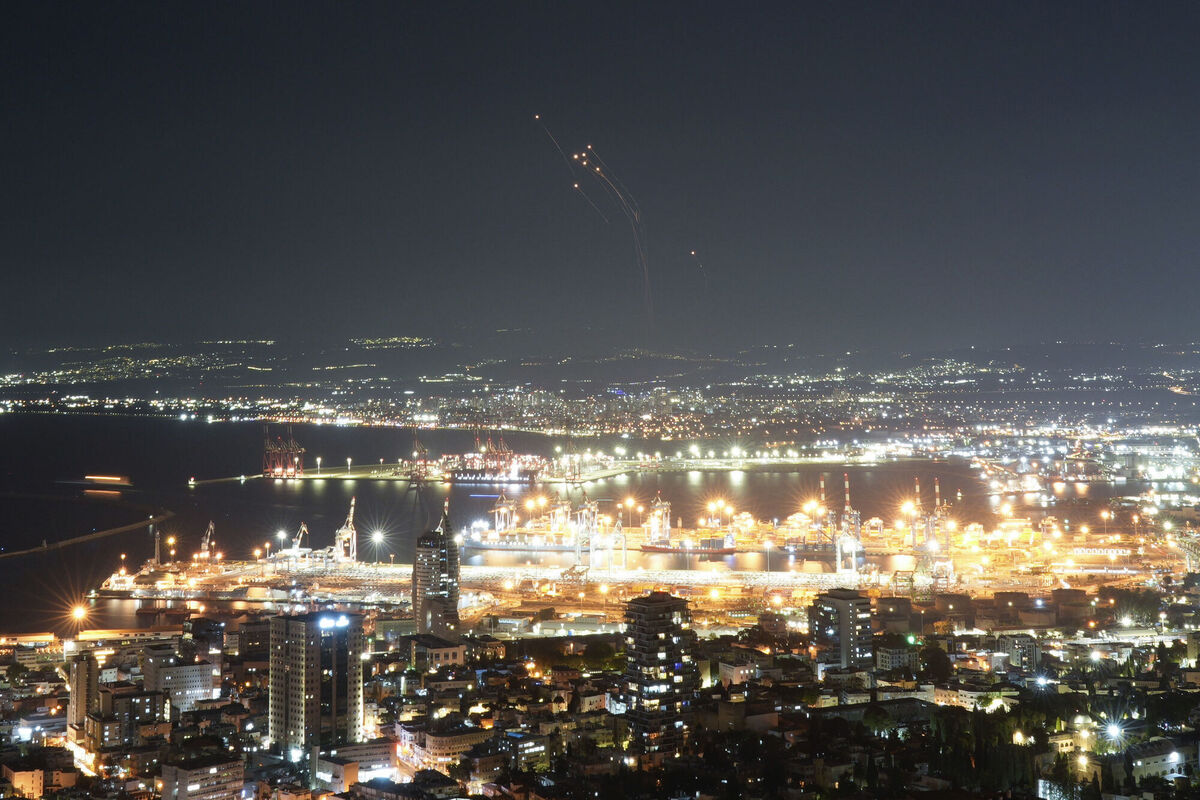
In this case, the warning siren went off only one minute before impact and the Iron Dome missile did not launch. It is highly unlikely that Hezbollah would intentionally have targeted a Druze village.
Since 2021, when it annexed the Israeli-occupied part of the Golan Heights, Israel considers the mainly Druze people there to be Israeli subjects. The majority of Druze living on the Golan still consider themselves to be Syrian. However, this former UN military observer remembers meeting Druze loyally serving in the armed forces of Israel, Syria and Lebanon.
After the Majdal Shams incident, Israel firmly took the lead in escalating the conflict with Hezbollah. The incident briefly turned the spotlight back to the Golan Heights. It would also have brought back a flood of memories for Irish military personnel who served on the Golan, before, and since the October 1973 Yom Kippur War.
Back in the 1980s, Majdal Shams was really just a village. Looking westward, from UN observation post (OP71) on the slopes of Mount Hermon, dozens of soft green lights in Majdal Shams would be visible for the first few hours of darkness. Then, when night finally fell on the Golan, the green lights would disappear, and billions of stars would emerge over one of the most light pollution-free zones of the planet.
Fifty years ago, in May 1974, both Israel and Syria signed a ceasefire agreement formally bringing the Yom Kippur War to an end. The months of acrimonious negotiations, punctuated by intense ceasefire violations, did not auger well for peace between the two countries.
However, it turned out to be one of the most successful truces in the history of the Middle East conflict. Despite Israeli airstrikes on Syria and rockets attacks launched from Syrian territory against Israel, the truce between both countries has held.
Israel is nearly, but not yet quite ready to conduct a full-scale ground offensive in Lebanon. Its Northern command has been reinforced by its 98th (paratroop and commando) division. However, a lot more assets need to be deployed before a major operation could be undertaken.
In the meantime, death rains again on the land of the Cedars, which many Irish soldiers regard as a second home. To paraphrase the late Cathal O’Shannon’s documentary title on the Spanish Civil War, we can now say, “even the cedars are bleeding”.
- Dorcha Lee is a retired Army Colonel and Lebanon veteran


CONNECT WITH US TODAY



Be the first to know the latest news and updates