Jim Clarken: No government should hold the power to block progress towards peace
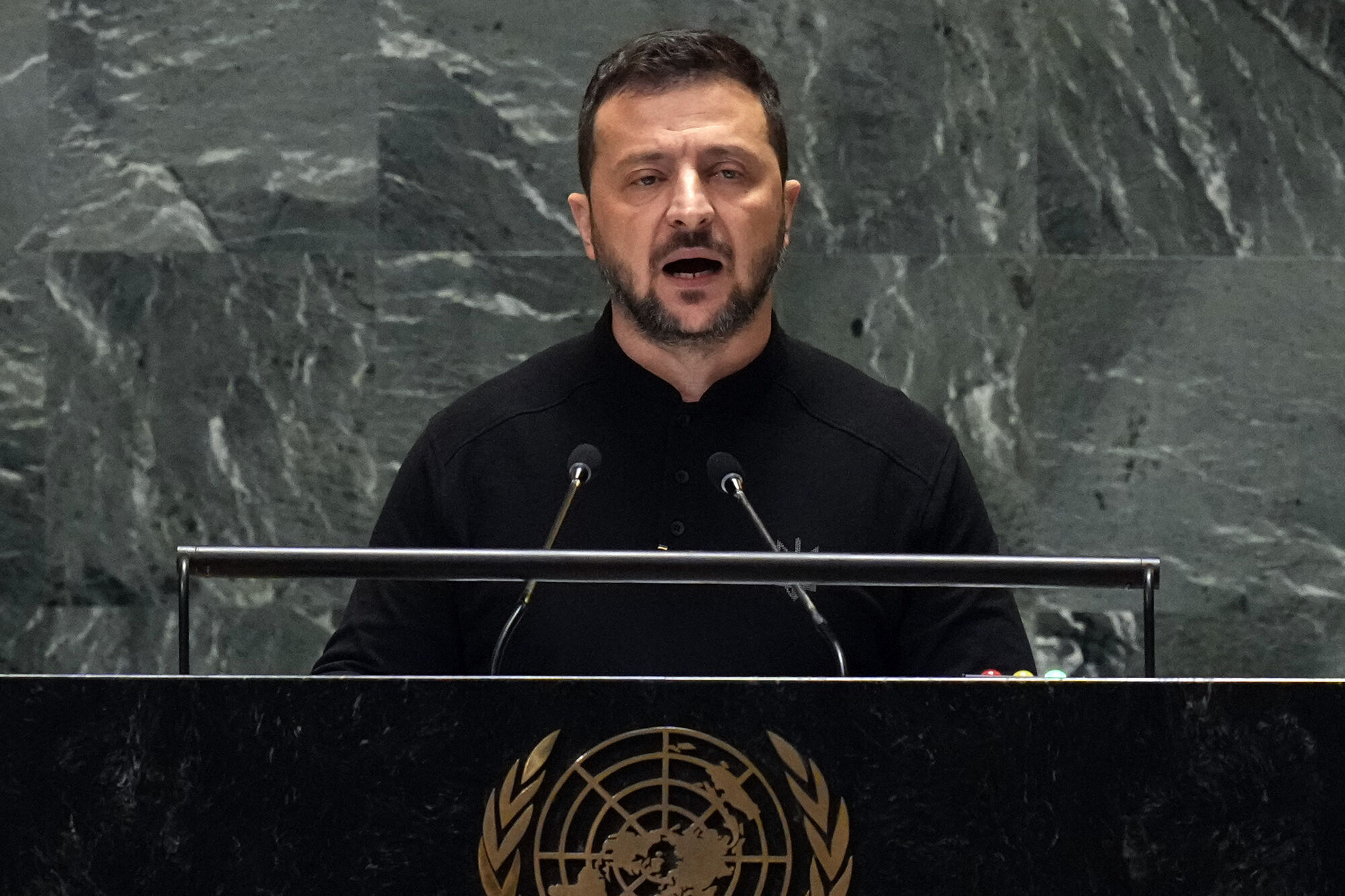
Ukraine president Volodymyr Zelenskyy addressing the 79th session of the United Nations General Assembly on Wednesday, September 25. Russia has used its veto four times on Ukraine, despite being an aggressor in the conflict. Picture: Richard Drew/AP
This time last year, President Michael D Higgins caused some consternation when he said that the United Nations was “losing credibility”.
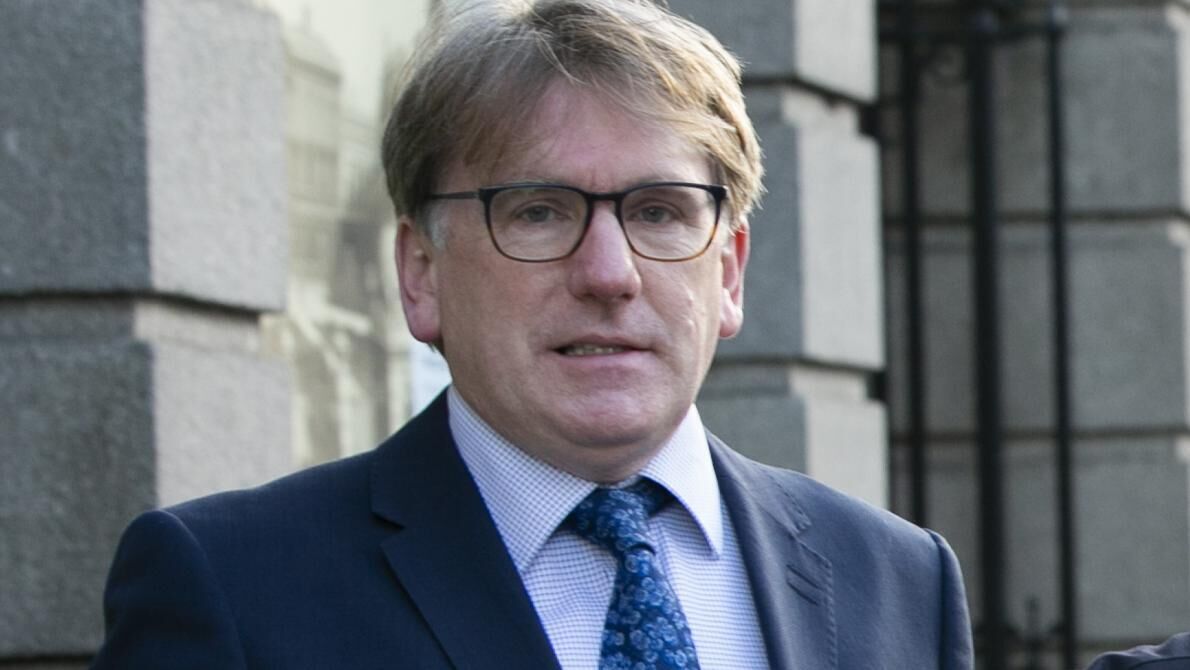
On Sunday, he spoke to the UN Summit of the Future, and asked all member countries to look not only at current weakness “but at those abuses of power that have consciously undermined the UN since its foundation in 1945”.
Chief among those abuses of power is the exercise of the veto in the UN’s Security Council.
Oxfam has just published a major report entitled ‘Vetoing Humanity: How a few powerful nations hijacked global peace’, which shows how the use of the veto by the Permanent Five — China, France, Russia, Britain, and the US — has blocked efforts to bring peace to conflicts around the world. We have studied 23 of the world’s bloodiest conflicts in the past 10 years, and found the UN Security Council is paralysed on some, neglects others, and freely passes resolutions on the rest without following up with necessary actions and resources in order to make those resolutions meaningful.
Of the 30 votes where the veto has been used to block resolutions, 27 of them have been on the conflicts in the occupied Palestinian territories, Ukraine, and Syria.

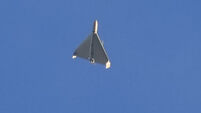
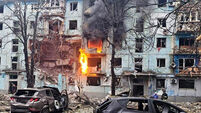
Russia has used its veto four times on Ukraine, despite being an aggressor in the conflict, and should therefore be disqualified from voting.
Russia, often with China, has vetoed 12 resolutions on Syria, and those resolutions that have passed have been weakened by fear of the veto.
The US has used its veto and its well-known threat of a veto to repeatedly block actions on Palestine. It took more than six months to get the Security Council to agree to call for a ceasefire as thousands were being killed in Gaza.
These votes have real and practical ramifications, as with a 2023 draft resolution where Russia vetoed a nine-month extension of cross-border assistance to northern Syria, leaving 4.1m people with little or no access to food, water and medicine.
The Permanent Five have cherry-picked which conflicts to focus on, to appease their own geopolitical and economic interests. Eleven of the 23 conflicts studied have been largely ignored by the Security Council. These include Ethiopia, Burundi, Myanmar, Chad, and Niger.
Even when resolutions are passed, for example, nearly 80 resolutions on Sudan and South Sudan, 53 on Somalia, and 48 on Libya, none of these have led to lasting peace. This is because there is a lack of political will to do the hard and necessary work of peacekeeping and peacebuilding on the ground in these conflict zones.
The real consequences of this failure can be seen in the more than 1m lives that have been lost in these 23 conflicts alone over the past decade. The number of people in urgent need of aid has more than doubled to more than 230m over that same period.
Globally, conflict remains the primary driver for hunger for more than 135m people. Nearly 100m people have been forced to flee their homes.
The Irish Government does advocate for reform of the UN Security Council and for enhanced multilateralism.
Indeed, one of Ireland’s own draft resolutions co-led with Niger on climate and security was blocked by Russia while we were members of the Security Council in 2021.
Taoiseach Simon Harris has said he will prioritise resolution of the conflicts in Gaza, Ukraine, and Sudan while he is in New York this week as well as for reformed multilateralism.
We submit that a reformed UN Security Council is necessary to even begin to deal with the conflicts in Gaza, Ukraine, Sudan, and so many others. For every time the world seeks to act in unison, one of the Permanent Five will act only in their own interests.
The veto should be abolished. No government should hold the power to block progress towards peace. At the very least, the Permanent Five must refrain from exercising vetoes on issues involving war crimes, crimes against humanity, genocide, and other serious human rights violations.
The rule against the Permanent Five using vetoes on disputes to which they are party — Article 27(3) of the UN Charter — must be adhered to. No country which is an aggressor in a conflict should be able to block the path to peace.
Membership of the Security Council should be increased to include those under-represented regions and countries, particularly from the Global South.
We recognise that some of these reforms will necessitate a review of the UN Charter but this is exactly what needs to happen.
The architecture of the Security Council was designed after the Second World War when the UN only had 51 member states, many of which were colonies.
Until the UN can enact the will of over 190 countries and not simply the big five, we will be stuck in a never-ending cycle of conflict and hunger. This week in New York, the rest of the world needs to unite, and Ireland can and should play its part.
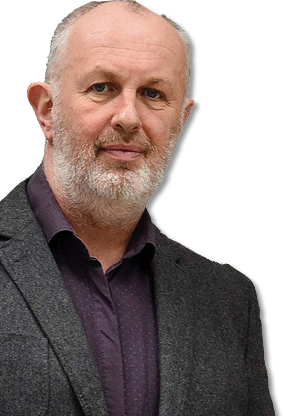
- Jim Clarken is CEO of Oxfam Ireland and chair of the EU Fundamental Rights Agency

BLACK FRIDAY
50% off monthly and annual subscriptions.
Already a subscriber? Sign in
CONNECT WITH US TODAY
Be the first to know the latest news and updates