Why we must get it right on cancer
While health services on this island have punched above their weight in dealing with cancer, they should not become complacent
Why we must get it right on cancer

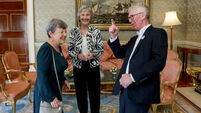
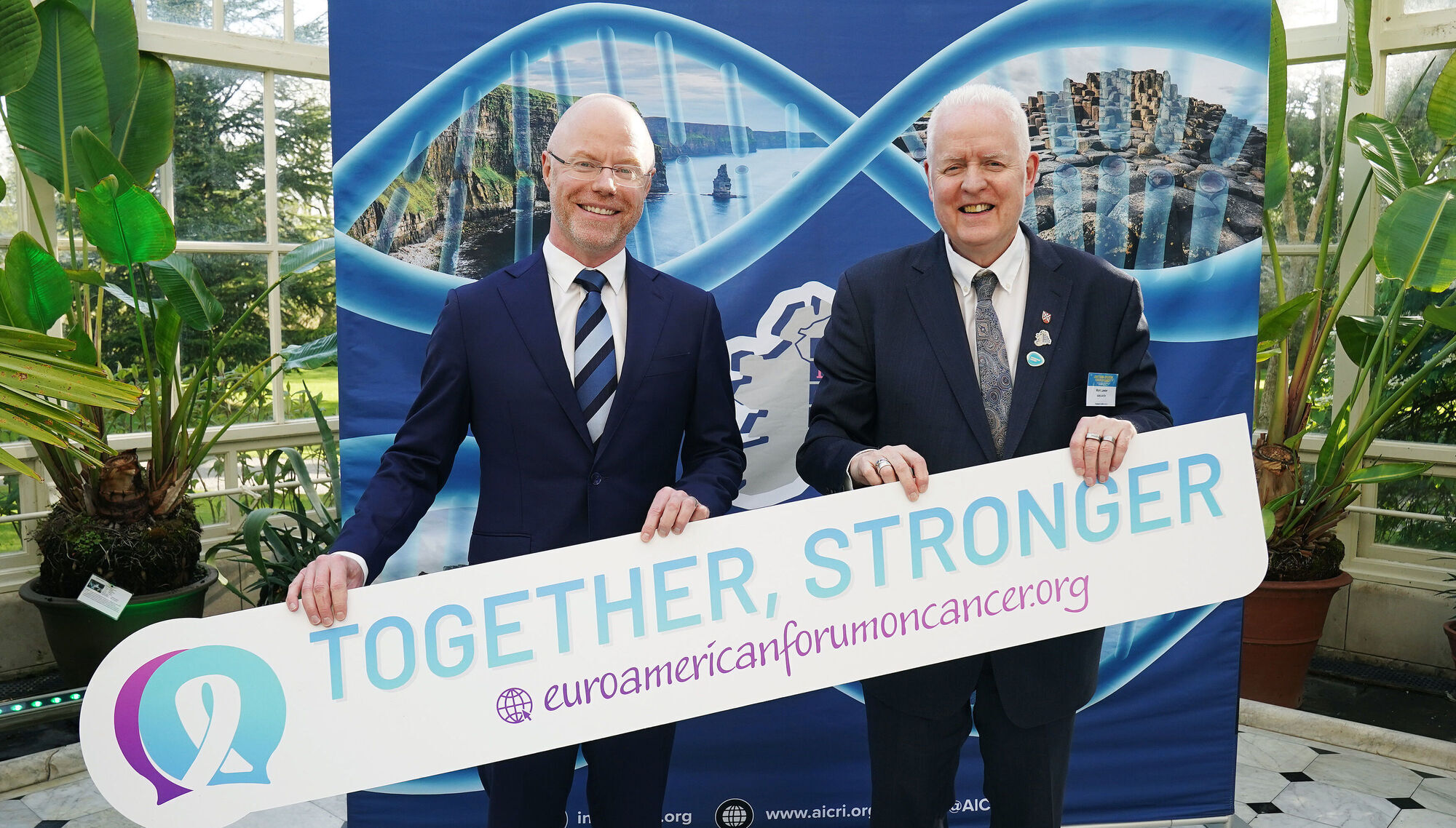
Minister for Health Stephen Donnelly (left) with European Cancer Organisation Special Network co-chair Mark Lawler at the Joint Euro-American Forum on Cancer at Farmleigh House, Dublin. Picture: Brian Lawless/PA 

This year represents a unique year for cancer on the island of Ireland, with three impactful initiatives celebrated at the inaugural joint Euro-American Forum on Cancer, a high-profile international event in Farmleigh House last week. The triple anniversary occurs when cancer is in the news, with calls by Irish cancer experts and the Irish Cancer Society for previously agreed funding for cancer to be released urgently, and renewed pleas in the North for its cancer strategy to be fully implemented.

Impactful initiatives

The first of these, the Ireland–Northern Ireland–US National Cancer Institute Cancer Consortium, a direct result of the Good Friday Agreement, celebrates its 25th anniversary. This unique partnership has been transformative — our recent data highlight that 35,000 patients on this island participated in clinical trials, saving thousands of lives and improving the quality of life of thousands more; a 15% improvement in cancer survival across the island, and a 550% increase in cancer research quality between Ireland and the North, delivering both health and economic impact island-wide.

The consortium’s work was recognised as an international exemplar of the health dividend of peace at the Science Summit of the United Nations General Assembly in New York recently. A resolution was passed at the forum in Farmleigh to enhance transatlantic co-operation, with the island of Ireland as a key bridge between Europe and the US.

The European Code of Cancer Practice, a series of 10 rights specifying what patients should expect from their health system, is a big win for patients.

This year also marks the 20th anniversary of Ireland becoming the first country in the world to introduce a smoking ban in the workplace, catalysing a public health initiative that resonated globally. Lung cancer was one of the key themes at Farmleigh, particularly timely given our work in the Lancet Oncology European Groundshot Commission, highlighting that lung constitutes 20% of cancer’s disease burden, yet only 4% of the research spend, a glaring inequality for a disease that the forum agreed requires greater emphasis on research. An innovative proposal was Tobacco 21, with cigarettes only sold to those above 21 years of age, delivering a smoke-free younger generation.

This year also marks the 10th anniversary of the launch of the European Cancer Patient’s Bill of Rights in the European Parliament, a Northern Ireland-led initiative highlighting cancer inequalities that exist across and within European countries. The Bill of Rights, an empowerment tool for cancer patients, received the prestigious European Health Award, which recognises health initiatives with pan-European impact. It led to development of the European Code of Cancer Practice, a series of 10 rights highlighted at the forum, specifying what patients should expect from their health system, a big win for patients, including on this island.

However, while Ireland and the North have punched above their weight as shown by the consortium’s achievements, both should not become complacent. Covid’s impact on cancer patients, cancer services, and the cancer workforce has been disastrous, with diagnoses missed, treatment delayed, four of 10 cancer healthcare workers burned-out and three of 10 exhibiting signs of clinical depression.

Inequalities

Our European Cancer Pulse Report for Ireland, developed by the European Cancer Organisation in collaboration with the Irish Cancer Society, which we launched in Farmleigh last week, highlights where Ireland is underperforming, including a 9% survival gap in more deprived compared to less deprived areas and higher than average levels of obesity, particularly childhood obesity. These inequalities need addressing as a matter of urgency.

Our work in the International Cancer Benchmark Partnership, comparing cancer outcomes in different countries globally (including Ireland and the North) has conclusively shown that cancer policy consistency, underpinned by funded, implemented cancer strategies, delivers better cancer outcomes.

We have developed a cancer policy scorecard, which places Ireland in the top half, with the North languishing bottom of this particular league table. The North’s lowly position reflects lack of a recently implemented cancer plan. While Ireland has performed well historically, cancer policy consistency means exactly that — you have to keep on doing it. Letting up gives the advantage back to cancer. Lack of significant protected investment in Ireland’s National Cancer Strategy in five of the last seven budgets is worrying, risking undoing the good work of the last decade.

We must not forget research. Our work shows conclusively that people treated in research-active hospitals have better outcomes. Research is not a luxury, it is a necessity for 21st-century cancer care. Recognising this research-informed reality, the All-Island Cancer Research Institute, which we co-lead, is a unique collaboration of 10 universities across the island of Ireland, alongside other key stakeholders, dedicated to delivering high-quality cancer research and innovation.

Through our work, we are gaining a better understanding of cancer, developing more personalised treatments, easing suffering, and saving lives. Cancer knows no borders — neither should we.

  • Mark Lawler is professor of digital health at Queen’s University Belfast, co-lead of the All-Island Cancer Research Institute (AICRI), chairman of both the International Cancer Benchmarking Partnership and the Lancet Oncology European Cancer Groundshot Commission. He is scientific lead of the European Cancer Organisation’s European Cancer Pulse, which captures cancer inequalities across Europe. 
  • William Gallagher is professor of cancer biology at University College Dublin, co-lead of AICRI, deputy director of Precision Oncology Ireland and scientific director of the St Vincent’s-UCD Cancer Centre. He is currently the lead investigator, together with Prof Lawler, on a large-scale Higher Education Authority North-South Research Programme, AICRIstart, which is training the next generation of researchers in precision cancer medicine.

x

More in this section

Revoiced

Newsletter

Sign up to the best reads of the week from irishexaminer.com selected just for you.

Cookie Policy Privacy Policy Brand Safety FAQ Help Contact Us Terms and Conditions

© Examiner Echo Group Limited