Mick Clifford: Helen McEntee needs to get better grip on immigration brief
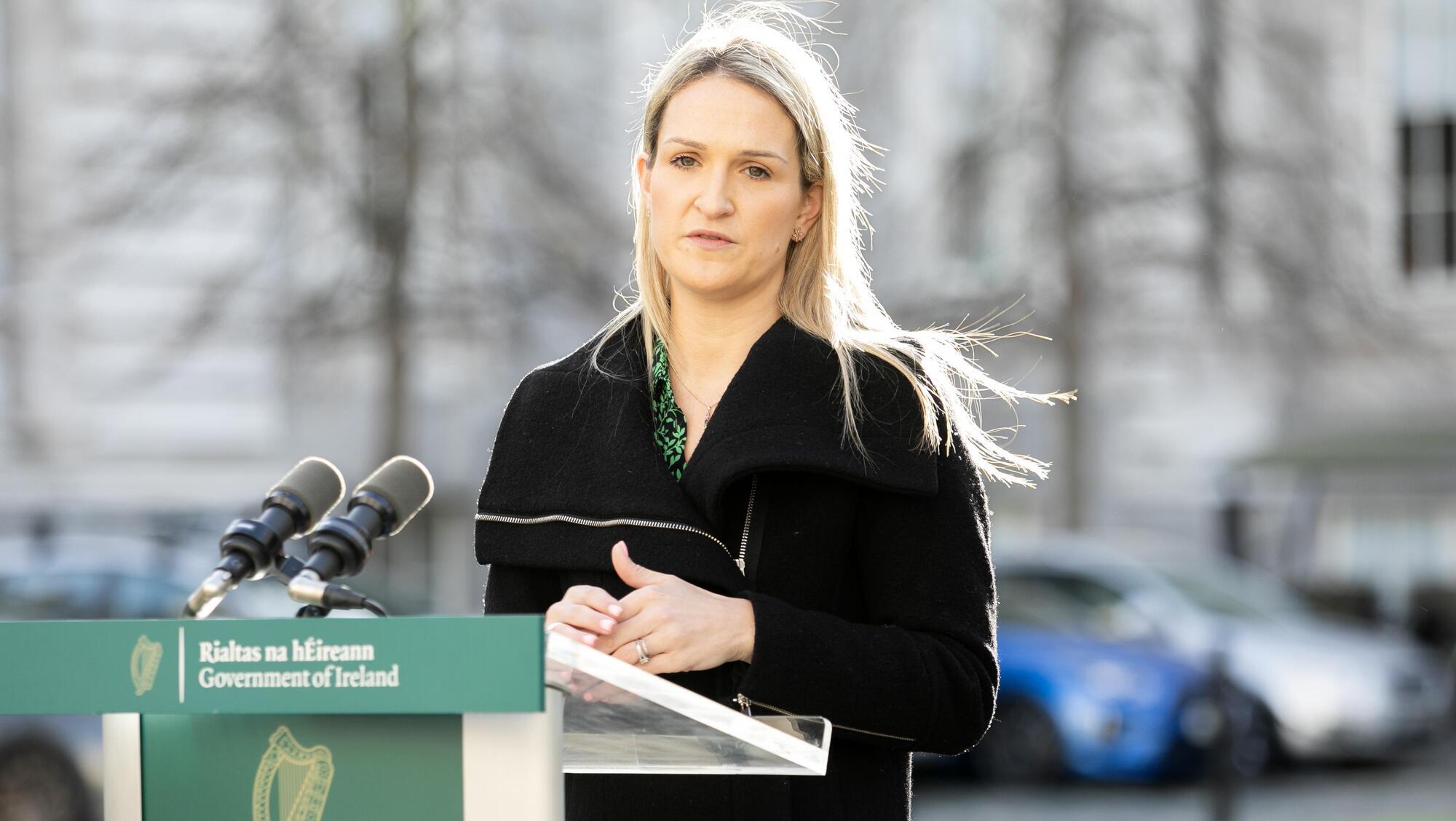
The thrust of Helen McEntee's position is that the proposed EU pact on asylum and migration is a good thing as it would ease the forthcoming challenges of migration because we would be acting in concert with most of the rest of Europe. File photo: Gareth Chaney/Collins
There was plenty of red meat on the menu this week for the ‘Ireland is full, close all the borders’ crowd. Legitimate questions were raised about the operation of the State’s international protection system. The Justice Minister Helen McEntee, who has become a bete noir for those convinced we are being overrun, was shown to have a shaky grasp of her brief.
There was further examination of the proposed EU pact on asylum and migration. And it turns out that we do indeed have an open border across which large numbers of asylum seekers cross unimpeded.
Last Tuesday, McEntee was before the Oireachtas Justice committee to answer questions about the EU pact. The thrust of her position, and that of the government, is that the pact is a good thing as it would ease the forthcoming challenges of migration because we would be acting in concert with most of the rest of Europe.
In the course of the meeting she was filleted by independent TD Michael McNamara. He pointed out shortcomings in the current system. In 2023, he told McEntee, there were 188 cases where another country said they would take back a person for processing who had originally applied for asylum in that country. This system of reverting to the country of first instance in applying is known as the Dublin Treaty. Of the 188 who were supposed to return to another EU country just three were transferred. How come?
“This shows the inefficiency of the Dublin Treaty,” McEntee said. “It shows the inefficiency of the Department of Justice,” McNamara said.

He asked her how many people were appealing to her as minister for right to remain in the country despite being turned down on initial application and on appeal. The minister said she didn’t know.
“Does your department have any handle on what’s happening in immigration in Ireland?” the TD asked her. The minister replied she was proud of the work of her department. McNamara wasn’t finished.
The next rabbit he pulled from his hat was the figure for those who landed at Dublin Airport in 2023 without a passport. There is a practice among some who arrive here claiming asylum of destroying travel documents before they land so they can claim this is their first port of call.
“3,285 people with no passports landed at Dublin Airport and there were no prosecutions,” McNamara said. “In the Dáil I raised it and lo and behold prosecutions start. What changed?” The minister insisted that prosecutions were a matter exclusively for the gardaí and the DPP. But if government pressure has been applied in this respect it is a worrying development.
Another nugget to surface at the meeting was that of around 7,300 orders to leave the country last year, fewer than 100 resulted in deportation. On the face of it, this also appears to show a lack of enforcement of the prevailing system.
Then there was the most startling revelation. In response to a question, the minister stated that up to 80% of applicants for protection are arriving in the state via Northern Ireland. Collectively, an exercise designed to examine whether Ireland should opt in to a new EU pact appears to have at least shown that the current system is operating with a degree of dysfunction.
So says the stats, but they alone don’t tell the whole story. For instance, the numbers for deportation are shockingly low but it is understandable that the first option is that a refused applicant would voluntarily leave. If they don’t leave they are in the state with no supports, no housing and no access to any work unless illegally. How many remain under those conditions would be worth exploring.
The issue over passports is not straightforward either. Some certainly destroy documents to suit their purposes, but others simply don’t have travel documents. Nobody bothered to mention another reason why some passengers land with no passport. Those who are fleeing from the countries where the majority of new arrivals originate, such as Somalia and Afghanistan, either could not get nor wouldn’t apply for a passport in their native countries.
It is not their fault they have no passport and any campaign to crack down on the nefarious practices of some should take full cognisance of the origins of those who don’t have or never had travel documents.
The volume of applicants coming from the North is certainly worrying. Some of this, Tánaiste Micheál Martin suggested during the week, may be due to the proposed Rwanda policy of the Tory government. If applicants in the UK are fearful that they will be deported to the African country they may well decide to avail of the free travel area and try their luck in this jurisdiction. Further work is required on ensuring that this issue isn’t magnified.
Overall it was a bad week for the government around the whole asylum issue. McEntee needs to get a handle on the brief, particularly at a time when nefarious actors are using any apparent sloppiness to push their intolerant agenda.
The main opposition didn’t cover itself in glory either this week. It now seems that every Sinn Fein rep is schooled to begin every utterance on the asylum issue with the words: “Sinn Fein is opposed to open borders”. The strategy is little more than a dog whistle, throwing out to voters that there may well be open borders — as some have been indoctrinated to believe — but the Shinners are not in favour of them.
Apart, of course, from the one open border that was shown during the week to be highly porous, that which divides the northeast with the rest of this island. Maybe Sinn Féin want it closed. Has their desperation to arrest a decline in support now pushed them towards a partitionist mentality? The flip-flopping by the party on this issue has just got a lot flipping floppier.