Is it time to change the cultural norms around children and teenagers' smartphone use?
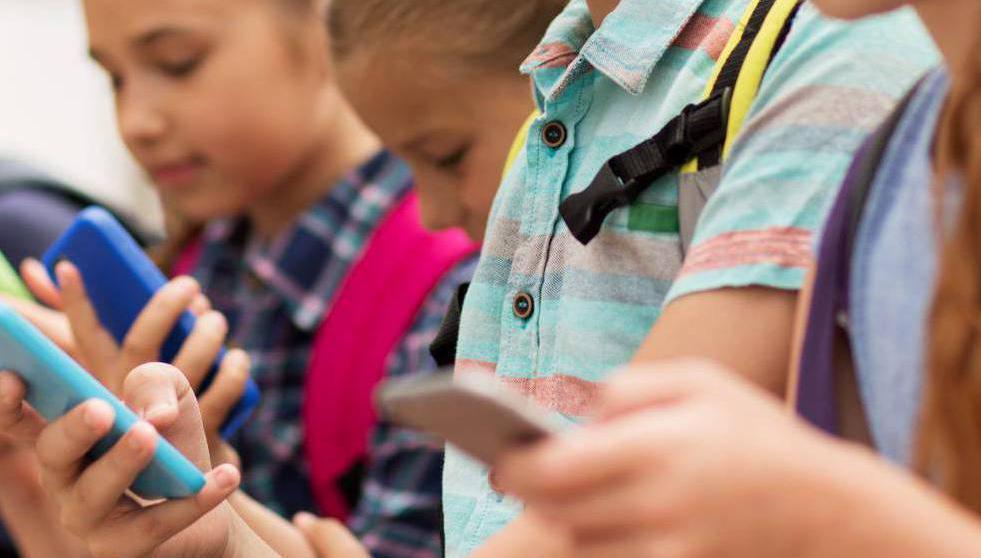
Younger users are too valuable for most social media companies to limit access.
Cyberbullying was among the topics debated at the annual convention of the Association of Secondary Teachers Ireland (ASTI) this week, amid a call for stronger legislation to deal with online harassment.
A recent survey carried out by Red C, on behalf of the ASTI, showed that almost one-in-five secondary teachers have experienced some form of work-related cyberbullying. The most common forms of abuse involved receiving angry, rude and vulgar messages, as well as videos of teachers uploaded without their consent.Â
The survey also found experiences of trolling, harmful, untrue or cruel comments being posted online, the creation of fake social media profiles impersonating teachers, accounts being hacked, and private information being posted about teachers.
But cyberbullying in schools is not limited to teachers. Nearly one-in-six young teenagers (16%) experienced cyberbullying in 2022, according to a new report from the World Health Organisation (WHO).
The Health Behaviour in School-aged Children report from the WHO European region says the increase in bullying has been aggravated by the covid-19 pandemic that changed how teenagers treat and behave towards each other, with 14% of boys and 9% of girls cyberbullying others.
WHO regional director for Europe Hans Kluge called the report a "wake-up call for all of us to address bullying, whenever and wherever it happens". The study was based on data from 279,000 children and teenagers from 44 countries across Europe, Central Asia and Canada.

"With young people spending up to six hours online every single day, even small changes in the rates of bullying and violence can have profound implications for the health and wellbeing of thousands," Mr Kluge said.
The critical question that is not addressed is how to change the cultural global norms that facilitate children and adolescents spending their time buried in social media, and the impact that lost time has on other activities critical to childhood development that have been discarded for time spent online.
Jonathan Haidt, an American social psychologist who is the author of a new book titled says: "Once young people began carrying the entire internet in their pockets, available to them day and night, it altered their daily experiences and developmental pathways across the board.Â
Prof. Haidt suggests that before we evaluate the evidence on any one potential avenue of harm we need to step back and ask a critical and much broader question: "What is childhood, including adolescence, and how did it change when smartphones moved to the centre of it?
"As long ago as the 1980s, we started systematically depriving children and adolescents of freedom, unsupervised play, responsibility and opportunities for risk taking, all of which promote competence, maturity, and mental health."
As more evidence is emerging of the links between social media and youth mental health issues, social media platforms claim they can self-regulate. However, they have yet to do so.Â
At a meeting earlier this year between Education Minister Norma Foley and representatives from companies including Meta, Google, Microsoft, TikTok, Three, Vodafone, and Tesco, the introduction of robust age verification to ensure that social media services are not used by children under the age of 13 was discussed.
When mobile service providers present at the meeting were asked whether they supported the principle of parents not buying smartphones for their children while in primary school, the answer was all too predictable: "That wasn’t forthcoming at this point in time, but they gave a commitment to engage again on this matter."
The can was kicked down the road.
A recent study led by Harvard School of Public Health (2023) was the first to estimate the number of users on social media platforms in the US and how much annual revenue is attributable to them.
The study found that in 2022, YouTube had 49.7 million US-based users under age 18; TikTok, 18.9 million; Snapchat, 18 million; Instagram, 16.7 million; Facebook, 9.9 million; and X, 7 million.
The platforms collectively generated nearly $11bn in ad revenue from these users: $2.1bn from users aged 12 and under and $8.6bn from users aged 13-17. YouTube derived the greatest ad revenue from users 12 and under ($959.1m) followed by Instagram ($801.1m) and Facebook ($137.2m).
Quite simply, younger users are too valuable for most of these companies to limit access.
Up until the 1980s, human childhood and adolescence happened outdoors in a physical world full of dangers and opportunities with play, exploration happening mostly unsupervised by adults.Â
Children had to make choices, resolve conflicts and look after each other. Hundreds of studies show the vital importance of play to the social, cognitive and emotional development of children.
All that began to change in the ‘80s. More cars on the roads and more ‘intense’ parenting meant parents began pulling kids indoors and into adult-run afterschool activities — music, sport, and other skill-based classes. Free play, independent exploration and ‘hang- out’ time dropped.
At the same time, the arrival of digital technology made it easier and very enticing to spend a lot of time indoors, and alone. Very quickly, the tech companies got access to children 24/7 their eyes, their minds, their brains.
The most recent Irish data from Amárach in February, on behalf of CyberSafeKids, found that almost one-in-four (24%) of Irish six-year-olds own a smartphone. Almost half (45%) of 10-year-olds are allowed to use smartphones in their rooms, just one-in-four (28%) of parents use parental controls and one-in-five (20%) felt the good the internet could bring their children outweighed the risks.
Prof. Haidt suggests four key steps to getting kids out of the trap of social media: no smartphones in primary school, no social media accounts under the age of 16, no smartphones during the school day, and more independence, free play and responsibility in the real world.
The ASTI is calling for stronger legislation to deal with online harassment — that would be a positive step.
The critical issue that is not being addressed is challenging the cultural mores that tolerate children and young adults being constantly online. That must change.Â
Teachers and parents working collectively in communities have been shown to be a powerful instigator of change when they go back to first principles and collectively place limits on access to a smartphone; when it is okay for children and teenagers to own a social media account; and what content is okay to upload.
- Dr Catherine Conlon is a public health doctor and former director of human health and nutrition, safefood