Cianan Brennan: Public royally sick of RTÉ mess, but serious questions remain
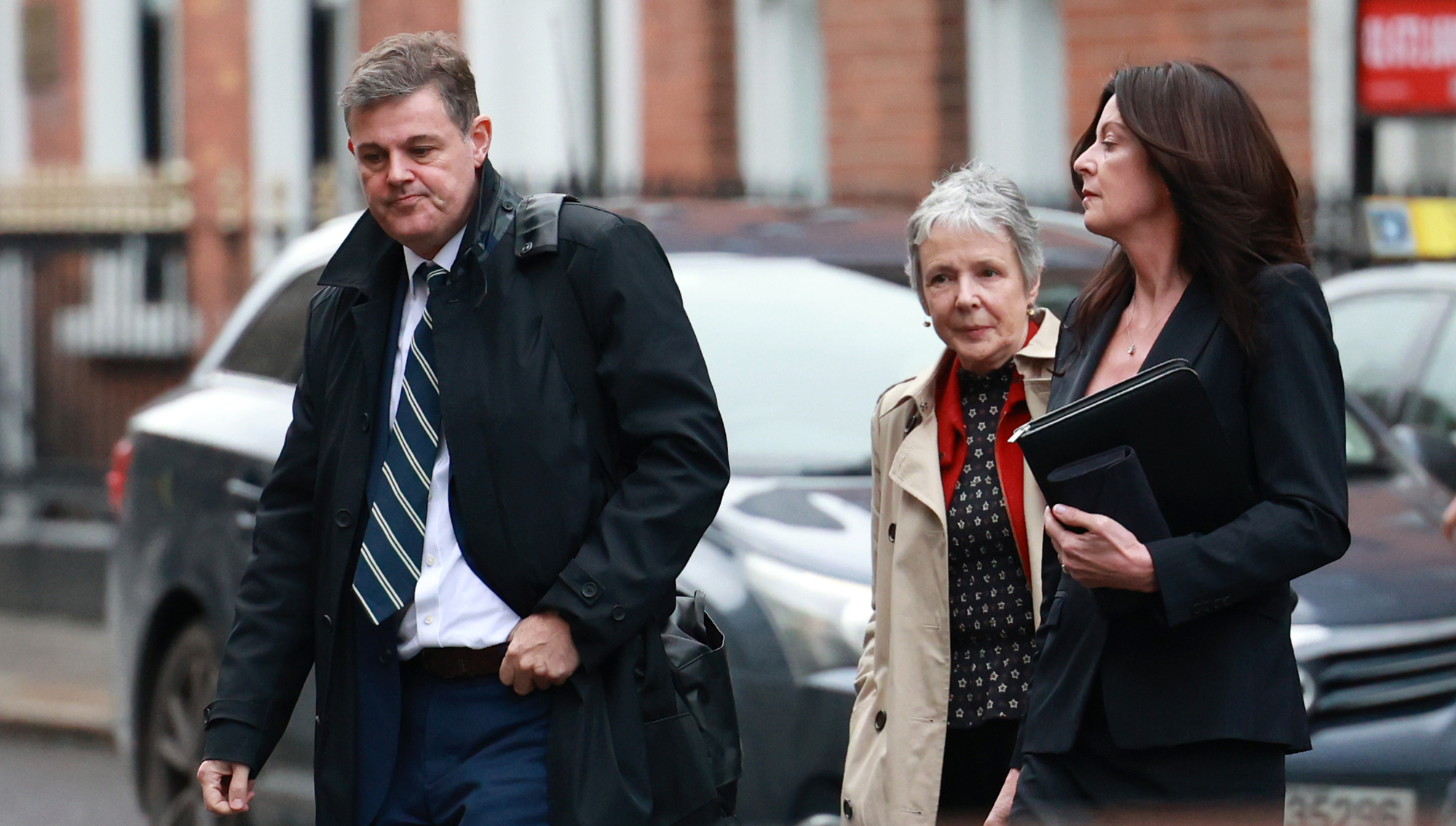
(Left to right) RTE Director General Kevin Bakhurst, RTE board member Siún Ní Raghallaigh and RTE board member Anne O'Leary arriving at Leinster House for the Joint Committee on Tourism, Culture, Arts, Sports and Media on Wednesday afternoon. Photo: Sam Boal/Collins Photos
At this stage, you would imagine that most Irish people are royally sick of the whole RTÉ debacle.
Eight months is a long time to be listening to endless debate as to what a mess the organisation is. Nevertheless on paper, Wednesday’s meeting of the Media Committee was as important as any hearing to date, given it was convened to discuss the findings of two recently released and much-anticipated reports regarding two separate debacles: the genesis of costly flop, The Toy Show: The Musical and RTÉ’s problematic voluntary redundancy schemes of 2017 and 2021.
As tedious as the RTÉ saga may be, there remain serious questions to be answered, both in terms of what happened at the broadcaster, and in terms of what comes next in terms of how public service broadcasting is to be funded in Ireland.
The problem with the former is that so many of the characters crucial to what happened were absent from committee room three on Wednesday afternoon.
The three most noteworthy empty chairs — each accompanied by a note respectfully declining to attend, though Moya Doherty elaborated to say hers was due to family and personal reasons — were probably Ms Doherty the former chair, former head of strategy Rory Coveney, and former chief financial officer Breda O’Keeffe, she of the €450,000 redundancy package for a role that wasn’t even made redundant.
Former director general Dee Forbes was also missing, but then she has been so since the very beginning.
Ms Doherty and Mr Coveney were equally egregious absentees on Wednesday however, and those who were present, many of them board members making their committee debut, were not shy about speaking their mind about their missing former colleagues.
RTÉ’s Audit and Risk committee chair, Anne O’Leary, has come in for a lot of criticism due to her committee’s perceived lack of scrutiny of the musical, which ended up making a €2.3m loss, and its financials.
She argued that such criticism is “a little unfair” and made abundantly clear, repeatedly, that as far as she is concerned the audit committee didn’t scrutinise the stage show, which ran for a month in Dublin’s Convention Centre in December 2022, because it wasn’t allowed to, specifically by Ms Forbes and by Mr Coveney, the primary driving forces behind the musical.
“There was a rigorous process in place about how projects are supposed to get approval,” she said, one which had been used 33 times during her time at RTÉ to interrogate costly projects and one she said had been “deliberately circumvented” by the two executives.
By this she said that she meant that no matter how often she asked for costings and detail surrounding the musical in early 2022, those requests were simply ignored.
Ms O’Leary went further. She said she felt “completely betrayed” by her former colleagues and lamented her own assumption that those with knowledge of how the musical was faring were “careful executives and would do their jobs”.
She was on less solid ground when discussing the re-appointment of auditors Deloitte to the RTÉ beat for an additional two years in the wake of the scandals besetting the organisation, saying that this had happened as it was “easier” to do so than to expedite a tender for an alternate vendor.

She noted that the Ryan Tubridy pay scandal had only come to light because Deloitte had noted it.
No mention was made, however, of the €75,000 which had been transferred from RTÉ’s commercial income to bolster the Toy Show musical’s sponsorship figures. In fact, that figure, one of the most damning to emerge to date in the RTÉ saga, wasn’t mentioned once at the committee, which doesn’t cast the questioners in the best of lights.
The other figure to take centre stage was HR director Eimear Cusack, who has worked with the organisation since 2017, though this was her first time speaking at length, and providing an opening statement, to one of the committees.
Ms Cusack is of interest primarily regarding the voluntary redundancy scheme dating from 2017, which saw Ms O’Keeffe leave RTÉ with an exit package of €450,000, as confirmed by director general Kevin Bakhurst at committee, despite the package not having been signed off by the RTÉ executive and the fact no cost savings whatsoever were achieved on the deal.
The HR director said that while she knew that exit package was unusual, and the largest she’d ever signed off on, she had not questioned it as she had “no reason not to trust” Ms Forbes, who after all was her boss.
Ms Cusack denied that she had been “afraid” of Ms Forbes, while Mr Bakhurst stepped in to defend her competence — stating that while Ms Cusack “had made a mistake” and should have looked closer, she nevertheless “is an extremely good head of HR” who is “delivering change” to the organisation.
A penny for Mr Bakhurst’s thoughts, whose dream job has turned out to be nine months of cost-cutting, fire-fighting and miserable Oireachtas appearances.
On Wednesday, he noted that he is “sick” of not being able to give the full detail of what has happened at RTÉ. The feeling is similar among the public, one suspects.