Thorn in O’Leary’s side unlikely to be gone anytime soon
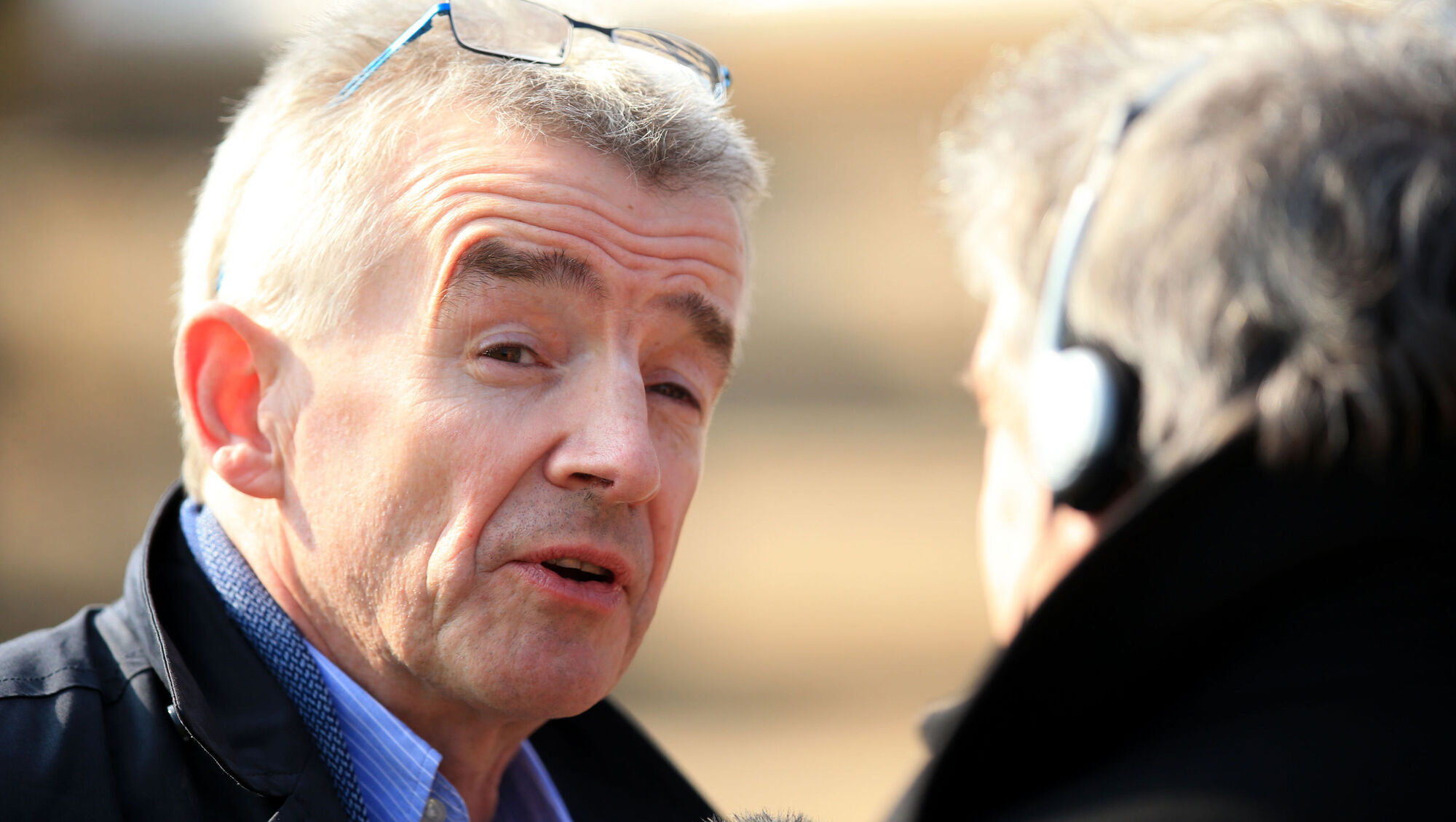
In an open letter issued on Friday, Mr O’Leary called on Mr Ryan to resign 'and let someone competent deliver traffic, tourism, and jobs growth for Ireland'
Thorn in O’Leary’s side unlikely to be gone anytime soon

Ryanair CEO Michael O’Leary has not been shy about airing his grievances with Transport Minister Eamon Ryan in the public sphere. Picture: Mike Egerton/PA

A Government minister issuing an open letter to the chief executive of a major company is not a regular thing.

But then, Michael O’Leary of Ryanair isn’t a regular CEO, and his increasingly personalised tirades on Transport Minister Eamon Ryan have gone beyond regular lobbying.

In an open letter issued on Friday, Mr O’Leary called on Mr Ryan to resign “and let someone competent deliver traffic, tourism, and jobs growth for Ireland”.

This followed a radio interview in which he called Mr Ryan “an idiot”.

In response, Mr Ryan accused the mercurial airline executive of “highly personalised, inaccurate and inflammatory” statements throughout his tenure and said that he has made offers to Mr O’Leary to meet him.

“Those invitations have never once been taken up. I reiterate this open invitation to you again should you wish to accept.”

The personal sideshow, while entertaining in a way, has distracted largely from the actual issue that has vexed Mr O’Leary and caused a split at Cabinet, an issue that has its roots over a decade and a half ago.

Back in 2007, when Terminal 2 was approved at Dublin Airport, 23.2m passengers transited through the Swords campus.

That figure was up 9.9% on the year before, but while 2008 would see another 200,000 or so added to that number, there was little thought given to the planning permission’s cap of 32m passengers a year, especially when the financial crash saw passenger numbers drop below 20m for three straight years even as the new terminal opened in 2010.

But in 2015, numbers began to rise and topped 25m, before 2019 saw the cap breached by around 900,000 passengers before covid took the legs out from under the travel and tourism industry.

However, the swift rebound in air travel will likely see Dublin Airport’s passenger cap breached again.

It is this cap that is causing the schism at Cabinet and so riling Ireland’s best-known chief executive, with proposals to increase the limit to 40m passengers per year.

To be precise, the Dublin Airport Authority (Daa) is applying for a 15-year permission to build a suite of 11 distinct infrastructure projects at Dublin Airport and the surrounding area as well as an increase in the passenger capacity at the airport from 32m to 40m passengers per annum.

The infrastructure projects include the expansion of the North and South Aprons to accommodate extra aircraft and the expansion of the check-in and passenger services area within Terminal 1 which includes the relocation of the existing security area.

There are also three infrastructure projects on the airfield and five relating to airport access and parking.

The documentation submitted by Daa runs to over 7,000 pages and almost 700 drawings and is what Fingal County Council calls “an application of significant scale and complexity”.

But why the need to expand and what are the arguments against it?

Going back to 2007, the grants of planning permission by Fingal County Council for Terminal 2 and the North Runway applied the 32m passenger cap and the night-time restrictions on the runway system at Dublin Airport respectively.

In the case of the passenger cap, it was largely felt that the roads and infrastructure in the surrounding areas would struggle to cope with much more in the way of traffic.

Going back to 2007, the grants of planning permission by Fingal County Council for Terminal 2 and the North Runway applied the 32m passenger cap and the night-time restrictions on the runway system at Dublin Airport respectively. File picture

The Daa now wants an increase in the number of flights taking off and landing at Dublin Airport between 11pm and 7am.

However, residents have objected to this idea because they say that existing issues with flight plans have resulted in unbearable noise.

Proposed flight paths from the new runway, which first opened in August 2022, were environmentally assessed on the basis of a ‘straight out’ pathway, one where no turns were taken by aircraft for five nautical miles following takeoff.

However, the runway has never followed those paths and has instead imposed almost immediate turns on departing aircraft leading them over neighbouring communities.

In one of many submissions on the new planning application which closed two weeks ago, Green Party junior minister and TD for Dublin Fingal Joe O’Brien said: “It will significantly increase noise exposure from aircraft to residents of north county Dublin and cause a significant increase in greenhouse gas emissions.

“During a climate emergency, I believe it is contrary to our national and international commitments to expand airport passenger numbers by 25%.”

Mr O’Brien and his party colleague MEP Ciaran Cuffe have made the point that additional passengers would mean additional flights which would mean additional emissions.

For its part, Dublin Airport last week unveiled its plan to cut emissions at the airport.

This includes running vehicles on Hydrotreated Vegetable Oil (HVO) and upgrading rainwater harvesting, lighting, and bus facilities.

For airlines, the great hope of emission reduction are so-called SAFs — sustainable aviation fuels.

At European Union level, the adoption of the Refuel Aviation Regulation, a law to increase the uptake of SAFs has been passed.

However, as Mr Cuffe points out, the requirement for the use of SAFs is only 5% use by 2030, 20% by 2035 and 32% by 2040, and also, SAFs themselves are not zero-carbon.

Both Ryanair and Daa insists that airline and passenger demand is there, but that Ireland would lose out to other uncapped hub airports in the UK and Europe for new jobs and new connectivity and that Dublin Airport can currently cater for up to 35 million passengers without any need for additional infrastructure and the access road network could accommodate this.

On the political end, both Fianna Fáil and Fine Gael politicians have signalled support for the expansion, but Mr Ryan has insisted there is no political input into the planning process, which means that it is not yet a full-on Cabinet dispute.

While we await a decision, however, it’s unlikely that the arguments will be put away.

x

More in this section

Revoiced

Newsletter

Sign up to the best reads of the week from irishexaminer.com selected just for you.

Cookie Policy Privacy Policy Brand Safety FAQ Help Contact Us Terms and Conditions

© Examiner Echo Group Limited