Ireland must persuade EU and US to implement court's ruling if genocide in Gaza is proven
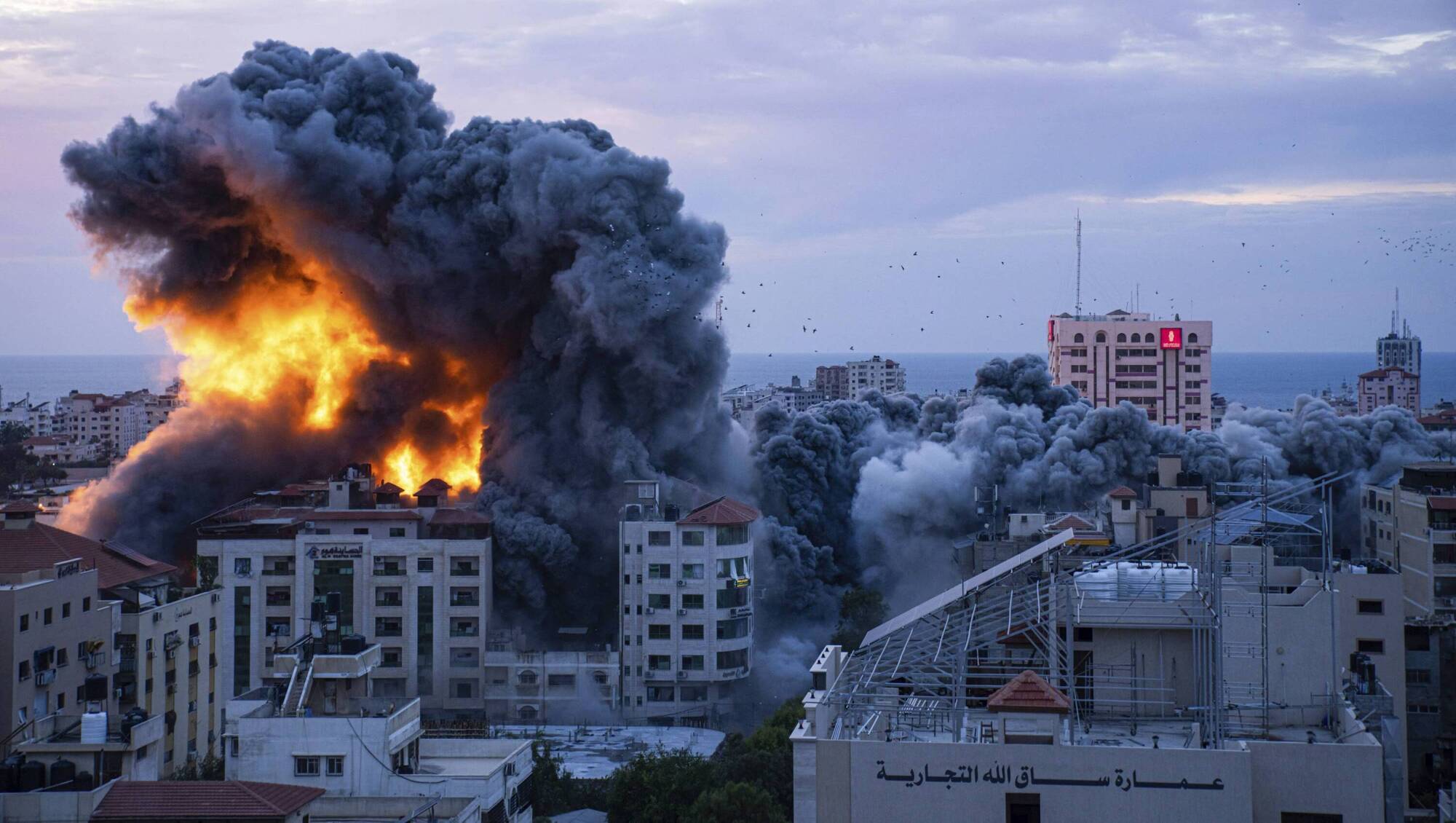
The level of destruction in Gaza is now almost unbelievable with perhaps up to 30,000 killed, of whom as many as 10,000 are children. File photo: AP/Fatima Shbair
The Convention on the Prevention and Punishment of the Crime of Genocide was agreed by all the countries of the United Nations in 1948 and is universally applicable.
It was conceived as a response to the racial crimes committed by Nazi Germany during the Second World War, in particular the Holocaust which resulted in the extermination of most of Europe’s Jewish population. The Convention defines the crime of genocide as the destruction of — or the intent to physically destroy — any national, ethnic, racial or religious group.
The International Court of Justice (ICJ) in The Hague was established by the United Nations two years earlier to arbitrate in disputes between member States. Unlike the International Criminal Court (ICC) which was not established until 2002, all members of the UN are parties to the statute of the ICJ, including Israel and the US.
Just two weeks ago on December 29, South Africa lodged its case with the ICJ accusing the State of Israel of committing the crime of genocide in its campaign against Hamas in Gaza. Israel has reacted with predictable fury to this charge — but also not a little embarrassment. Given Jewish history, this is surely one crime of which Israel should never have allowed itself to be accused.
Although the allegation of genocide will be hard to prove, there is no doubt that the South African case is a strong one and is well-argued in its official deposition to the ICJ. Its recent description by the White House spokesperson as “meritless and counterproductive” is not only unfair but blatantly inaccurate.
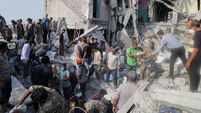
The level of destruction in Gaza is now almost unbelievable with perhaps up to 30,000 killed, of whom as many as 10,000 are children; most of Gaza’s public infrastructure has been destroyed including water and power supplies; mosques, churches and schools have been hit and only a few overcrowded hospitals are still functioning; at least 60% of the entire housing stock has been destroyed or rendered uninhabitable.
Worst of all, the constant bombardment of civilian areas in the south of Gaza serves no military purpose and senior members of the Israeli government are even proposing the transfer of much of the Gazan population out of the country entirely.
It is clear that war crimes and breaches of international humanitarian law have already been committed. Meanwhile, any possibility of a ceasefire to end the slaughter has been ruled out of the question by Prime Minister Netanyahu.
By and large, the Irish government has acquitted itself fairly well in its response to the initial Hamas outrage of October 7 and the subsequent Israeli onslaught on civilian targets in Gaza. While it rightly condemned the indiscriminate attack on civilians by Hamas and the taking of hostages, it has also made clear its deep disquiet at the disproportionate nature of Israel’s military response and the enormous level of civilian casualties.
Very unfairly, Ireland has received much negative coverage in the Israeli media suggesting that we are the least friendly to Israel of all the European countries. One Israeli politician has even suggested that the entire population of Gaza should be transferred directly to Ireland!
With regard to the genocide case being brought to the ICJ, both the Taoiseach and the Tánaiste have indicated that Ireland will not be offering its support to South Africa at the present time. This is clearly regrettable but it is understandable.
To act outside the EU consensus would be likely to attract heavy criticism not only from Israel but also from some quarters in Europe and the US — with possible consequences for our important commercial relationships.
Furthermore, the countries which have to date supported South Africa in its application to the ICJ are all either Arab countries or outliers such as Iran, Cuba and Venezuela, none of whose regimes are renowned for the protection of their own citizens’ human rights.
In many ways, however, South Africa is the ideal country to take this particular case to the ICJ. It is a pluralist democratic state with no colonialist baggage and has itself suffered from the atrocious crime of apartheid. Nor is it dependent on trade and investment from the Western world.
It has little to lose therefore from picking a fight with Israel on the latter’s treatment of the people of Gaza and Palestine in general. A victory in the International Court of Justice would undoubtedly burnish its credentials further among its peers and allies.
Where Ireland should certainly play its full part is in the aftermath of the formal ICJ decision — whatever and whenever that may be. As a general rule, Ireland is fully supportive of all UN bodies and their official rulings and no exception should be made in this case.
The government should accordingly be prepared to use all its influence and diplomatic skills to ensure that whatever the ICJ calls for in its ruling is implemented by the EU and by our friends in the White House — even if that involves sanctions against Israel.
Anything less would be a derogation of our duty to history and to the international community.
- Niall Holohan is a retired ambassador who served in Ramallah as the Irish Government’s Representative to the Palestinian Authority from 2002 to 2006.


CONNECT WITH US TODAY



Be the first to know the latest news and updates