Countries bearing the burden of climate change have done little to create the problem
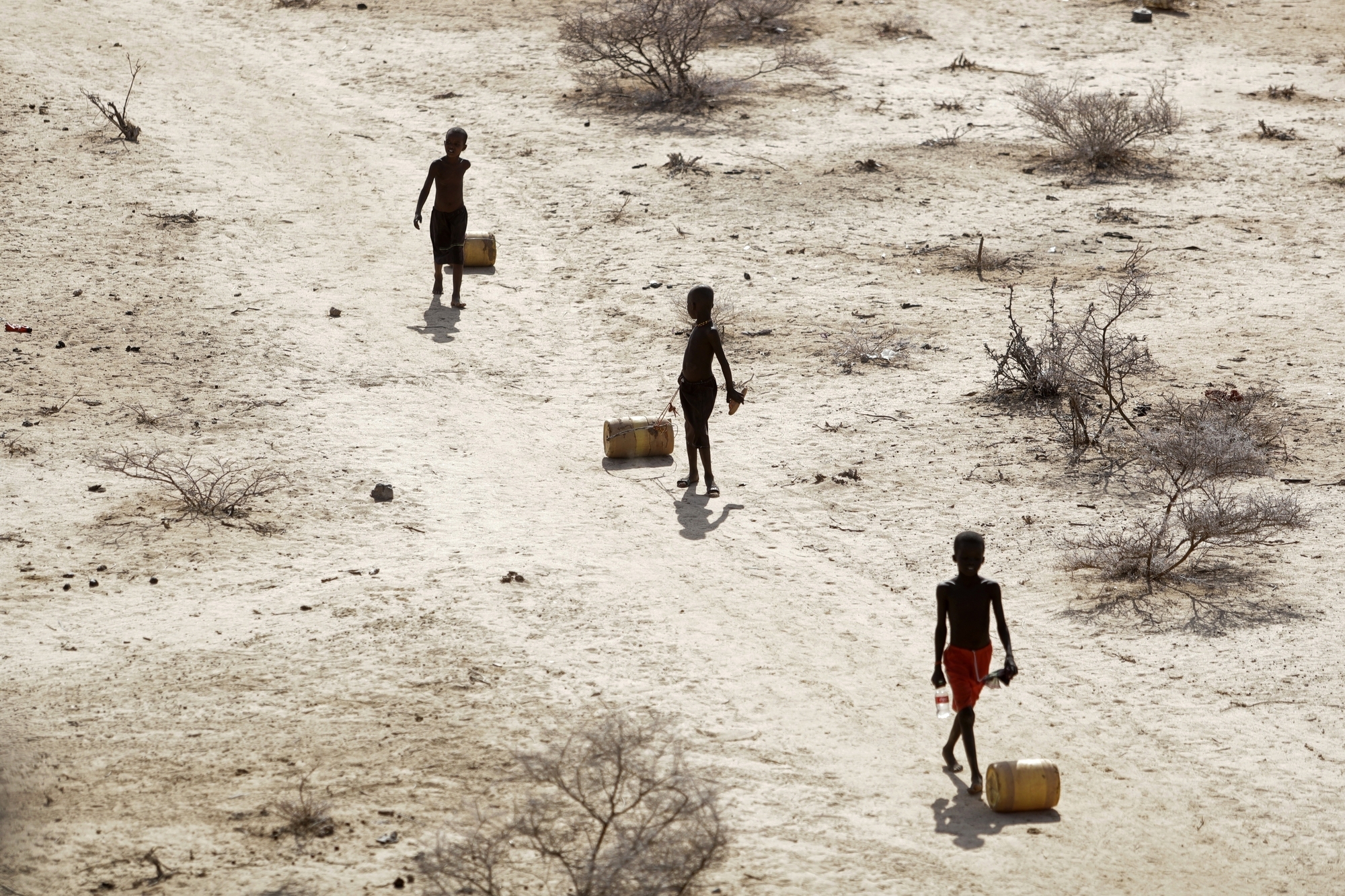
In northern Kenya, five successive failed rains have had a devastating impact on the mainly pastoral communities, with an estimated 50-70% of livestock dying during the drought. Picture: AP/Brian Inganga
As global leaders gathered this week in Dubai at Cop28, pastoralists in northern Kenya are not just recovering from the worst drought in 40 years, but are preparing for the next drought.
Meanwhile, in Bangladesh, people are counting the cost of a year in which they experienced the hottest day in 58 years and an unprecedented three cyclones, and widespread loss of farms and livelihoods as a result of flooding.
In the coming days, policymakers at Cop28 will repeatedly be told countries which contributed least to greenhouse gas emissions are bearing the brunt of climate change. But will they truly understand what that means or what is urgently needed from them to assist these countries?
In northern Kenya, five successive failed rains meant there were no proper rains in 2021 and 2022. The impact on the mainly pastoral communities was devastating. An estimated 50-70% of livestock died during the drought. The cattle were first, followed by sheep and goats, then donkeys — which are normally very resilient — and then finally the camels.
Some 50% of camels in the region died during the drought. They are the most important asset for pastoral people, a sign of wealth. Camels are only sold when there is a huge need or for a dowry.
The drought of 2021/22 has had a devastating and long-lasting impact. It takes between six months and one year after a drought before goats breed again. For cows, it is a further year. To replace the livestock lost during the recent drought could take between three and 10 years. But communities now expect droughts every five years, making herd replacement impossible.
A major humanitarian response across the region meant the loss of human life was limited in 2021 and 2022. However, malnutrition levels soared, with about one million people in the region becoming malnourished during the drought.
The lack of rain has forced some families to move to urban centres, abandoning their homes and potentially their way of life. Usually, community meetings are attended by women as they are closer to the family homes.

But these meetings, facilitated by Concern staff, are now increasingly attended by men and boys. They are there to see what is happening, in search of hope. They carry small clubs and herding guns — essential tools for herders — but now they have no animals to care for. Their animals have died and their herds have shrunk — in some cases going from 50 down to two goats.
In Bangladesh, climate change poses an existential threat to the 169 million population. Two-thirds of people – 112 million — live less than 15 feet above sea level.
With sea levels rising, one-in-seven Bangladeshis — 24 million — are expected to be forced from their homes by climate-related issues by 2050.
In addition to increasing rainfall levels, greater uncertainty comes as to when the rain will fall. Soaring temperatures between April and June meant that much of this year’s jute crop was damaged and burnt.
Bangladeshi families also face the increasing risk of river erosion, which is destroying fertile land and people’s livelihoods. In parts of the south, where we work, 563 families (about 2,500 people) lost their farms and homes this year alone. Some families try and remain in the area. Others have no option but to migrate to cities, where they face living in very poor conditions in informal settlements.
Concern is working with communities in Bangladesh and Kenya as they adapt to climate change. Concern supports people at household and community level, helping people to be sustainable today, tomorrow and in the future beyond the next drought or flood.
Kenya has a lot of fertile land but not enough water. It can produce sufficient food and livestock but investment is needed in water sources. If all the available water is harvested, it can be sufficient.
In several regions of Kenya, much of the underground water is saline or high in metals. Major investment is needed to treat water for multiple use — livestock, crops and human consumption. Concern has done a lot of work rehabilitating boreholes.
Work is also needed to manage rangelands so the vast pasturelands used by pastoralists to graze their livestock can re-generate. This is one the key areas where climate adaptation funding could have major results.
Research is being undertaken into hybrid and drought-resistant seeds. However, you cannot plant them without sufficient water. The use of fast-maturing and drought-resistant seeds is being rolled out to communities, with the seeds being harvested and kept in communities for the following year’s harvest.
In Bangladesh, Concern is a member of the Zurich Flood Resilience Alliance, working to develop effective early warning systems. This gives communities advance notice of impending floods, enabling them to limit the damage done by taking steps such as strengthening flood defences, and moving livestock and assets to higher ground.
Adaption work to protect communities includes raising households and community buildings such as mosques and schools on plinths and raising the height of key access roads. Nature-based solutions such as strategic tree-planting near households and along roadsides are also effective in protecting structures and limiting soil erosion during floods.
The new reality of worsening climate change means these adaptation measures are becoming more difficult and ineffective given the increased extremes of weather.
For example, we may raise a road or a building above the previously highest flood level, only for flood waters to rise further this year. Climate change means we are planning for unpredictable and previously unimaginable situations.
If the communities we work with in Bangladesh got 60 seconds with decision-makers at Cop28 they would tell them the people of Bangladesh are bearing the burden of climate change, although they have done little to create the problem. Wealthier countries are letting us shoulder the burden while doing little to provide the finance and support to help us.
Climate adaptation work is producing meaningful results for communities. But more funding is needed. Impacted communities will look for a commitment by global leaders and donors at Cop28 to increase climate adaptation funding and deliver on existing promises.
Communities at the frontline of climate change are adapting — they are experts in adaptation. They know how much adaptation costs and why funding for adaptation is inadequate. These communities also know that there is only so much adapting a person can do. Help is needed, commitment is needed and the political will to change course is needed.
Cop28 must be the moment for the whole world to adapt because we are running out of time.
- Afsari Begum is a flood resilience programme manager with Concern Bangladesh
- Jackson Mekenye is livelihoods coordinator with Concern Kenya

CLIMATE & SUSTAINABILITY HUB
CONNECT WITH US TODAY



Be the first to know the latest news and updates