Hiram Morgan: It’s time to steer away from an inflated cattle population
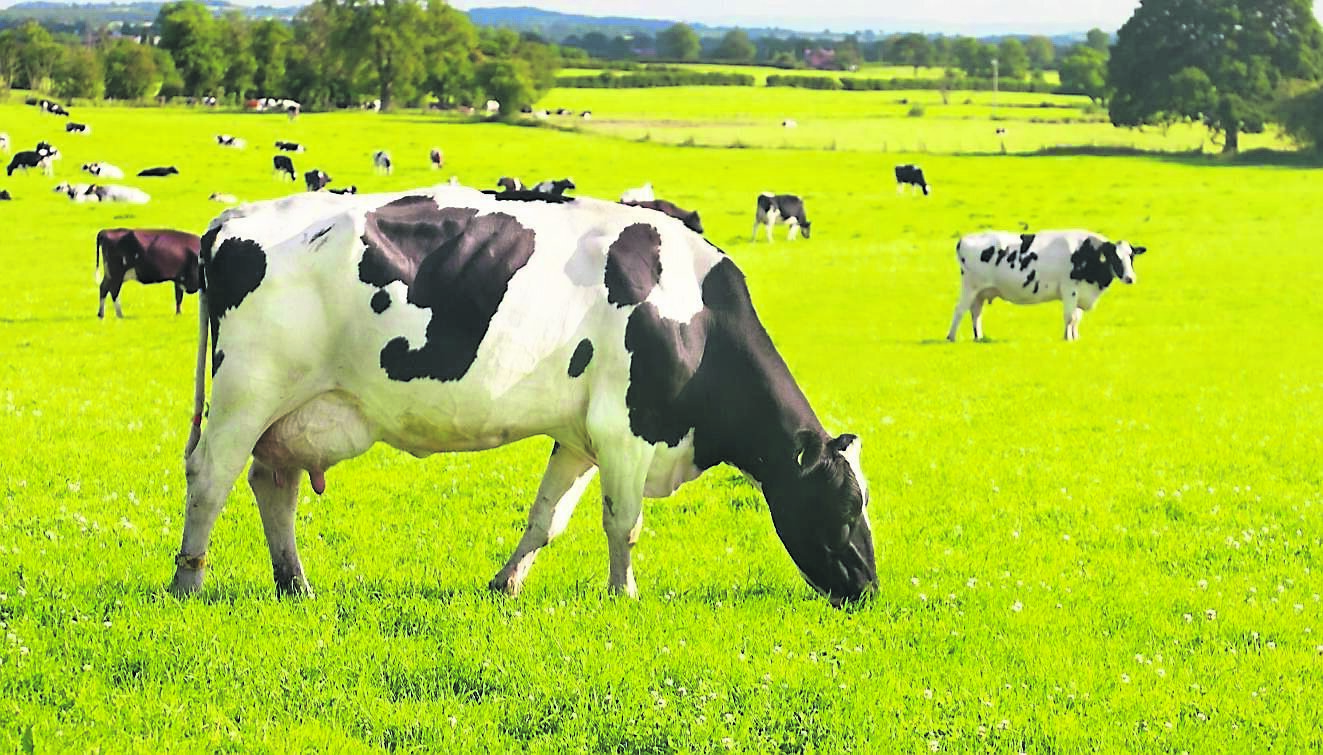
The issue is plain. Can the land in Cork or indeed anywhere in Ireland sustain the large numbers of livestock we now have?
Hiram Morgan: It’s time to steer away from an inflated cattle population

Ireland has always prized the cow, but while in 1589 there were 151,000 head of cattle in Co Cork, that number is well over a million now and growing.

Sometimes history can tell a basic truth. Pertinent to our current environmental crisis, there is one very interesting document from our colonial past relating to the government of Munster in 1589 when the plantation was being established there. It is a detailed estimate of livestock numbers in Co Cork for taxable purposes in State Papers Ireland. Similar compilations for the other Munster countries were plainly intended but they were either never carried out or haven’t survived. The extant document estimated that there were 151,000 head of cattle in the county.

Today there are well over a million. That should be a big cause of worry as the size of Cork has not changed in the interim!

In 1589, Ireland’s largest county was already linked to the wider world with the port towns of Cork, Kinsale, and Youghal exporting hides, basic manufactures such as woollen blankets and mantle,s and surplus grain to England and the continent. Yet the land itself was still in a relatively natural state. Apart from cultivated areas near towns, villages, and castles, the rest of the country was open, ‘champion’ (champagne) ground available for livestock.

Something of this landscape can be seen in Trinity College Dublin’s famous painting of the Siege and Battle of Kinsale in 1601/2 in which, apart from scattered patches of woodland, it is all open grassland. In such circumstances, it is a fair assumption to say that livestock was the county’s normal produce and that its natural carrying capacity, being then in an unimproved state, is approximately that contained in the 1589 document.

The overall figures given are 36,000 cows, 38,000 young cattle, 32,000 two- year cattle, 30,000 one-year cattle, and 15,000 calves; 26,000 horses, 12,000 two- year colts, and 6,000 one-year colts; 78,000 sheep, 36,000 goats and 36,000 hogs.

The victors of the Battle of Kinsale consolidated the Plantation of Munster and, with it, a new capitalist economy with land as the prized commodity.

Although the English colonists had advocated arable farming as the ultimate marker of civility over the large herds the Irish lords owned and exploited, they quickly realised that Ireland was best suited to pastoral farming and they commercialised it first in live cattle exports and later in butter and meat production. By the 1680s, Ireland’s fledging dairy industry located in Munster was being represented on Dutch maps. Today the dairy industry is king and our largest ‘co-operatives’ (Glanbia and Ornua), now working on a global basis, are turning over billions.

The issue is plain. Can the land in Cork or indeed anywhere in Ireland sustain the large numbers of livestock we now have? The Central Statistics Office shows the total number of cattle in Cork in 2020 at 1,104,794 up from 1,026,168 in 2000. It might be argued that large tracts of land reclaimed from ‘waste’ and ‘wilderness’ have, since the plantations, been made available for agriculture, but this should be offset against the extension of towns, roads, and other infrastructure.

Over time, the open country was enclosed with hedges and ditches, crop rotations were put in place, cattle farming shifted from seasonal movement between pastures to shelter in winter quarters with saved hay and heavier and better-yielding breeds developed.

Now the land is fertilised artificially by nitrates providing big crops of silage instead of hay, all sorts of machinery, technology and medicine have been harnessed and national, European, and GATT/WTO policies have been implemented. All these factors have enabled the expansion in the number of cattle and other farm animals. But the environmental damage is becoming all too evident, particularly the polluted rivers and the blooming lakes and seashores. Besides there is the issue of bovine methane emission, global warming and climate breakdown.

In 2020, the national herd in the Republic numbered a staggering 7,314,543 cattle. Reducing that number is a political lightning-rod given the industry’s success and all the hard work that has gone into that achievement.

Quite correctly, it will be argued back that the human population has also increased proportionally and is the major polluter.

But people can’t be readily culled, nor their weanlings sold off for veal, as Jonathan Swift once ruefully suggested. Harking back to the Munster Provincial Presidency’s 1589 plan to tax livestock is also relevant. It was never executed, because the colonial regime, having survived and recovered from the Desmond War, did not want to face the another revolt!

In the present situation, the Irish state’s lily-livered relations with the vociferous farmers’ lobby aren’t much different, but fortunately the EU Nitrates Directive and the current high price of such fertiliser holds out some prospect of letting the grass grow at a more natural rate.

However, the pursuit of profit knows no bounds and the fear would be of Irish cattle-raising’s extensive approach being abandoned for something far, far more intensive on the American model. One doesn’t have to look too far to see the criminal consequences: More dead loughs and watercourses like Lough Neagh.

x

More in this section

Revoiced

Newsletter

Sign up to the best reads of the week from irishexaminer.com selected just for you.

Cookie Policy Privacy Policy Brand Safety FAQ Help Contact Us Terms and Conditions

© Examiner Echo Group Limited