Richard Hogan: We loved Sinéad O'Connor for her raw, intense, authenticity

Sinéad O’Connor. Picture: Domnick Walsh
Our national broadcaster has come under incredible scrutiny in the last several weeks, many questioning its role in our society.
But if ever there was an answer to that question, John Creedon’s programme on Wednesday provided it so profoundly. I was driving home from work and getting ready to listen to a few ‘tunes’ that Creedon is famous for.
I have been listening to his ‘tunes’ now for many years. He kept me warm when my youngest daughter was sick in hospital. It’s his voice. The calm, soporific quality, his taste in music — or maybe it’s the Cork accent — but there is something about feeling safe listening to that show that I can’t quite articulate.
As the trumpets faded, Creedon’s voice came over the airwaves: "As you probably heard over the last hour or so, the death has been announced of the Irish singer, Sinéad O'Connor aged just 56."
I pulled the car over and just sat there, listening. I hadn’t heard. The opening song, , moved me in away only music can. Every hair on my neck was standing. I never met Sinéad, but there was something about her that you felt like you knew her. It is the same way I feel about John Lennon.
Some artists have a unique way of communicating that makes you feel like they are talking directly to you. Like you are the only one that fully understands what they are saying. Of course, the collective outpouring illuminates just how many others feel the same way. What a special talent that is.
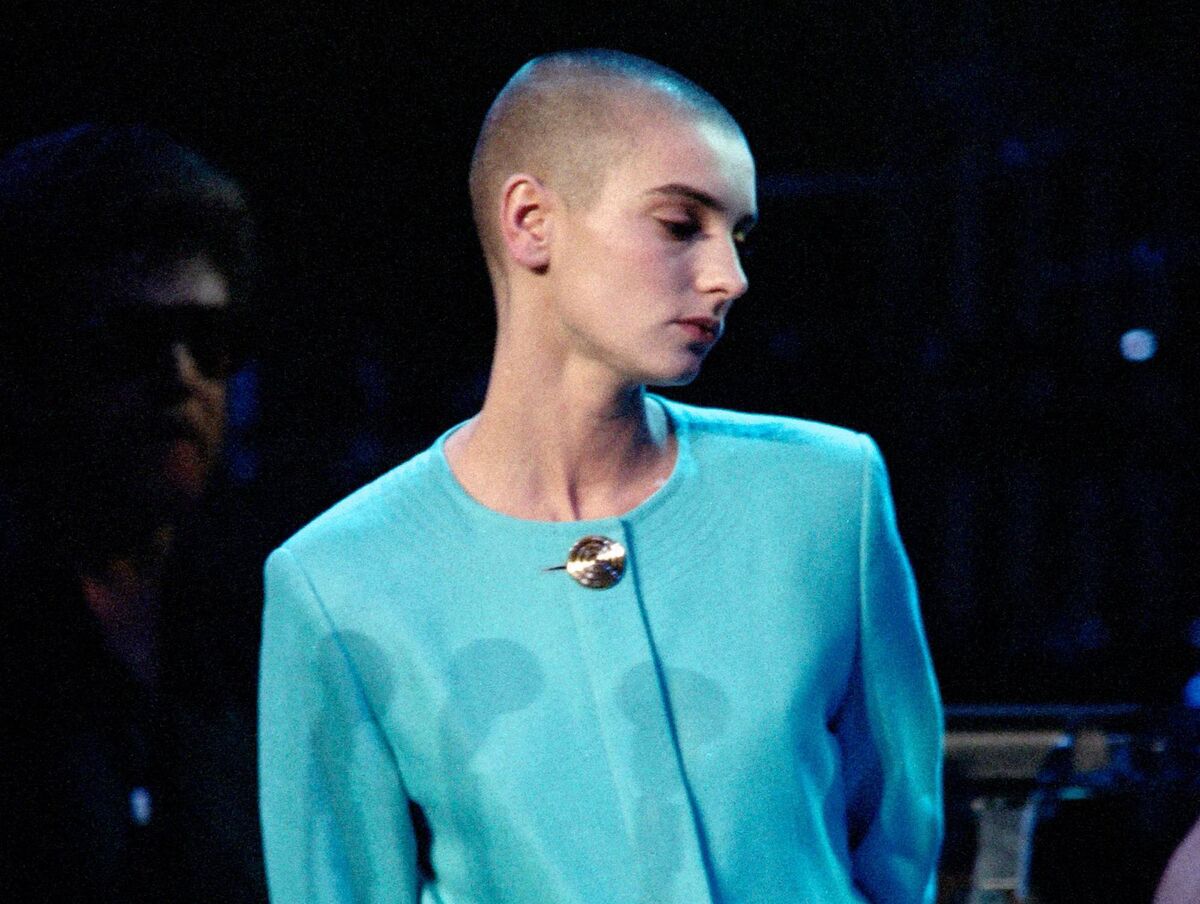
I was sitting there, emotional and recalling the first time I heard Sinéad O’Connor’s voice. I was 15 and a girl I was friendly with give me the album . I listened to it all that summer of 1990, rewinding my favourite songs on the cassette. Seems like a different world, now.
Like some Proustian madeleine, any time as an adult I heard , I was always transported back inside the skin of that 15-year-old boy. Confused and trying to make sense of the world.
That’s what happens when you produce a piece of art, it is assimilated into the collective consciousness of its people. Like U2’s , Patrick McCabe’s , or Yeats’ . They no longer belong to the artist. They become ours.
And when that artist dies, the public grief is profound. Because that artist represented something unspoken in us. They did what only a few can do; reach down into the rag and bone shop of our heart and drag into light the still sad music of humanity that lies in all of us. When that happens, a spiritual connection between artist and audience forms, and the artist transmutes from an ordinary person into a national treasure.
Sinéad made that transition and we all loved her for it. We loved her for her raw, intense, authenticity. I remember the first time I read by Sylvia Plath. I felt that same feeling. The utter honesty of her insecurity about being a mother. The authentic female voice jumping out of the page. Not the stuff you usually found in poetry. Similarly, I remember listening to the words of .
The dynamics in her voice — she could move from this sweet, innocent, haunting voice to a primal scream that touched every fibre in your soul with such ease. And then, there was her look. I had never seen anything like it before. It was so rebellious. Punk couldn’t come close. MTV was at its zenith, and the video, only capturing Sinéad’s facial expressions, communicated so much in such a simple way. That was her gift, to speak the truth in such a direct way, no fancy tricks.
There was no doubt her voice was special, but it was what she was expressing that made her utterly unique in the landscape of popular music. Her refusal to play the corporate game, and to live by her own rules spoke to the young rebel that raged in my teenage heart.
"There’s millions of people, offering advice saying how I should be, but they’re twisted and they will never be any influence on me."
Have any lines of poetry or song really captured the influence of the Catholic Church over young girls in this country in such powerful, direct, and unadorned language? When I think of Sinéad, I think of the Ireland she emerged from. An Ireland not so long out of the marriage bar, an Ireland where divorce was outlawed and homosexuality a criminal offence.
In every generation, there is a voice that has the courage to speak against the injustices prevalent in that society. The Lennons, the Alis, the Martin Luther Kings. Sinéad was that voice of my generation. She told young girls, not to blindly follow the rules. Her ripping up of the Pope’s picture on in 1992 was one of the most outrageous and defiant stunts I had witnessed.
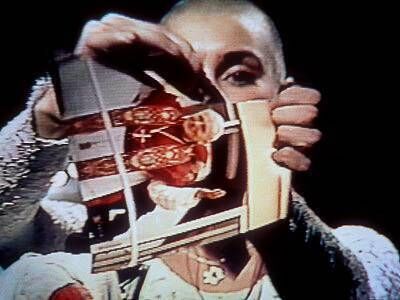
Whenever she made an appearance on the nation tuned in. I’d always be sitting there smiling because I could tell that Gaybo loved her mischievous side, he was so straight and you could tell she knew that he loved her wildness. It was a fascinating dynamic. It made for some great viewing.
The tragedy that engulfed her life over the last couple of years had a profound impact on her. It speaks to the devastation left in the aftermath of suicide. I have worked with so many families trying to build their lives again after such an incomprehensible tragedy strikes.
The recent scandal about the state of our mental health services in this country is a terrible indictment on how we help vulnerable families in crisis. Sinéad often spoke honestly about her childhood and the impact it had on her formation. Services in this country are failing people desperately in need. We urgently require better early intervention, so young children and adults in this country do not reach a point where they feel there is no alternative to the pain touching their life.
Sinéad’s voice touched all of us. We are all collectively grieving the loss of a special talent, our sister and daughter. I only hope Sinéad had a sense of the affection the nation held for her.
CONNECT WITH US TODAY



Be the first to know the latest news and updates