Brendan Lenihan: The RTÉ Board should have known more and earlier
Over the coming months no doubt there will be some soul-searching done within the RTÉ Board about what might have been done earlier to prevent the reputational damage done.
At last week’s Oireachtas hearing, former RTÉ chair Moya Doherty’s doctrine of the three ways that boards garner information (served up by management, from the external auditors and when on walkabouts) was challenged, immediately and incredulously by her questioner Mattie McGrath.
But what is it the spotlighted independent non-executive directors (INEDs) on RTÉ’s board could have done differently? If transactions covering a fraction of 1% of spend lead to catastrophic reputational loss, why would anyone sign up to an expectation that the boards should be across everything?
Let’s start with the bad news.
The imbalance in information between management and board INEDs is a fact of life. One side spends thousands of hours a year in the business, with INEDs dropping in for maybe 100 to 150 hours of that.
Too much trust in management makes an INED gullible and useless but no trust at all will bring the organisation to a halt quickly. Trust in executives is probably best judged over time and if management collectively or individually are untrustworthy then this is an issue which needs to be tackled head-on by the board and usually one side or the other walks out.
Secondly, knowing absolutely everything is an impossible task, even for management who may pretend that it does. Unfortunately, modern tech tools and the ubiquitous proliferation of information have only increased an unrealistic expectation of omniscience for INEDs.
All of that is not, however, an explanation of why a number of easily juggled balls were dropped in RTÉ’s case. Nor is it a charter for what seems to be a standoff-ishness from the RTÉ board before the alarm bells starting ringing in March.
For something as prominent as the Tubridy scandal and all of the related gaffs exposed thereafter, it is beyond surprising that it got all the way to the desk of an external auditor before alarm bells were sounded.
This is the equivalent of taking a visitor tour of the White House and walking straight into the Situation Room in full swing. It shouldn’t happen like that.
In reality, INEDs don't need to know everything, just collectively know the important stuff. By that I mean generally the information about strategic progress, risky initiatives, and the big judgements that are being made. Plus whether the organisation is culturally, ethically, financially and legally kosher.
Discerning this from the avalanche of the mundane (sometimes dross) that fills formal board reports and meetings takes skill and fortitude. Particularly when, for most people, the prospect of wading through such governance detail is as dull as dishwater.
Much of what perhaps ought to have been noticed in RTÉ may be in the often-overlooked boring bits. Good boards insist on having a scorecard of measures that should flag up the health of important areas. There should have been a number of forward-looking artefacts (including forecasts, plans and risk management reports) which provided information about what's going to happen next and what uncertainties may get in the way of RTÉ reaching its objectives.
Or perhaps in a number of backward-looking systems (including management accounts, internal audit reports, compliance statements) which provide written assurances that should have been accurate and complete.
For an organisation that appears now so culturally and financially compromised, I would be surprised if the signals weren’t there in RTÉ.
Even allowing for that, why did nobody on the RTÉ board just ask the question, at the right time — “so, what’s the deal with Ryan Tubridy’s renewal?”
If the board has not received information that it needs to do its job, the first suspect for me is in poor agenda setting by the chair. Boards at their core are collective human decision factories, with incredibly limited opening hours (only nine times in RTÉ during 2021, for a few hours at a time). There must be time made to ask the obvious questions.
What is also surprising about the RTÉ saga is the apparent lack of board curiosity about media reports of sizeable travel and hospitality expenditure in 2019, which we now know went through the infamous barter account.
That’s before we talk about what might have been in the risk mitigation plan for that opted to “go big or go home” rather than refine it first at a smaller venue.
Deliberate concealment is always a risk, both between the management and the board as well as between executive colleagues. Having a strong board and committees that exhibit both constructive challenge as well as healthy professional scepticism usually deals with that.
Challenge is typically about what is put in front of you by management as information, explanation or evidence. Scepticism is often, in my experience, about what isn’t there, but probably should be.
This is why every board should contain a qualified accountant, although that is not an argument for a room full of them. Having dropped some balls, in recent years the accountancy profession worldwide has invested a huge effort in strengthening professional scepticism. Not only to combat fraud but in light of a developing psychological understanding of cognitive bias.
In most financial and governance scandals it isn't that information wasn't there or wasn't provided, it's that the dots weren't joined up and the correct conclusions reached and interventions made.
The RTÉ saga has strong echoes of this, by admission at the Executive Board level and arguably at the statutory board level too. Call me old fashioned, but an RTÉ Audit & Risk Committee without a single member that belongs to a recognised accountancy body (based on current bios) is already starting from behind. As is a former board chair that gives the external audit opinion an overly exalted role in discharging what is inherently the board’s own responsibility to be accountable for the money.
People's motivations and perceptions may lead them to provide biased or misleading information, even when they have the very best intentions. There is a growing range of strategies and techniques that high-performing boards use to overcome bias in the way they operate and make decisions. It will be interesting to see if any featured at RTÉ board level.
One of the vital roles of INEDs is to puncture the collective overconfidence and excessive trust in ideas or people. It is not easy. It paints against the grain of constant positivity, cheerleading and lionising of management teams that can occasionally sail into public view in Irish business culture. Even though much of this is common sense, to execute it takes skill and courage. While it’s the right thing to do, you won’t be immediately clapped on the back for doing it.
In the end, in a place the size of RTÉ, some wrongdoing is inevitable. Promoting a culture of staff ‘speaking up’ is one of the strongest protections that INEDs have in terms of spotting it. In recent years, boards have started paying a lot of attention to the protected disclosures system. The PD legislation is specifically designed so that concerns about potential wrongdoing can escape from the staff level and become known to the board and/or beyond to regulators and potentially into the public realm.
Without suggesting wrongdoing on anybody’s behalf, in the 3 years from 2019 to 2021 there was only one protected disclosure reported in RTÉ. It was deemed ‘a legacy matter’ and apparently did not require further investigation.
With so much anger and recrimination in the air now, why weren’t more concerns raised then? If concerns were raised, where didn’t they percolate through to the Board? If they weren’t, is there a problem with speaking up?
Over the coming months no doubt there will be some soul-searching done within the RTÉ Board about what might have been done earlier to prevent the reputational damage done.
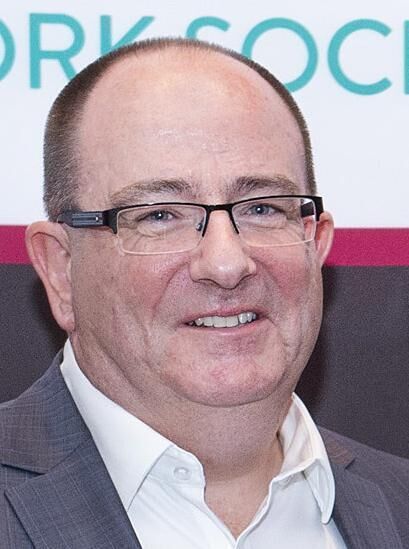
Brendan Lenihan is MD of Navigo Consulting. He is a professional INED, a governance consultant and mediator. A former President of Chartered Accountants Ireland, he served 4 years as an INED on the HSE Board where he chaired its Audit & Risk Committee and is currently an INED at Bus Eireann. He is Chair of a number of private companies and also Good Shepherd Cork.

CONNECT WITH US TODAY



Be the first to know the latest news and updates