Why has EU's nature restoration proposal turned toxic?
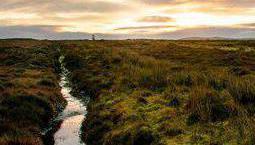
Among Irish MEPs, concerns around so-called 'rewetting', which means saturating peatland to help reduce greenhouse gas emissions, is one of the most contentious issues.
To those unfamiliar with lobbying, voting blocs, and Machiavellian insider scheming, it would seem the European Commission’s nature restoration proposal is a politically innocuous piece of legislation that should be rubber-stamped.
After all, who would not want to restore at least 20% of the EU’s damaged land and sea areas by 2030, and all ecosystems by 2050, as proposed by the commission.
More than 80% of protected habitats across the EU are in a bad state, according to the European Environment Agency, with a combined area about half the size of Spain in need of restoration.
Yet, the political fallout from the proposal has been toxic, driving a wedge between governments and MEPs alike, even at home in Ireland where the Government coalitions parties have been sending mixed messages, to put it generously, about the proposal.

Taoiseach Leo Varadkar's position that it "goes too far" is in direct contradiction to the Fianna Fáil TD and Agriculture Minister Charlie McConalogue and Green Party leader and Environment Minister Eamon Ryan, who have accused those in opposition as "scaremongering" around the rewetting of peatlands.
At the weekend, an information event held by independent TD Michael Fitzmaurice for the farming community in Ballinasloe at times erupted into chaos, as legitimate questions around the proposal by some in attendance were eclipsed by booing of speakers, far-right conspiracy theories around so-called “new world order” social engineering, and even outright denial of climate change and its impacts.
Before the 705 MEPs vote on the proposal this week, it first went to the European Parliament’s environmental committee, where it remained deadlocked at 44-44 on two rounds of voting.
No amount of political backroom channeling could swing the vote one way or the other.
Usually that would sound the death knell of such a proposal but its proponents kept it on life support, wanting to force the hand of all MEPs to show their intentions in a full vote.
The European Council of Ministers, made up of various government ministers from each member state, crucially reached agreement on the proposal independently of the European Parliament, helping to keep it alive.
What is in the proposal that makes it so contentious to the European People’s Party (EPP)?
The 176-strong EPP, of which Fine Gael is a member, claims the nature restoration proposal has good intentions but is badly designed" when it comes to farmers and food production.
EPP MEPs Esther De Lange, Christina Schneider, and Anne Sander claimed before the first 44-44 vote that the commission vice-president Frans Timmermans had threatened some of their fellow MEPs to accept the Nature Restoration Law or other political business they wished to pass in the future would be blocked.
Ms De Lange used words like "intimidation" while Ms Schneider claimed threats were made in MEPs offices. They also claimed the commission had been unduly influenced by green business lobbyists.
Those in support of the proposal have dismissed the EPP position as caving into far-rightwing rhetoric around the climate and biodiversity crises, and that without nature restoration, farming and food production will be bleak in the long-term.
Among Irish MEPs, concerns around so-called “rewetting”, which means saturating peatland to help reduce greenhouse gas emissions, is one of the most contentious issues.
Farmers have complained their lands are under threat of compulsory purchase orders, effectively confiscation, in order to meet rewetting targets, even though Environment Minister Eamon Ryan has ruled this out, and Agriculture Minister Charlie McConalogue has insisted there is enough publicly-owned lands to do the heavy lifting around rewetting.
Since the 44-44 gridlock in the European Parliament’s environment committee, the nature restoration proposal text has been tweaked — environmental campaigners say it has been severely watered down — in order to assuage MEPs and governments in opposition.
Ireland South MEP Billy Kelleher and Dublin MEP Barry Andrews, members of the Renew grouping in the European Parliament, have indicated they could now support the proposal.
Mr Kelleher was initially opposed, saying he could not vote for it in its original form.
Last week, he said the latest proposals from his political group, Renew Europe, on the Nature Restoration Law could ensure a balanced piece of legislation that supports biodiversity and protects farmers and landowners.
He said that Renew Europe had committed to tabling the text agreed at Council of Ministers’ level, in addition to 13 other amendments “that gives enough flexibility to member states when implementing the legislation”.
A spokesperson for Mr Andrews said he voted for the Renew proposal, and that he “wants ambitious nature restoration law”.
A spokesperson for Fine Gael MEP for Dublin and EPP member Frances Fitzgerald said “an effective EU nature restoration law is needed” and she “will be doing everything possible to make sure that law is absolutely as good as it can be for everybody — urban, rural farmers, businesses, and consumers”.

Fine Gael MEP for Ireland South Sean Kelly has been discussing the recent developments with colleagues and stakeholders, a spokesperson said.
“Decisions will be communicated next week. However, I would underline that Mr Kelly has repeatedly stated, publicly and to the EPP Group directly, that he disagrees with their decision to leave negotiations on the Nature Restoration Law,” she added.
Mr Kelly was critical of the EPP grouping for breaking off negotiations last month between MEP groupings and the European Commission when it came to the nature restoration proposal, saying it was akin to walking off the pitch while playing.
MEPs Maria Walsh and Colm Markey did not respond to emailed queries from the on whether they would vote in favour of the proposal or against it.
Ireland South MEP Deirdre Clune said she intended to vote for the amendments that reflect the Council of Ministers' position.
On the left, Sinn Féin MEP Chris McManus has indicated his concerns have been somewhat assuaged, while Green MEP Grace O’Sullivan and Ciarán Cuffe and independent MEPs Mick Wallace and Luke Ming Flanagan are wholeheartedly in support of it.
While the vote is scheduled for Wednesday, negotiations on amendments and final wording of the text of the nature restoration proposal will go down to the wire, with some Brussels insiders telling the that some groupings including the EPP may try to stall for time by moving to postpone the plenary vote.

Ms O’Sullivan has said the nature restoration proposal is “one of our last chances to show if the EU is a leader or a loser in halting the precipitous decline of biodiversity in Ireland and beyond”.
While political tussling takes place around biodiversity, the crisis is not getting better.
There are currently more than 42,000 threatened species on the IUCN Red List, which stands for the International Union for Conservation of Nature Red List of Threatened Species, the world's biggest data inventory of vulnerable species conservation status.
Outside of the IUCN red list, as many as 7.5% to 13%, or 150,000 to 260,000, of all two million known species have already gone extinct since 1500, biologists from the University of Hawaii at Mānoa and the Muséum National d’Histoire Naturelle in Paris estimated last year.
Up to a million wild species are facing extinction, many within decades, a report from the Intergovernmental Science-Policy Platform on Biodiversity and Ecosystem Services, signed off by 193 member countries, also revealed last year.
CLIMATE & SUSTAINABILITY HUB