Catherine Conlon: Government must support public buy-in to tackle climate change
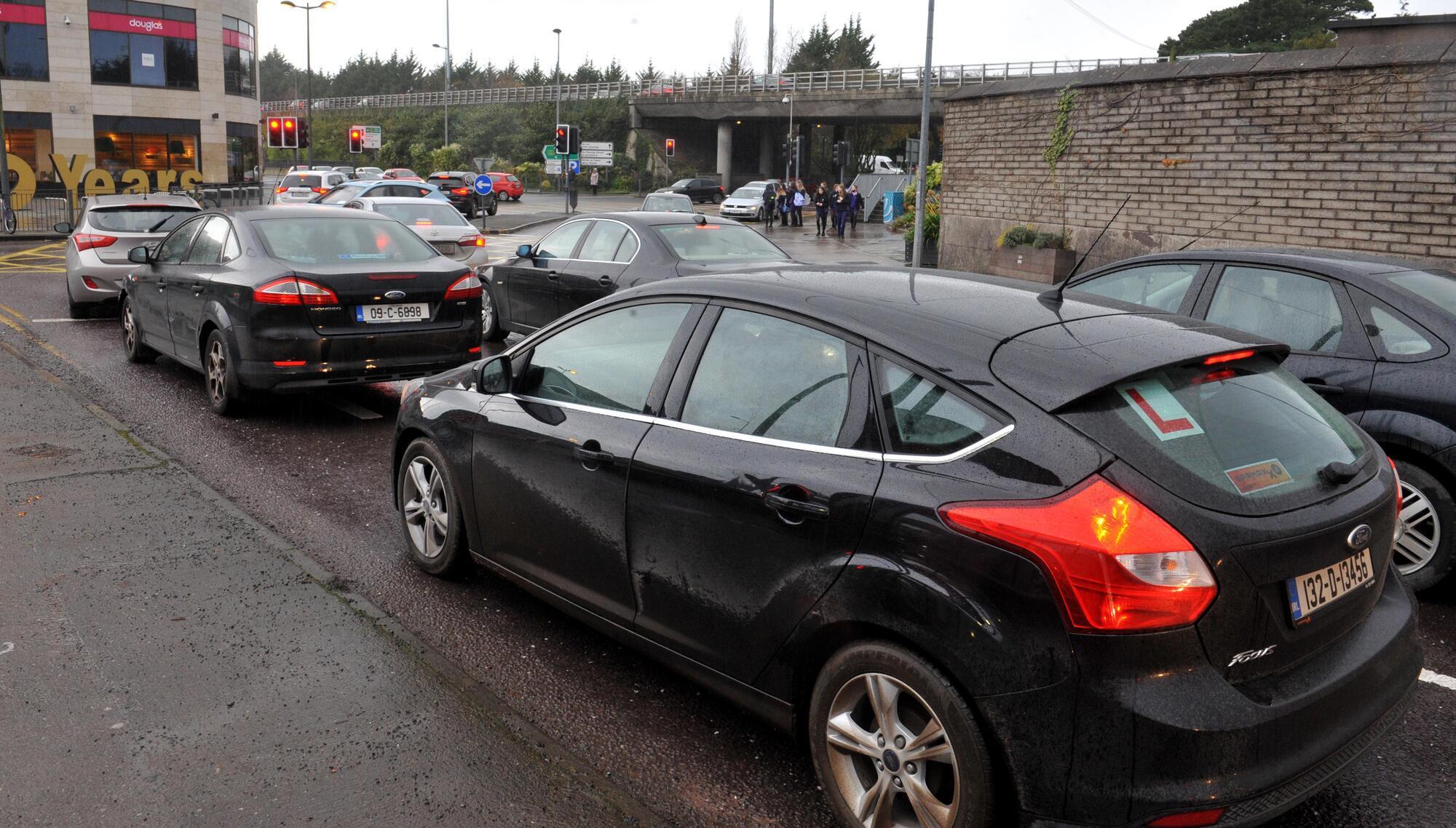
Traffic congestion in Douglas, Cork. A typical European car is parked almost all (92%) of the time, spends one-fifth of this driving time looking for parking and its five seats only move 1.5 people.
As the budget surplus is set to balloon to a staggering €15.5 billion in 2024, from €9.8 billion this year, the Economic and Social Research Institute (ESRI) is urging the Government to consider putting even more money into the National Reserve in 2023 to avoid taking measures that could overheat the economy.
The ESRI said it supports the Government putting aside windfall or excess tax revenues to address the State’s long-term pension liabilities as well as potentially using some of the funds to address ‘bottlenecks’ in housing and healthcare.
What is not mentioned in the report is the use of the budget surplus to address climate change.
One of the world’s leading climate scientists, Kevin Anderson, has repeatedly warned of the unwillingness of senior academics, journalists and government scientists to publicly acknowledge the urgent systemic transformation required to tackle the climate crisis.
In his unflinching commentary on Climate Uncensored, he has suggested there is no historical precedent for the 3-4C rise in temperature he predicts we are heading towards that is locking in really high sea level rise — maybe seven, eight, or more metres.
"We are likely to see one or two metres rise across this century which will be devastating for coastal cities. Food production, changing weather patterns, rainfall, insect pollination of crops are all playing out together — one disaster after another," he warns.
Why are we allowing this to happen? Professor Anderson suggests it is "because we are running too scared of the political repercussions of actually driving the emissions out of the atmosphere today".
Examples of "running scared" abound. While centuries of overgrazing and deforestation have eliminated most of the native flora in Ireland, creating what ecologists see as man-made deserts, the Taoiseach suggests that aspects of the proposed Nature Restoration Law "go too far". While the public service broadcaster sponsors car dealership events, ads for private jets appear regularly on front page media, and Michael O’Leary boasts of Ryanair "booming and getting boomier".
The suggestion by environmental commentator John Gibbons that ‘aviation quotas’ are attached to people’s PPS numbers, was met with incredulity.
While we obsess about a pay scandal in RTÉ, all around us the earth burns, the icecaps melt, ecology collapses, and the climate is increasingly off-kilter.
The key reason why the Government is not doing enough to address the climate and environment crises is because it does not have the support of the electorate to take the type of drastic measures that are needed and that will hurt the economy in the short-term.
As we listen to report after report telling us that urgent and collective action is needed to avoid tipping points, after which it will no longer be possible to prevent climate breakdown, the response of citizens range from indifference to mild anxiety as we contemplate our next purchase or plan our next holiday.
What is the solution? Where will the political will come from that will be the tipping point for behavioural change?
Incredibly, the British government attempted very briefly to do just that. In October 2021 it published a blueprint to change public behaviour to cut carbon emissions, including levies on high-carbon food and a reduction in frequent flying alongside its net zero strategy, but was predictably withdrawn within a few hours.
The blueprint emphasised that tackling the climate crisis requires "significant behavioural change" including reducing the demand for high-carbon activities such as flying and eating ruminant meat, among other changes. The report criticised the expansion of airports and tax exemptions given to the aviation sector. It suggested that a more realistic transition to net zero would involve tactics including reducing the number of frequent business flyers.
The report outlined nine key principles to change public behaviour to meet net zero. These included making clear to people what changes they have to make, making those changes easy and affordable, and aligning commercial interests with net zero outcomes. It recommended tax and statutory interventions to force change, including carbon taxes, a financial levy on food with a high carbon footprint, and using the law to force the public to change.
"We do not have time to nudge our way to net zero, and so a focus on building sufficient political capital and public support to instigate bolder action will be needed," the report concluded.
These issues are difficult ones for governments who know that many voters will fiercely oppose suggestions of a meat tax, or a levy on frequent flyers.
The British research report acknowledged that changing behaviours requires a clear narrative from government and that this is extremely challenging.
"We must recognise that we are often asking people to swim against the current, if the cheap, readily available, enjoyable, convenient, and default option is the unsustainable one."
It is hard to drive an electric vehicle (EV) if you don’t have off-street parking to install a charge point; hard to take a train when the plane is cheaper and quicker; hard to give up red meat when our shops, restaurants, and cultural norms are brimming with it. So, what will change people’s attitudes? Consumer research already shows that the next generation of eaters do not want to eat the products of a system with high carbon emissions.
A considered behaviour change campaign, of which the ESRI are masters, as we saw in the outcomes from the ESRI Behavioural Research Unit during the covid-19 pandemic, could make all the difference.
Active travel and public transport could be promoted by highlighting that a typical European car is parked almost all (92%) of the time. It spends one-fifth of this driving time looking for parking and its five seats only move 1.5 people. Almost all (86%) of its fuel never reaches the wheels and most of the energy that does moves the car not people.
Think about that the next time you jump into your shiny SUV to get to the shops, the gym, a play date, or the summer camp run.
Dr Catherine Conlon is a public health doctor in Cork and former director of human health and nutrition, safefood.
CLIMATE & SUSTAINABILITY HUB
CONNECT WITH US TODAY



Be the first to know the latest news and updates