Mick Clifford: Scandal of industrial schools now barely raises a shrug
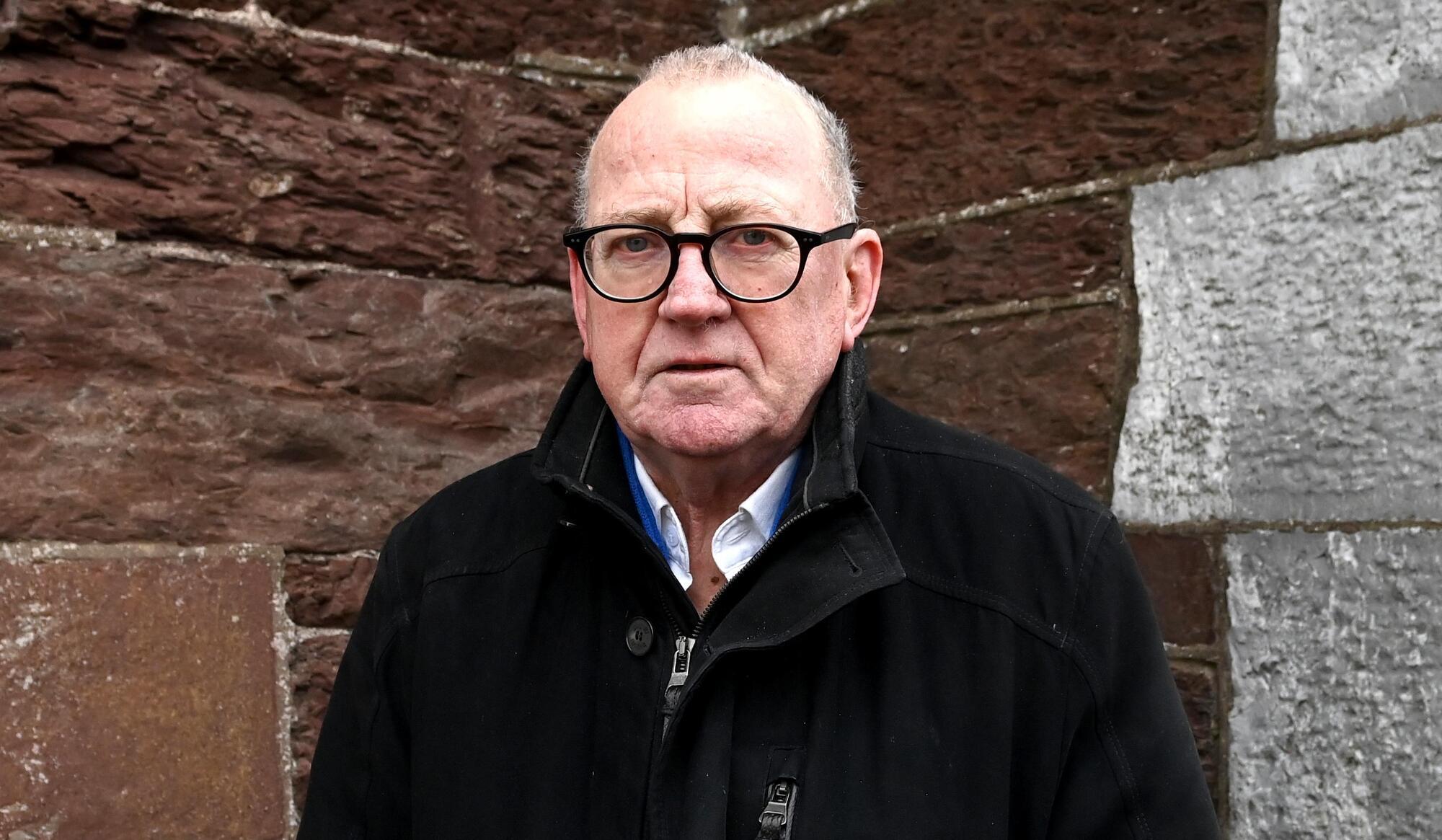
Tom Cronin at the old brick sandstone which reminds him of St Joseph's industrial school in Greenmount, Cork. Picture: Eddie O'Hare
Today’s big news is tomorrow’s fish and chips wrapping paper.Â
Or so it used to be.Â
In a time of digital communications, news normally disappears into the digital ether within 48 hours, rarely being heard of again.
Such is the case with the scandal of this state’s industrial schools.Â
On Tuesday, the Education Minister Norma Foley got approval from the Cabinet for supports for survivors of these institutions.Â
The measures include access to enhanced medical cards, the availability of education grants, and an advocacy centre.Â
The development came two years after a representative group of survivors presented the minister with a report on the needs of this elderly constituency. That report was nearly two years in the making.Â
So four years on, the minister delivered her proposals, presumably taking account of the survivors' report, yet managing to avoid implementing most of their recommendations.
The development on Tuesday brought barely a shrug from the body politic or the media.Â
It was all so different 14 years ago when the Ryan Report was published.Â
Everybody across the public square was falling over themselves to express shock, anger, offer empathy, and pledge to do whatever can be done to ease the pain of survivors in the late years of their lives.
The report, resulting from a commission of investigation chaired by Judge Sean Ryan, laid bare the outrage that had been perpetrated on generations of children behind the high walls of institutions.Â

Enda Kenny, the taoiseach at the time, spoke eloquently for the nation as society digested the contents.
“I regret the inadequacy of the words that I will use to deal with the Ryan Commission Report,” he told the House.Â
"All I can do is speak as a citizen, the leader of my party, and the father of a young family and try to imagine what those young boys and girls went through in the torture of their minds, given the extent of emotional, physical and sexual abuse.”
The religious orders involved coughed up over €100m to go towards restitution.Â
A new agency, Caranua, was established to fairly distribute resources and assist survivors negotiate the latter stages of their lives with a new cushion. Around 6,000 survivors contacted the agency and their experiences ranged from good to appalling.Â
On a number of occasions, Oireachtas committees raised problems with management in Caranua on foot of complaints from survivors about how they were being treated.
That process came to an end in 2019 and as a follow-on, a consultative forum was established to examine how best to continue assisting survivors.Â
The forum met with the minister on two occasions and produced a solid report in 2021 detailing what was required.Â
One of the main proposals involved some form of an enhanced pension for survivors, many of whom were living in poverty at the latter stages of hard lives.
“They were placed in these schools by detention orders in most cases, and forced to work in the schools baking bread,” the report outlined.Â
"In the summertime they were hired out to local farmers to work in their fields, picking potatoes and later when aged 16 was reached, sold to local farmers.”Â
The report went on to make the case why survivors who were subjected to forced labour against the law, with the connivance of the state, during their childhoods should now qualify for an enhanced pension.Â
“This whole area of abuse has been totally ignored and not covered by the redress board,” the report went on.Â
“This State pension should be paid at a comparable rate to a civil servant having served 21 years at grade A.”
There was no provision for any such pension in this week’s proposals brought to Cabinet. Instead, there was what one survivor on the representative forum described as “crumbs from the table.”
“I brought up about the pension in the Zoom meeting the minister had with us after she told the cabinet what she was doing,” Tom Cronin, who spent time in the Upton industrial school in Cork.Â

“I told her there was money there to be used and in our report, we were emphatic about why that kind of pension was needed by a lot of survivors.Â
"In my opinion, survivors have been used and abused through all these processes since the Ryan report.”
That view may not be universal among survivors, but Tom Cronin also sat on the board of Caranua before he resigned over what he said was the manner in which it was being run, particularly in attitudes towards the survivors the body was set up to assist.
If the government is intent on putting the matter to bed, it is well on the way to achieving that. The public anger has dissipated.Â
The media caravan has moved on to other issues. The outrage at the blighting of lives through childhood abuse of one sort or another is now focused elsewhere.Â
That matters such as this appear to be gauged according to transient public opinion tells plenty about where priorities lie.