Mairéad O’Shea: In the running: Encouraging women to get into politics

The possibility of having more women in elected office is becoming tangled up in negativity relating to online abuse, writes Mairéad O’Shea
Mairéad O’Shea: In the running: Encouraging women to get into politics

Becoming an elected representative is challenging, the hours are long, the work is demanding but the rewards are there.
Candidates all over the country are dusting off their sensible shoes as they prepare to hit the canvass for next year’s local elections and already it looks like we could have more women than ever before vying for those council seats. But this good news story is threatened with darkening clouds.

Somewhere along the way, the narrative has quietly shifted from “Why wouldn’t more women run for election?” to “Why would any woman even think about running?”

The possibility and positivity associated with having more women in elected office is increasingly becoming tangled up in negativity and barriers, particularly relating to online abuse and harassment.

While online abuse is an unfortunate reality for some politicians, it is not solely reserved for female politicians, so perhaps it’s time to reframe the narrative and talk about the many opportunities and benefits of having more women at decision-making tables and the positive impact this can bring to society.

Otherwise, we are allowing the trolls to win without even having to exert themselves to make a single click.

Here at See Her Elected, we have delivered workshops to hundreds of women all over rural Ireland and we have found that resilience and confidence, as well as fears about digital safety, are some of the greatest barriers to women entering and remaining in politics. Women also wait to be asked to run and, very often, that ask comes too late in the day so that is why we offer sustained support to women through our online SHESchool model and our publication Ireland’s first-ever Guidebook to Running for Local Elections 2024. We are asking women now with one year out to consider running for election otherwise nothing will ever change unless we get more women at the decision-making tables.

Becoming an elected representative is challenging, the hours are long, the work is demanding but the rewards are there. Women’s commitment to volunteerism and valuable contributions to their communities means they are already filling in gaps without the power to do anything about those gaps. By getting into the local council they can become a catalyst for the change they know their communities need. But we risk turning even more women off running for election if we don’t make a greater effort to highlight the positive aspects of running for elected office.

The fact remains, women do run for election and women can get elected. 

In 2019, just over a quarter (28.4%) of all local election candidates were women and there are currently 246 female councillors which stands at 25.9%. Research from University College Cork has shown that there is no electoral bias towards women on a ballot paper at election time, the challenge is getting more women onto the ballot papers to provide a choice for the electorate.

Council chambers need to be more reflective of the society we live in. For example, 13% of our population is made up of people with a disability yet we don’t see this reflected in the make-up of our councillors. We need to see more women, more ethnic diversity, and more disabled people or women from a Traveller background for example. The council chamber should look more like a microcosm of the society it represents. This will benefit all of society as it will hopefully make for more rounded and balanced decision-making. Councils have a say in the places where we live, work, and relax whether that’s affordable housing, environmental issues, road repairs, provision of playgrounds or leisure facilities or the arts – decisions made at council level affect our everyday life, so it is crucial that women play an equal part in that decision-making process.

Perhaps we need to be more solution focused and highlight the many benefits of the job of being a councillor. You don’t need a degree in politics or sociology to run for local elections, you just need to care about your community and want to make a change.

Change is slowly happening — the long overdue introduction of maternity leave for councillors is a game changer in this regard and will help to promote local politics as a viable career choice for women. But more can be done. 

The Family Friendly Tool kit by the National Women’s Council provides an excellent set of recommendations for Local Authorities which will help to make politics more family-friendly which will benefit both male and female politicians.

Practical and positive recommendations such as conducting hybrid meetings, offering flexibility of meeting times, ensuring information is distributed by email in a timely fashion in advance of meetings, providing a family room where children can do their homework if a councillor is attending a meeting- these are all possibilities and proves that it is possible to do politics differently. Introducing gender quotas is a quick and viable way to see an increase in female participation in both local and national politics.

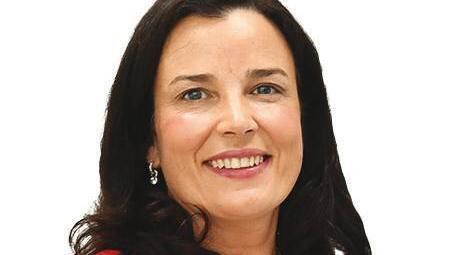
Mairéad O'Shea
Mairéad O'Shea

The adage of our political system being made up of “male, pale and stale” representatives is unfortunately true in many councils and the truth is gender quotas work.

In the 2016 general election when quotas were first introduced, there was a 90% increase in the number of female candidates and almost one-third of an increase in the number of female TDs. It is important too that women be selected to run in winnable seats and not merely chosen as the token female, added to an election ticket as a “sweeper” for the preferred male candidate.

The Citizens' Assembly has recommended that gender quotas be introduced at local election level and groups like See Her Elected are strong advocates for the introduction of gender quotas for local elections as a necessary catalyst for change as the glacial pace of organic change has yield little fruit.

In the meantime, we need to become cheerleaders for the women we know who are currently telling themselves that they could never run for election by asking one simple question: “Why wouldn’t you run?”

  • Mairéad O’Shea is the communications manager for See Her Elected.
  • SHE School Summer Series runs in July and August with topics and subjects that matter to women including resilience and confidence building, organising your campaign finances and understanding Sipo, staying safe online, using the Headliner app to promote your radio interviews, and basic graphic design with Canva. To find out more https://www.seeherelected.ie/she-school/she-summer-school/

x

More in this section

Revoiced

Newsletter

Sign up to the best reads of the week from irishexaminer.com selected just for you.

Cookie Policy Privacy Policy Brand Safety FAQ Help Contact Us Terms and Conditions

© Examiner Echo Group Limited