Tim McNulty: Radical measures required to address chronic housing shortage
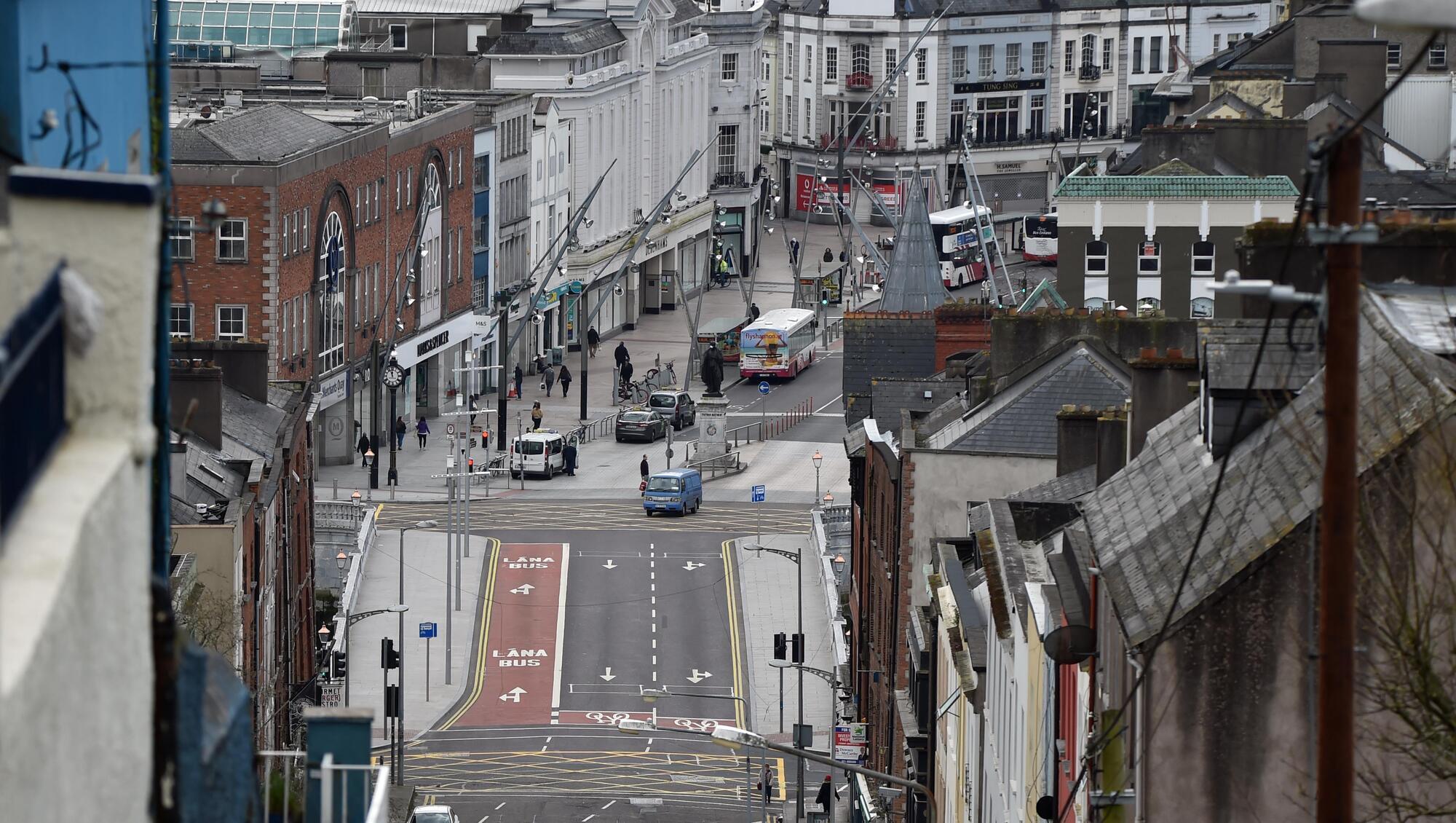
A view of St Patrick's Bridge and St Patrick's Street in Cork. The government should permit the immediate residential use of the two upper stories of approved suitable commercial buildings on the main streets of every village and town and city across the country.
The shortage of houses and other residential accommodation is now becoming chronic, and it will get worse.
Urgent action is required, as high rents for scarce places are also fuelling wage demands. Both are damaging competitiveness and making Ireland less attractive.
Skilled people are rejecting, or preparing to leave Ireland because of high rents.
We owe it to ourselves to prevent a haemorrhage of skilled workers, especially in medical, nursing, healthcare, teaching, and childcare.
The lives of young adults will be blighted by frustrated hopes and dreams.
Legitimate expectations of nesting, thriving, and living their best lives, maybe having a family, and aspiring to home ownership, will all be unfulfilled.
This Government, or the next one, will need to take both urgent and radical action. I repeat — urgent and radical — without apology.
The first bold radical measure would be to permit the immediate residential use of the two upper stories of approved suitable commercial buildings on the main streets of every village and town and city across the country.
Subject to it being approved as fit and safe for temporary limited residential use, any such conversion to residential use should be exempt from planning permission, building regulations, energy conservation regulations — and from the fullest and strictest compliance with fire regulations.
This radical measure should be for a limited period of 4 or 5 years, to allow for the promised supply of new homes to arrive.
This will act as a constraint on tardiness, but also act as a target date and timeline, or pressure point, for accelerating delivery.
Terms and conditions must apply.
The property itself would require preliminary approval by the relevant local authority.
Subsequently, prior to letting, the property would then require a further inspection and a formal certified approval by a local authority, or a surveyor, as being “reasonably fit and safe for temporary residential use in a time of exceptional housing shortage and unsustainably high rents which are detrimental to the public interest and the common good".
To upgrade for residential use, the property owner should be given grant assistance and also incentivised by tax relief.
The grants should cover essential upgrades for sanitary facilities, heating and lighting, and basic fire safety compliance measures.
If the enhanced property is sold within the 5-year period, the grants should be clawed back, and be recoverable by law from the sale proceeds.
For fire safety purposes, this special exemption might be further limited to the creation of only two such exempted new residential units in any one property.
So, this would mean effectively either ground and first-floor units, or alternatively on the first and second floors only, usually over a shop, but no more than that.
The property owner might also be incentivised with a tax exemption for the duration of the emergency measure, on terms similar to the existing rent-a-room exemption.
Like that scheme, the amount of rent to be tax exempted might be capped at €14,000 per annum per unit.
The benefit of such a limitation would be to effectively impose a rent cap of €1,166 per month on these new temporary-use units.
Such units at such fixed modest rents might not be up to dream home standard decor and finish.
Furnishing and decoration might be left to the tenants to do, at their cost, subject to landlord approval.
To qualify for this new scheme it would be reasonable to require the property owner to be fully tax compliant. And to register these new units, with the Local Authority, and with Revenue.
It should also be possible to introduce a standard form Master Lease for this new type of temporary-use residential unit, which should strike a fair balance between owner and tenant.
The priority is to encourage commercial owners to commit to creating these temporary new residential units in their properties.
Tenants should not acquire rights to long-term renewal or “first refusal” rights on any sale. Owners would be just put off by creating such rights against them.
The most significant attraction of this measure is that the units will be created within buildings that are already built, and are already connected to existing services.
And, being town centre, there will be many other benefits, both for tenants and for society, in reducing travel costs, and emissions, and by repopulating and rejuvenating town and city centres nationally.


CONNECT WITH US TODAY



Be the first to know the latest news and updates