Nesrine Malik: The seeds of Sudan’s collapse were sown decades ago
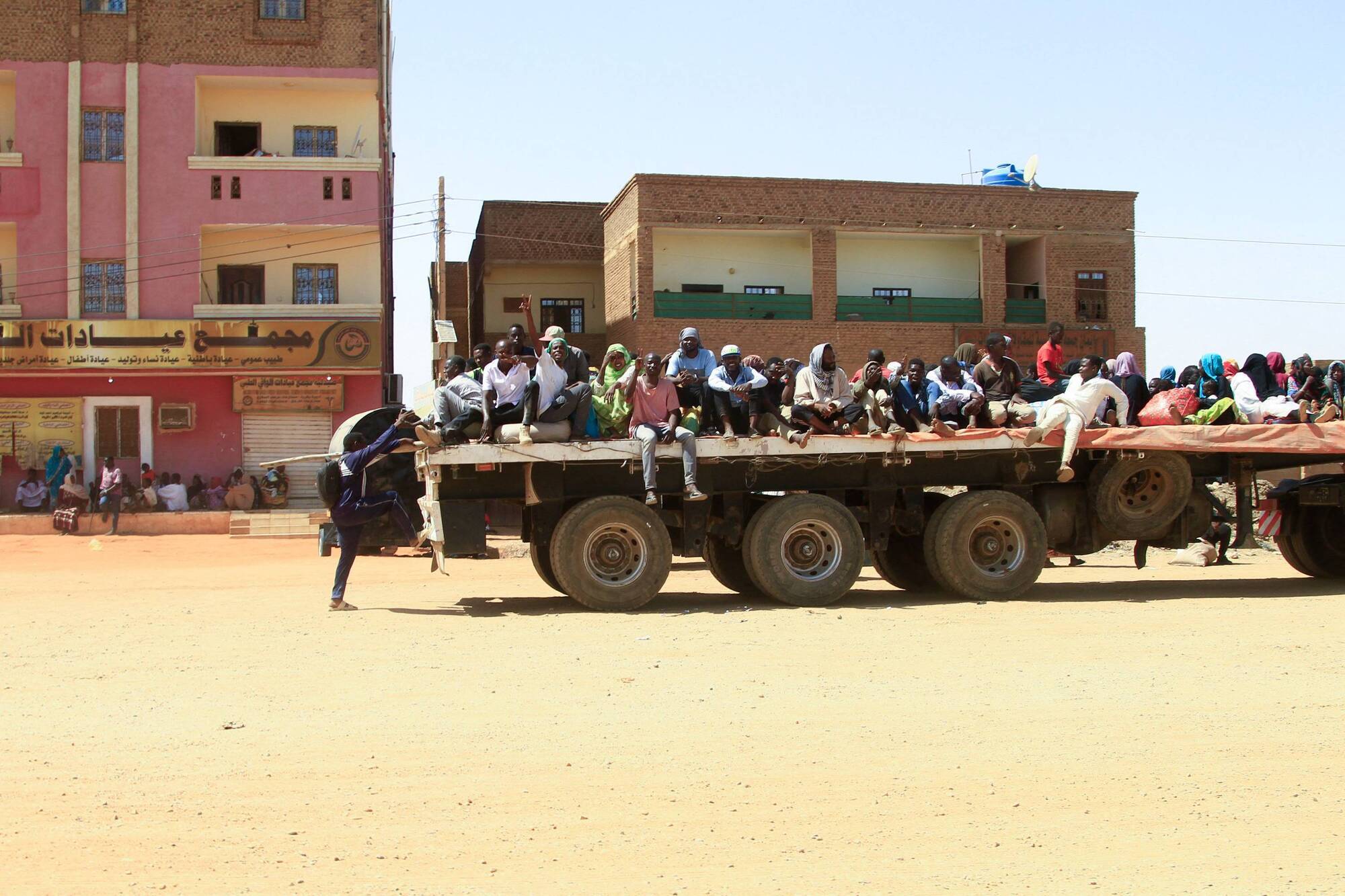
People fleeing street battles between the forces of two rival Sudanese generals, are transported on the back of a truck in the southern part of Khartoum, on April 21, 2023.Picture: AFP via Getty Images
The speed with which Sudan unravelled was the first indication that it had all been building up for a long time. The country’s collapse is the result of a series of failures, complicities and complacencies that have been rumbling away in the background for so long that those living with them assumed they would continue on for ever. That was until a paramilitary group, the Rapid Support Forces (RSF), and the country’s army went to war over who runs the country – and trapped the Sudanese people between them.
The country’s capital, Khartoum, has become a war zone, with surreal scenes of tanks, missile strikes and plumes of smoke rising throughout the city. The conflict erupted exactly four years after a colossal revolution succeeded, against all odds, in removing President Omar al-Bashir after almost 30 years of dictatorship, economic pillage and genocide – and in doing so, created a power vacuum over which the two forces are fighting.

CONNECT WITH US TODAY



Be the first to know the latest news and updates