It will be tough, but the delivery of a just transition cannot be delayed
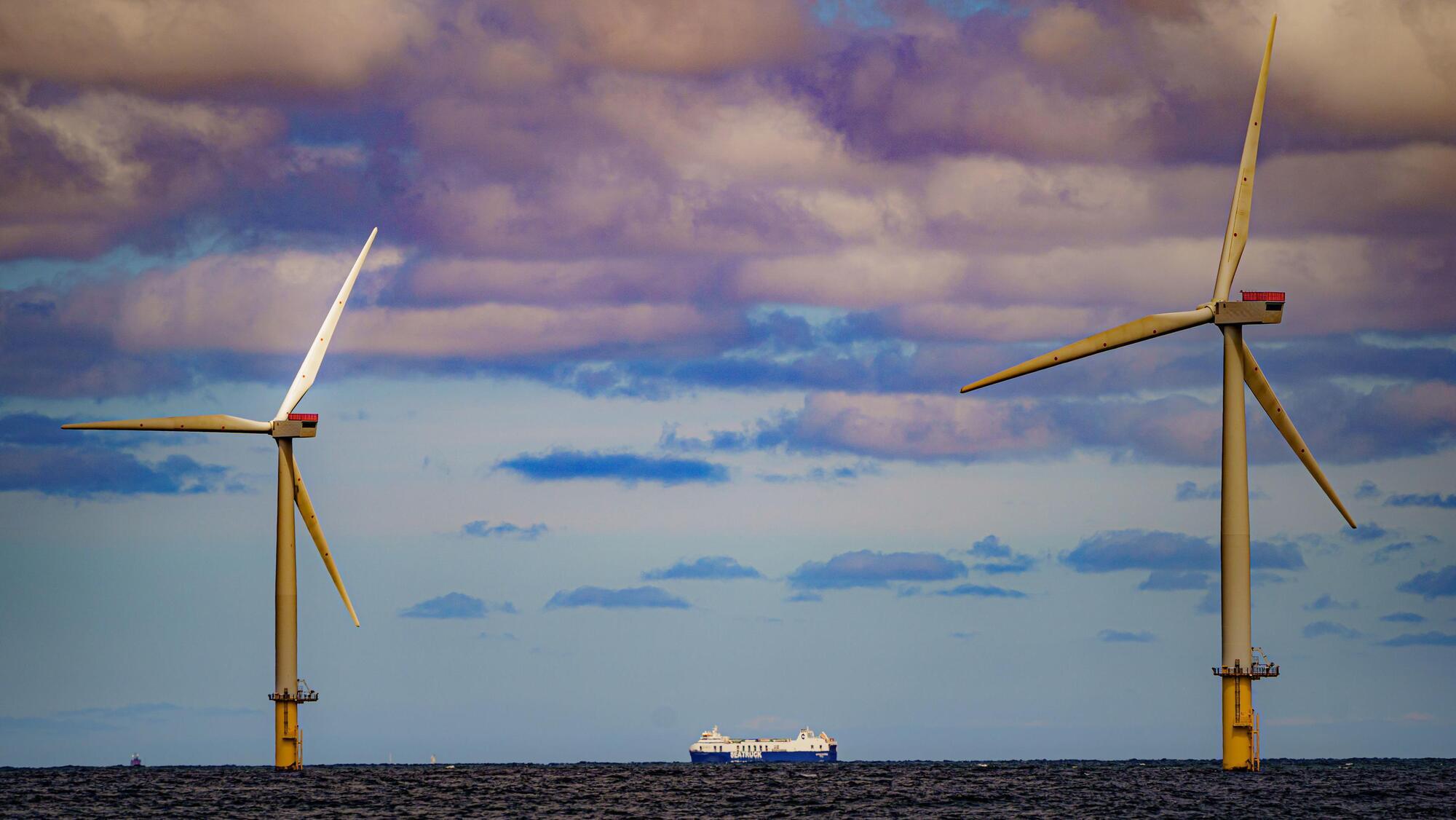
Greater reliance on offshore renewable energy will be part of Ireland's future, but periods of economic change can often lead to unemployment, and measures should be taken to deal with this. Picture: Ben Birchall/PA Wire
The recent report published by the Intergovernmental Panel on Climate Change (IPCC), assembled by the world’s foremost climate experts, and approved by all the world’s governments, lays bare the crossroads we now face.
We must collectively accelerate the transition to a cleaner, healthier world. But in making that transition, we cannot lose sight of justice.
We need to protect, throughout the transition, those who are adversely affected by it: the people and communities whose livelihoods are tied up in fossil fuels; people living in areas that are currently worst hit by climate change; people who are already disadvantaged and least able to cope with the changes that must be made.
What we need is a just transition for Ireland — a human-rights and equality-based transformation — in our approach to climate action, which will benefit the wellbeing of all people, particularly the most vulnerable.
The Irish Human Rights and Equality Commission, the organisation that I lead, has published its policy statement on achieving a just transition, which sets out in detail how we can do just that; create a cleaner, safer, more equitable society where we protect the most vulnerable and those most affected by the present and future changes.
So how exactly do we build justice into our transition?
For starters, human rights and equality must form an integral part of our transition toward being a low-carbon country.
We must ensure that a move towards a climate-neutral economy happens in a fair way, leaving no one and no place behind.
Climate change has already had profound impacts on a wide variety of human rights, including the rights to life, self-determination, development, food, health, water, sanitation, and housing.
It is important to remember that periods of economic change can often lead to unemployment and increased poverty for those left behind.
Climate change is a human rights issue.
And as we saw during the pandemic, inequality is exacerbated when we switch to crisis mode and reprioritise our efforts as a society to deal with threats.
So climate change is also an equality issue.
Research shows us that by hitting our most vulnerable groups the hardest, climate change risks both increasing existing economic inequalities and causing more and more people to fall into poverty traps.
In our policy statement, we primarily call for the immediate establishment of the promised and delayed Just Transition Commission, and that human rights and equality are explicitly included in its mandate, regarding the functions, expertise, and diversity in its governing body and staff.
And, of course, all voices must be heard in this process.
Delays to policies and programmes affecting the equality and human rights of the people most affected by the transition are unacceptable.
This is especially true in the context of current economic challenges, the cost-of-living crisis, inflationary pressures, and the housing crisis.
The transition to a low-carbon economy in Ireland is creating many challenges, for some more than others — we’ve already seen the effect on the peat industry in the midlands and we will see further changes, particularly in areas such as agriculture and transport.
The carbon-neutral and green transition is happening alongside a digital transition, or a Fourth Industrial Revolution, as described by Mark Carney in his 2022 book .
“The Fourth Industrial Revolution could be more intense than its three predecessors in terms of scope, scale, and speed," he wrote.
This is occurring at breakneck speed and will have significant impacts for our society and the economy.
As these transitions progress in tandem and interact, they require careful planning and investment.
That’s why we’ve called for the Just Transition Commission to consider both strands rather than climate in isolation.
We’re lucky that we’ve been granted up to €169m of EU funding for the Irish Just Transition Fund.
There must be accountability in how this is distributed and used, to ensure it will support those who most need it.
Though the coming years will be tough — this challenge also gives us many opportunities, and an opportunity for the Government to prioritise important resources to advance human rights and equality in Ireland and to provide leadership at home and internationally.
Where climate change and a just transition is concerned, the time for delay and discussion is over.
The time for action is now. Human rights and equality must form the core of our just transition. There will be no second chance to get this right.
CLIMATE & SUSTAINABILITY HUB