Elaine Loughlin: Fixing the housing shortage was never private landlords’ job

The Coalition is fixated on landlords leaving the market — when it should really focus on the undersupply of homes which in turn is creating generations of accidental tenants
Elaine Loughlin: Fixing the housing shortage was never private landlords’ job
Instead of fixating on private landlords leaving the market, maybe Housing Minister Darragh O'Brien should be trying to move tens of thousands of accidental tenants out of rental accommodation.

As the Dáil returns today to debate a motion to extend the eviction moratorium, the Government faces yet another wave of criticism over its continued failure to get to grips with the housing emergency.

Tinkering with  tax measures for landlords or bolstering tenant-in-situ schemes only gives the Coalition breathing space — something which renters facing eviction will not be afforded.

Until the Government admits that substituting social housing with private rental accommodation no longer cuts it, we will be back here again with opposition motions and political point-scoring week after week and month after month.

Leo Varadkar told the Dáil long queues to view houses were caused by 40,000 landlords quitting the market — but this makes no sense, as many of the properties in question are in fact sold to other landlords. Picture: Leah Farrell/RollingNews

The Dáil has yet to vote on Sinn Féin’s eviction ban and already further motions both from Mary Lou McDonald’s party and Labour have been threatened.

Since the controversial decision to lift the eviction ban was made by the Cabinet, the Housing Minister and his colleagues in Government have been stressing the need to protect smaller landlords, those mom-and-pop investors who have been selling up in their droves.

In the Dáil, Taoiseach Leo Varadkar pinpointed 40,000 landlords who have left the market as the reason that “people are in such long queues looking at a property when it becomes available”.

But housing analysts, including architect Mel Reynolds, have questioned whether the sale of rental accommodation has led to the level of loss in the market that the Government is making out, as it doesn’t take account for the fact that some rental properties are simply sold on to other landlords, while a significant amount of stock is transferring from private rental into social rental.

Another issue to consider is the reason small landlords are selling up. A survey published by the Residential Tenancies Board (RTB) in July 2021 found that 55% of former landlords who sold their rental properties exited the sector as they no longer wished to be a landlord.

A further 28% exited because it was no longer profitable; 8% left because the property was no longer in negative equity, and just 4% got out because of the regulatory environment.

Interestingly, when the RTB asked former landlords if any measures would have made them reconsider, the majority (57%) said nothing would have changed their mind as they “wanted to sell for personal reasons”.

However, a smaller proportion of landlords mentioned that ‘greater profit’ (13%), ‘less taxation’ (11%), and ‘less unfavourable regulation’ (8%) could have caused them to reevaluate.

It means that, regardless of any lucrative tax breaks or supports the Government may introduce, landlords will leave.

Another key element which the Government has failed to grasp (or at least failed to publicly acknowledge) is that once a rental property is sold, it doesn’t simply disappear. Those houses or apartments continue to be lived in by people — families and individuals who need homes regardless of whether they own or rent.

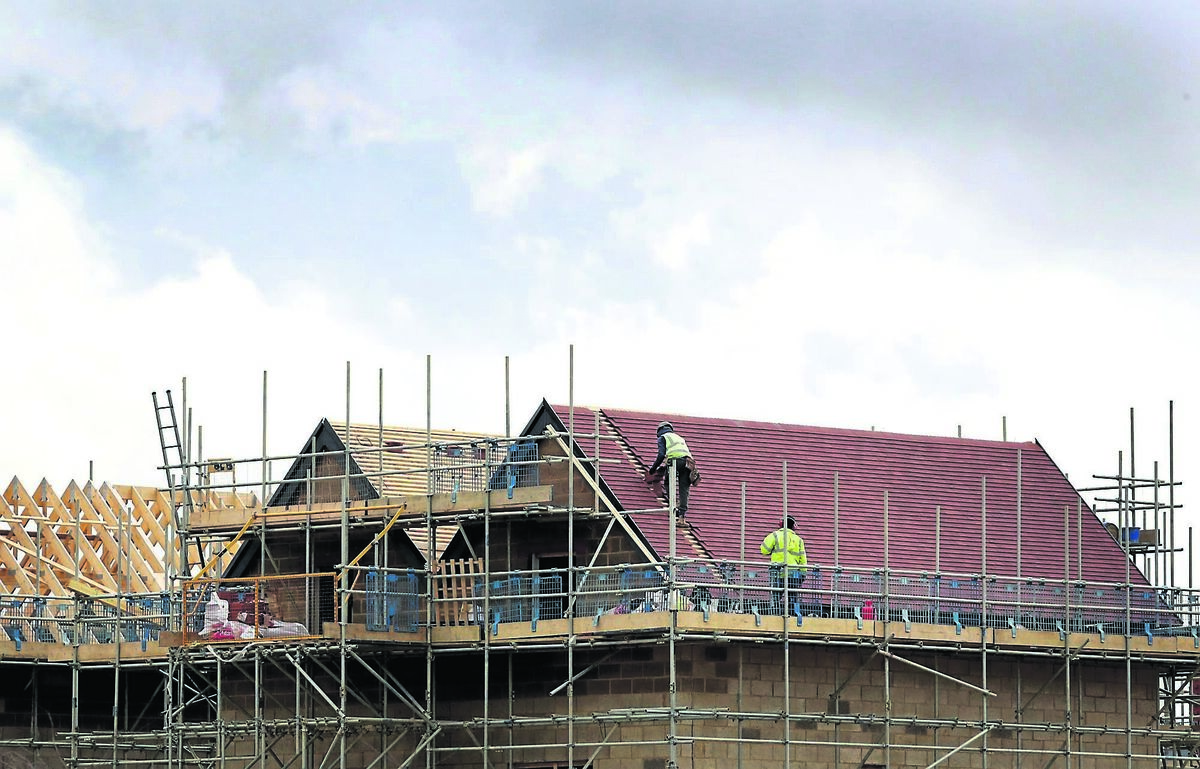
The Government is relying on private landlords to cope with our housing crisis but that sector cannot and will not fix that problem. Ireland needs more homes. Picture: Gareth Fuller/PA

And so, the real issue here is the old chestnut — supply. There simply are not enough houses in the country to go around.

What everyone from Varadkar down has also failed to acknowledge is the pressure the State’s reliance on the private market to provide public housing is having on the entire sector.

If the Government was to provide social housing for individuals in receipt of housing assistance payment (HAP) and rental accommodation scheme (RAS), this would free up more than 70,000 private rental properties overnight.

Sinn Féin’s housing spokesman Eoin Ó Broin pointed out: “The
exiting of the single property landlord is not the cause of the rising levels of homelessness, because a lot of the people who are living in the private rental sector shouldn’t be there and don’t want to be there. 

A third of the private rental sector are social housing applicants supplemented by RAS and HAP. 

Under the HAP scheme, tenants who qualify for social housing source their own private rental accommodation but have most of their rent paid directly to their landlord by their local authority. The amount of State money spent on HAP has spiralled from less than €500,000 in 2014 when the scheme was introduced to €542m in 2021 and this figure continues to jump each year with around 59,000 now in receipt of the support.

RAS is slightly different as it involves local authorities drawing up contracts with landlords to provide housing for people with a long-term housing need.

IN general, councils consider such arrangements as solving a social housing need and those living in a RAS property will be taken off the local authority’s housing waiting list.

But it still equates to private accommodation being used to fix a public housing need.

As Lorcan Sirr, senior lecturer in housing at TU Dublin, puts it: “Maybe the rental sector is way too big. There’s around 60,000 HAP households in the rental sector that shouldn’t be there, they should be in council housing.”

Sinn Féin's Eoin Ó Broin points to the remarkable statistic that fully one third of private tenants are in fact social housing applicants. Whatever about 'accidental landlords', these should surely be counted as accidental tenants. File picture: Cillian Sherlock/PA

He adds that there is another cohort of renters who could afford a mortgage.

He suggests that the issue is not just a lack of supply of rental properties, but a dearth of homes available to purchase.

Assistant professor at Trinity College school of law Sarah Hamill has pointed out that just 8% of Irish households were private renters in 1991. However, within 25 years, that percentage had jumped to almost 30%.

Mr Sirr added: “It sounds counterintuitive, because rents are rocketing, but do 29% of the population really want to be renting?”

Darragh O’Brien needs to admit that the issue is not with private landlords but with the Government’s over-reliance on this sector to solve a problem which should never have been theirs to fix.

Did You Know?

Herbert Simms became head of Dublin Corporation’s newly-established housing architect’s department in 1932. 

He oversaw the construction of 17,000 homes for Dublin’s working classes over a period of 16 years.

Mr Simms is mostly remembered for his stylish blocks of three- and four-storey flats located across Dublin’s inner city, many of which are still occupied. 

He was also responsible for thousands of two-storey houses on greenfield sites on the outer fringes of the city.
 

This week in years gone by

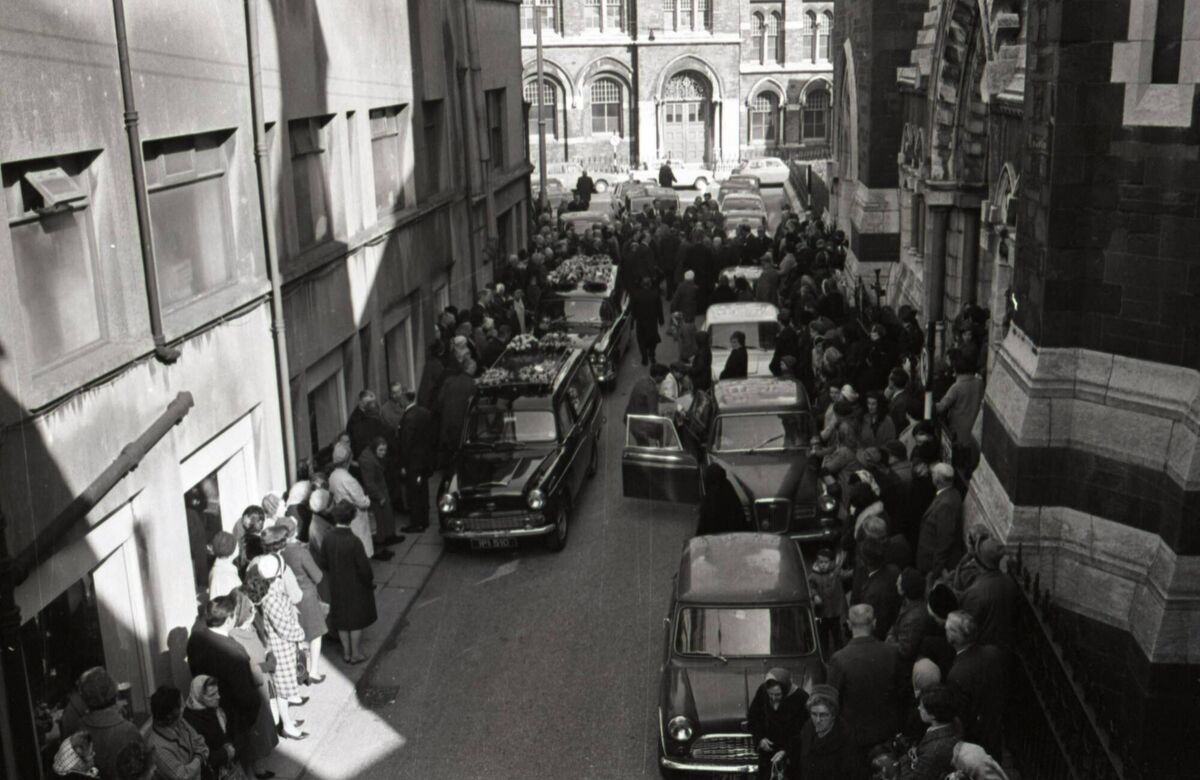
The funeral Mass of some of the 57 Tuskar Rock air crash victims taking place at Saints Peter and Paul's church off St Patrick's Street in Cork on March 30, 1968. Irish Examiner Archive 

1949 —  March 22

The Government leased a residence in the Phoenix Park to the US for 99 years. However, the home had already been in use by representatives from America. The first US envoy, Frederick A Sterling, arrived in 1927 and took a lease on the property from the Board of Works with the rent set at a penny per year.

1968  —   March 24

Aer Lingus said there was little hope of finding any survivors from the worst tragedy in the history of its operations after the Cork-to-London St Phelim aircraft crashed near the Tuskar Rock. 

A total of 57 people died in the crash.

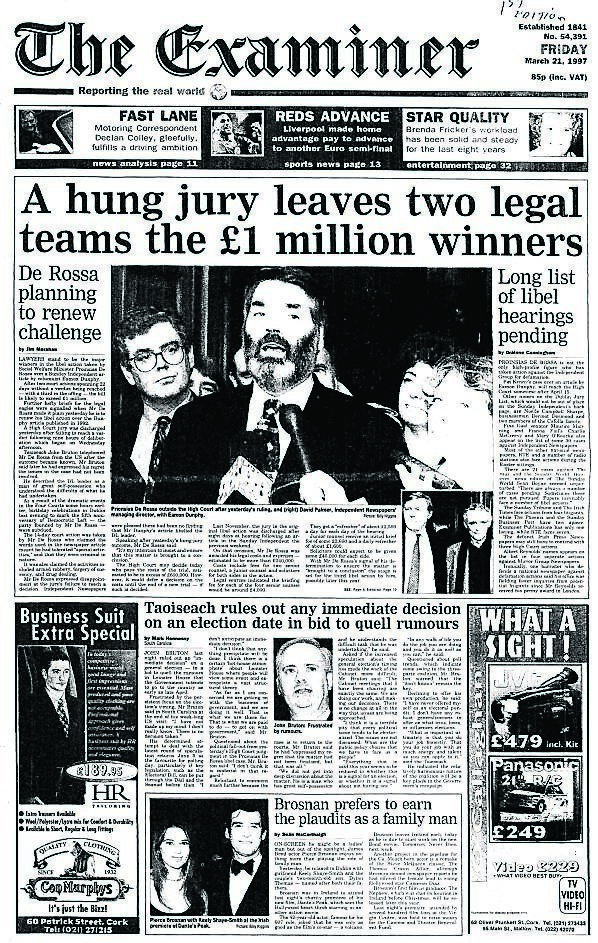
1997  —  March 21

It was reported that lawyers stood to be the major winners in a libel action taken by then Social Welfare Minister Proinsias De Rossa over a Sunday Independent article by columnist Eamon Dunphy.

The 14-day court action by Mr De Rossa claimed the words used in the article meant he had tolerated “special activities” and that they were criminal in nature. 

In the end, the jury failed to reach a verdict.
2010  —  March 24:

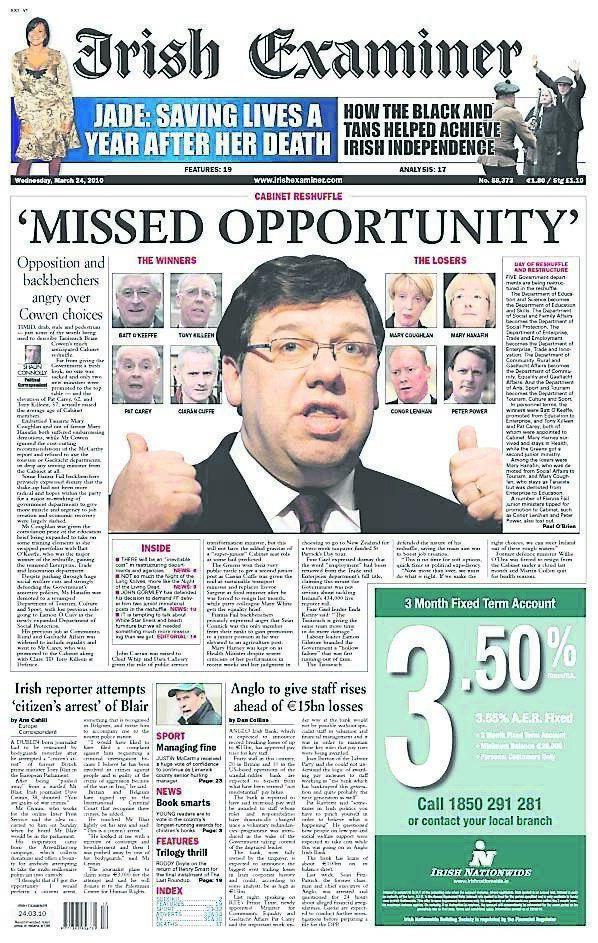
 “Timid”, “drab”, “stale”, and “pedestrian” were just some of the words used to describe then Taoiseach Brian Cowen’s much-anticipated cabinet reshuffle.

The Examiner reported that, far from giving the Government a fresh look, no one was sacked and only two new ministers were promoted to the top table — and the elevation of Pat Carey, 62, and Tony Killeen, 57, actually raised the average age of ministers.

Hot topicals  

Eviction ban: Back from recess and the Government is straight into a Dáil debate on the decision not to extend the eviction moratorium. Sinn Féin’s motion calling for a reinstatement of the measure is up for discussion from 7.30pm tonight.

In rude health: The HSE’s new chief executive, Bernard Gloster, is to come before the Oireachtas health committee tomorrow morning, where he will be grilled on his strategic priorities.

Brussels bound: Taoiseach Leo Varadkar will attend the EU Council summit on Thursday and Friday The ongoing war in Ukraine will be discussed by European leaders, as will prices and supply of energy and the economy.

Emergency department: Nurses working in University Hospital Limerick say a lack of consistent safe staffing in the intensive care unit is having a detrimental impact on the physical and mental wellbeing of staff and their patients. Staffing levels in hospitals will be discussed in the Dáil on Thursday afternoon as the INMO ballots for industrial action over the coming weeks.


x

More in this section

Revoiced

Newsletter

Sign up to the best reads of the week from irishexaminer.com selected just for you.

Cookie Policy Privacy Policy Brand Safety FAQ Help Contact Us Terms and Conditions

© Examiner Echo Group Limited