Mick Clifford: Claims of Irish Planning Institute whistleblower still not fully addressed
An external report into the actions of the former executive director of the Irish Planning Institute highlighted a number of still unanswered concerns, writes Mick Clifford
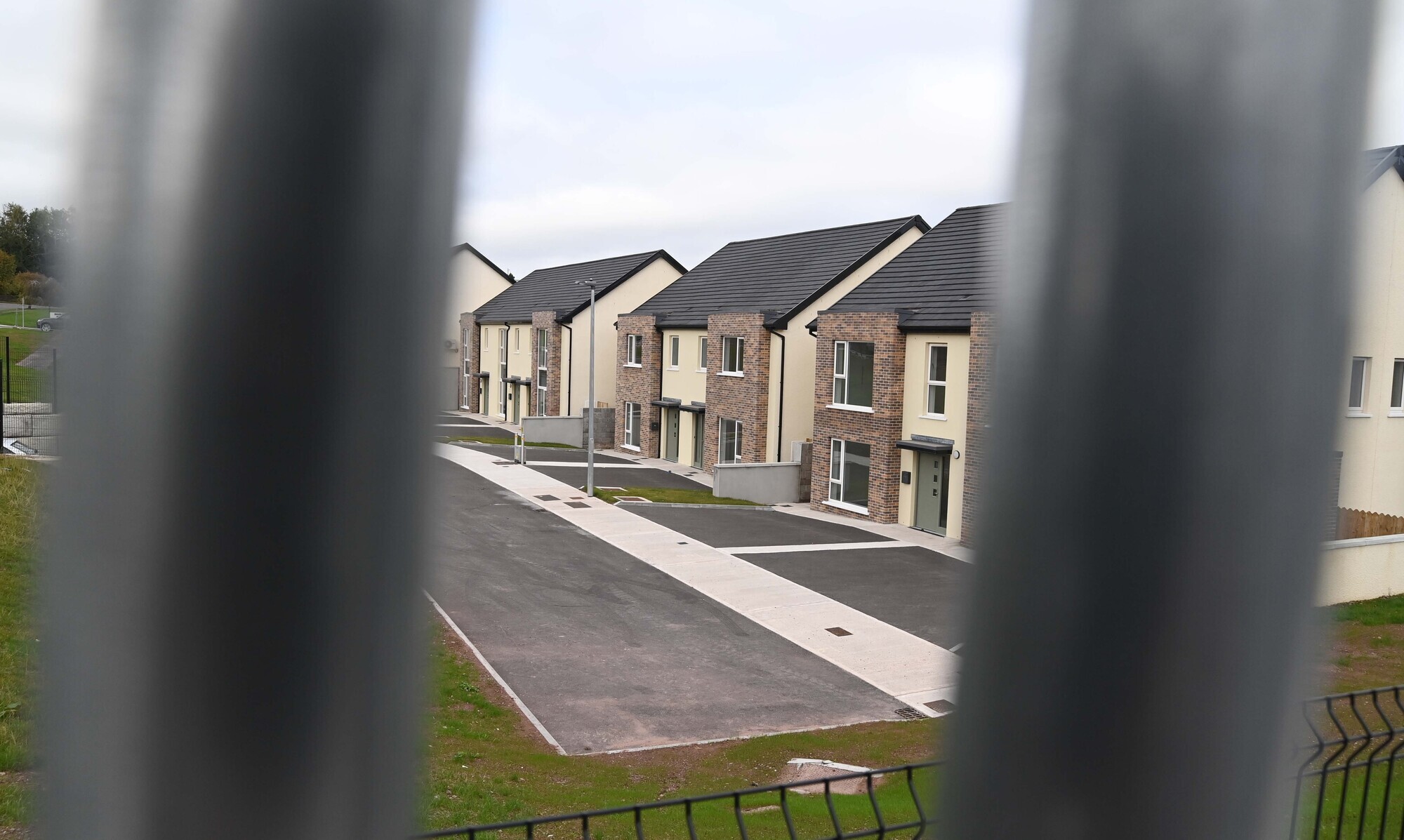
The issue that led to the Irish Planning Institute’s travails was one of the most controversial planning policies of recent decades, Strategic Housing Developments (SHD), introduced in 2018, ostensibly to speed up planning. 	Picture: Denis Minihane

The issue that led to the Irish Planning Institute’s travails was one of the most controversial planning policies of recent decades, Strategic Housing Developments (SHD), introduced in 2018, ostensibly to speed up planning. Picture: Denis Minihane

Clarification: The Irish Examiner published this article on 26 January 2023 in relation to a confidential report carried out by EY concerning Orla Purcell in her role as Executive Director of the Irish Planning Institute. The Irish Examiner has never asserted and does not assert that the contents of that EY report are true, or that Orla Purcell was guilty of any wrongdoing.

*
Conor Norton was on his way home from work when he got the call from a whistleblower. 

It was 5.10pm on November 5, 2021. 

Norton, an academic in Technological University Dublin, was president of the Irish Planning Institute (IPI), the representative body for the state’s 900 or so planners. 

The whistleblower told him she was about to resign from the institute. She wanted to reveal various strands of malpractice she had observed. Norton asked her to put in all in a letter.

The revelations surprised but didn’t shock him. According to a subsequent interview he gave to an investigator, what he was told “provided a rationale for some unexplained and unusual events which had been puzzling” to him. 

The allegations included attempts to undermine Norton’s presidency, manipulate elections to the institute’s ruling council, the wrongful use of funds, and, crucially, unauthorised attempts to change IPI policy about a major government planning initiative that was supposed to be central to solving the housing crisis. 

Within a year of receiving the call, Norton and five other of the twelve council members would have resigned in protest, the executive director of the IPI departed under a cloud, and major questions would remain about conflicts of interest in the planning sector.

The IPI is highly influential in the area of planning. Its members work for local authorities, developers, An Bord Pleanála (ABP), and in academia. 

It nominates members for ABP and regularly has input into planning legislation. 

Despite that, little is known about its own internal workings. 

Broadly, the membership is broken down between the public and private sectors, with about two-thirds in the public. 

It is governed by an elected twelve member council, which is headed up by a president, who is the voice and face of the institute. There is also a small compliment of full time staff, led by an executive director.

The issue that led to the institute’s travails was one of the most controversial planning policies of recent decades, Strategic Housing Developments (SHD). The policy was introduced in 2018, ostensibly to speed up planning. 

It involved developments of more than one hundred housing units bypassing local authorities and applying directly to ABP for planning permission. 

TUD academic and former president of the Irish Planning Institute Conor Norton was first contacted by a whistleblower in November 2021 with concerns about malpractice.

The policy was strongly supported by developers and was the subject of intense lobbying. The IPI, following internal debate, took the position of opposing it on the grounds that it contravened good planning, particularly in respect of local democracy.

The SHDs turned out to be a disaster, with objections frequently leading to cases being appealed though judicial review. A high proportion of these cases, taken against An Bord Pleanala, were successful. 

SHDs were at the centre of much of the controversy that has engulfed ABP in the last twelve months. Last year, the government terminated the policy.

Back in 2021, much of the fall-out was already unfolding with a succession of judicial reviews reversing ABP decisions.

According to sources within the sector, planners in the private sector and senior personnel in ABP were perturbed at what was happening in the courts, particularly in relation to critical comments from judges.

In June 2021, an admin assistant at the IPI received a call from the executive director, Orla Purcell. She wanted the admin assistant to email her, Purcell, saying that members had been contacting the IPI, asking that something be done to counter the negative publicity in the courts. 

The admin assistant took a note of the detail Ms Purcell wanted included in the email about fictitious contacts being made. One line in the admin assistant’s note of the call was: “Some of the members are making critical remarks personally against the president. Can you let the council know?” 

The assistant hadn’t taken any calls. 

This was Purcell asking her to create a false narrative, an email trail suggesting that members had been calling upset about the IPI’s stance on the controversies. The admin assistant didn’t send Purcell the requested email and the matter wasn’t followed up.

A subsequent investigation by the consultants EY confirmed that this had been an attempt to create a false narrative. Purcell denied doing so but EY found her “explanation not credible”.

Another allegation levelled at Purcell was that she had spent around €1,500 on the IPI credit card on occasions for food and alcohol without any official sanction. Most of these events were attended by a small number of council and senior members of IPI. 

Among the latter was Rachel Kenny, the Director of Planning for An Bord Pleanala.

The EY report lists six such occasions, three of which were attended by Kenny. On one such occasion, Kenny and Purcell met to discuss IPI business. Kenny set up the meeting and at a dinner they had afterwards two friends of Kenny’s also attended. 

“It was a social occasion so work was not discussed after they attended,” the EY report states. 

“OP would not disclose the names of these two people as the event was set up by RK and OP felt it inappropriate to name them.” 

It was agreed that if Purcell paid for the dinner on the IPI account, Kenny would not charge mileage for an upcoming IPI conference. 

The other two attendees, who also worked in planning, had their dinner courtesy of the IPI. The bill came to €260.

When interviewed by EY, Purcell said there was “no approver for expenses. There is a trust based system in place”.

The EY report upheld the allegation of “unexplained and unapproved expenditure at restaurants” by Purcell over a period of months amounting to €1,500.

Meanwhile, in June 2021, a special council meeting was convened to discuss the controversies that had arisen in the courts. Arising out if it was a decision to issue a press release outlining the IPI concerns.

The president, Conor Norton, signed off on the release. 

But following that, Purcell made a number of alterations which changed the character of the release. Norton later told the EY investigator: “It lacked broader context and included much more adversarial and aggressive language”.

The effect of this was to give the impression that the representative body for the country’s planners was more perturbed at the legal challenges to SHDs than actually was the case.

The EY investigation concurred with the opinion of Norton as outlined above.

“We have found that OP made extensive changes to the press release after it was signed off,” the EY report states. 

“Whist the amended version was shared by OP to the relevant council members, the extent of the changes was not brought to the attention of the group. As a result the changes were not seen or approved by the council members or the president.” 

Under IPI rules, the president is the only person who can approve a press release for issue.

When Ms Purcell was interviewed by EY she said she had added one sentence to the press release as a result of a suggestion from a council member, but she couldn’t say which sentence. 

“She agreed all other changes were made by her and were not brought to the attention of council members,” the report states.

The IPI is highly influential in the area of planning. Its members work for local authorities, developers, An Bord Pleanála (ABP), and in academia. Picture: Denis Minihane.

Effectively, Purcell had taken on herself, as an employee of IPI charged with supporting the council, the role reserved for the elected president.

Among those with whom Purcell consulted when drawing up the initial draft of the press release was Rachel Kenny. This left open the possibility of a conflict of interest on Kenny’s part as the press release was in response to criticism in the courts of An Bord Pleanála.

Purcell denied that Kenny had any input into the press release. According to the EY report, at a brainstorming session about how to respond to the SHD controversies, Kenny and another attendee “did not specifically comment about what should be included in the press release. They provided their knowledge about the issues, nothing of which was not already in the public domain.” 

This, however, the EY report found, was in conflict with an email sent by Purcell to the public relations firm dealing with the press release. 

“I sent you more on whattsapp from Rachel,” Purcell wrote to PR consultant Nigel Heanehan.

Conflicts of interest at ABP, particularly in relation to the SHD process, were at the centre of the controversy in An Bord Pleanala over the last year, which culminated in the resignations of the chair and deputy chair and led to a rebranding of the organisation.

Efforts to contact Rachel Kenny about the potential conflict of interest with her roles in ABP and as a member of IPI were unsuccessful. An inquiry to ABP on the issue received the following response:

“Attention is drawn to paragraph 2.3 of the board’s code of conduct which states: ‘Board members and employees may be members of their professional bodies/institutes and/or of a trade union, and participate in the activities of these bodies,” the statement said.

However, paragraph 2.5 of the same code states: “Board members or employees shall not engage in the activities of any organisation which would result in a potential conflict of interest between his/her own interests and the interest of the Board.” 

The chair of ABP, Oonagh Buckley, did not an address a question of whether she had received or read the EY report although the Irish Examiner understands she was furnished with a copy, as was the Minister for Housing, Darragh O’Brien.

There were other allegations against Orla Purcell examined by the EY report, concerning interaction with and elections to the council. Some of these were upheld, and more were not. Following the completion of the report, the council of the IPI considered it and ultimately decided to advance to a disciplinary process against Purcell on whether or not she was guilty of “gross misconduct”.

Industrial relations consultant Turlough O’Sullivan was hired to conduct the process. A series of scheduled meetings were repeatedly delayed, some because Orla Purcell had an ongoing family issue which occupied her.

The new president is Mary McMahon, now a senior planner at An Bord Pleanala.

In June 2022, a new council took office following elections. The new president is Mary McMahon, now a senior planner at An Bord Pleanala. Over the following six months, six members of the council, including former president Conor Norton, resigned. In broad terms, those who resigned were from the public sector.

The disciplinary process against Orla Purcell was not concluded. She left IPI in November 2022 with a financial settlement. Different sources have confirmed to the Irish Examiner that she was paid a year’s salary and a contribution to legal fees.

When contacted, Orla Purcell replied with a text message. “I took voluntary redundancy from the IPI in November after the death of my mother. As part of all that I signed a non-disclosure agreement so I am not in a position to comment.” 

In response to a question about whether the members of the institute have been fully informed about the various issues that have arisen, a spokesperson for the IPI replied: “Members received a memorandum in May 2022 which outlined matters examined in the EY report.” 

The Irish Examiner has seen the memorandum referenced which does not provide anywhere near the detail outlined in this piece. A request for interview with the current president, Ms McMahon, received the response: “The president does not discuss internal matters related to administration of the Irish Planning Institute.” 

Much of the character of the EY report suggests that there were repeated attempts to undermine the authority of Conor Norton when he was president. When contacted, Mr Norton replied: “I finished my term as president of the IPI last June so I’d prefer not to comment.” 

On one level, the whole affair concerns issues of financial control and governance of a professional representative body in which the actions of the employee running the organisation on behalf of members was central. 

However, planning has a primary role in the housing crisis. 

In this respect, An Bord Pleanála and planners in both the public and private sectors have a major role to play. 

What unfolded in the IPI has its root in different attitudes in the discipline to what constitutes good planning as devised by the government in the public interest. 

Such conflicts have to be a cause for concern for those charged with tackling the current housing crisis.

More in this section

Revoiced

Newsletter

Had a busy week? Sign up for some of the best reads from the week gone by. Selected just for you.

Cookie Policy Privacy Policy Brand Safety FAQ Help Contact Us Terms and Conditions

© Examiner Echo Group Limited