Finlay Thompson: Rural Ireland in the Stone Age when it comes to public transport
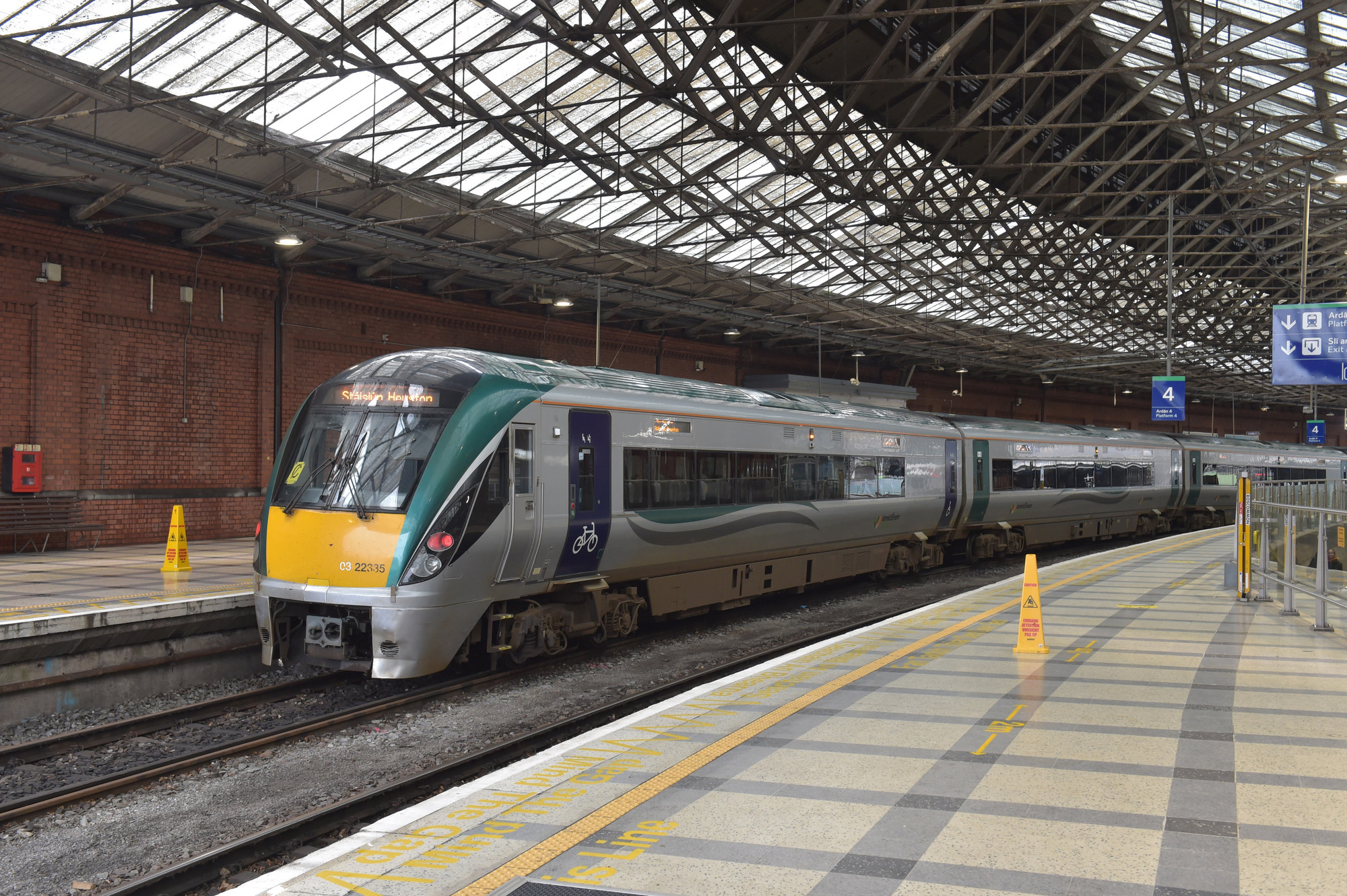
We must see developed public transport infrastructure right across the board, with an emphasis on train systems in rural counties. Picture: Dan Linehan
When you picture rural Ireland, what do you see? Probably fields, sheep, maybe a tractor; but definitely not developed transport structures.
Now think about how you get your weekly shopping. If you're lucky enough to live in a city, you're probably able to walk or get a bus or train. But for myself, living in Donegal, and for the majority of those in rural Ireland, we have no choice other than to drive.
People are well aware that the carbon footprint they create by taking a car is quite high, but in rural Ireland, we have no alternative means of transport that is more sustainable. And even when we do have the option of public transport, we always seem to be forced to take the most inefficient routes — the long way round, if you will.
When we talk about taking action on climate change, sustainable transport has to be one of the priorities for us as individuals and for the Government if we are to cut our carbon emissions and meet our climate targets — not just in Ireland, but across the world. But we need to have the options available in the first place before we can expect people to reduce their reliance on cars.
Here in Ireland, we need developed transport systems that run inter-county as well as intra-county, not just to Dublin and back. We all love our capital city, but I want to be able to visit my friends down in Cork at some stage, and there isn’t any straightforward or sustainable way of doing so at the moment.
CLIMATE & SUSTAINABILITY HUB
I know a farmer who lives beside me who doesn’t drive, and for the past 50 years he has relied on public transport to get to Mass, to get his shopping, and to do basic tasks. The priest comes around every so often to pray with him. But now, with the lack of transport available, his best option is to phone a neighbour with a car and ask for their help.
This man is completely stuck because he does not have access to public transport. He is a prime example of the isolation we face in rural areas.
We are effectively in the Stone Age in terms of our transport systems. We don’t want people to hear stories like that and run a mile from rural Ireland. It’s more important than ever that we make rural areas accessible for people to visit or even settle in. The pandemic showed a mass exodus of people away from cities, and as remote working becomes more established, there is a great opportunity to revitalise rural Ireland.
When I was booking a train from Dublin to Sligo, my friend reminded me to use my student card. I had to actually ask them to explain what a student card is. For someone such as my friend, who can use public transport a lot, the incentive of a cheaper ticket is much higher, whereas for me this was the first time I was taking a train in Ireland — of course I didn’t know about student cards.
Another major change this year was that fares have been reduced for the first time in 75 years — an amazing step in the right direction to make it easier to travel more sustainably. But we can’t wait another 75 years for major change.
People often talk about a carbon tax to incentivise the use of public transport. But if rural Ireland is still car-centric and with rising fuel prices, the impact of a carbon tax will be completely disproportionate to the rest of the country.
We can’t just look to electric cars to solve the problem either. An electric car has to be driven for six years before it reaches carbon neutrality. Their batteries are often produced in environmentally damaging ways, by harmfully extracting rare materials from the ground. Until these concerns are addressed and there is proper charging infrastructure in place so that electric cars can be used in rural settings, they are not the solution to sustainable travel.
We should explore other options such as hydrogen modes of transport. They have the potential to be a suitable alternative, and they could solve some of the problems that electric cars face in rural areas.
Transport has consistently been one of the sectors with the lowest funding. In 2020, motor tax revenues in Ireland generated €6.2bn, according to . That same year, only €2.68bn was spent on the transport sector.
The Government must support the sector financially if we want it to change. Budget 2023 has made a good start on this — now let’s sustain it.
The need for the Government to bring Ireland into the 21st century in terms of our transport systems is of the utmost urgency.
We must see developed public transport infrastructure right across the board, with an emphasis on train systems in rural counties such as Donegal.
One hundred years ago, there were more trains, more stations, and more routes in Ireland than we have today. We must look to the past and learn from it, to better our future.
- Finlay Thomson, aged 16, from Donegal, is a member of youth development organisation Foróige
CLIMATE & SUSTAINABILITY HUB
CONNECT WITH US TODAY



Be the first to know the latest news and updates