John Gibbons: Pesticides — the global hazard that is harming farmers' health here and now

Industrialised agriculture's role in the modern extinction event is well known. Less well known is the rate at which biocides are also harming farmers' health. Stock picture: iStock
It is a little known but alarming fact that, every year, 44% of farmers and farm workers worldwide experience poisoning by pesticides.
That means 385m people are affected, 11,000 of whom die annually, while tens of millions live with the long-term health impacts of this exposure.
“Acute pesticide poisoning is an ongoing major global public health challenge”, according to a scientific study published in December 2020. Among its recommendations was the phasing out of “highly hazardous” pesticides.
Scientists at UCC are currently seeking volunteers from the farming community for a study into a possible link between exposure to pesticides, and Parkinson’s disease
In laboratory tests, rodents exposed to these chemicals developed the symptoms of Parkinson’s, while research in France has linked high incidences of the disease with agricultural fungicides. Apart from farmers, people living in rural areas can be at risk of air-borne agricultural pesticides, or contaminated well water.
In Ireland, typically around 3,000 tonnes of pesticides are used annually, the vast majority for agriculture and by local authorities, while 450 tonnes are sold in a completely unregulated way to the public via garden centres and even supermarkets.
Globally, some 3m tonnes of often highly toxic pesticides are released into the environment every year, with many of these known as “forever chemicals” that remain harmful for years, even decades.
Sixty years ago, in September 1962, one of the most important books of the 20th century, by US biologist and science writer, Rachel Carson, was published.
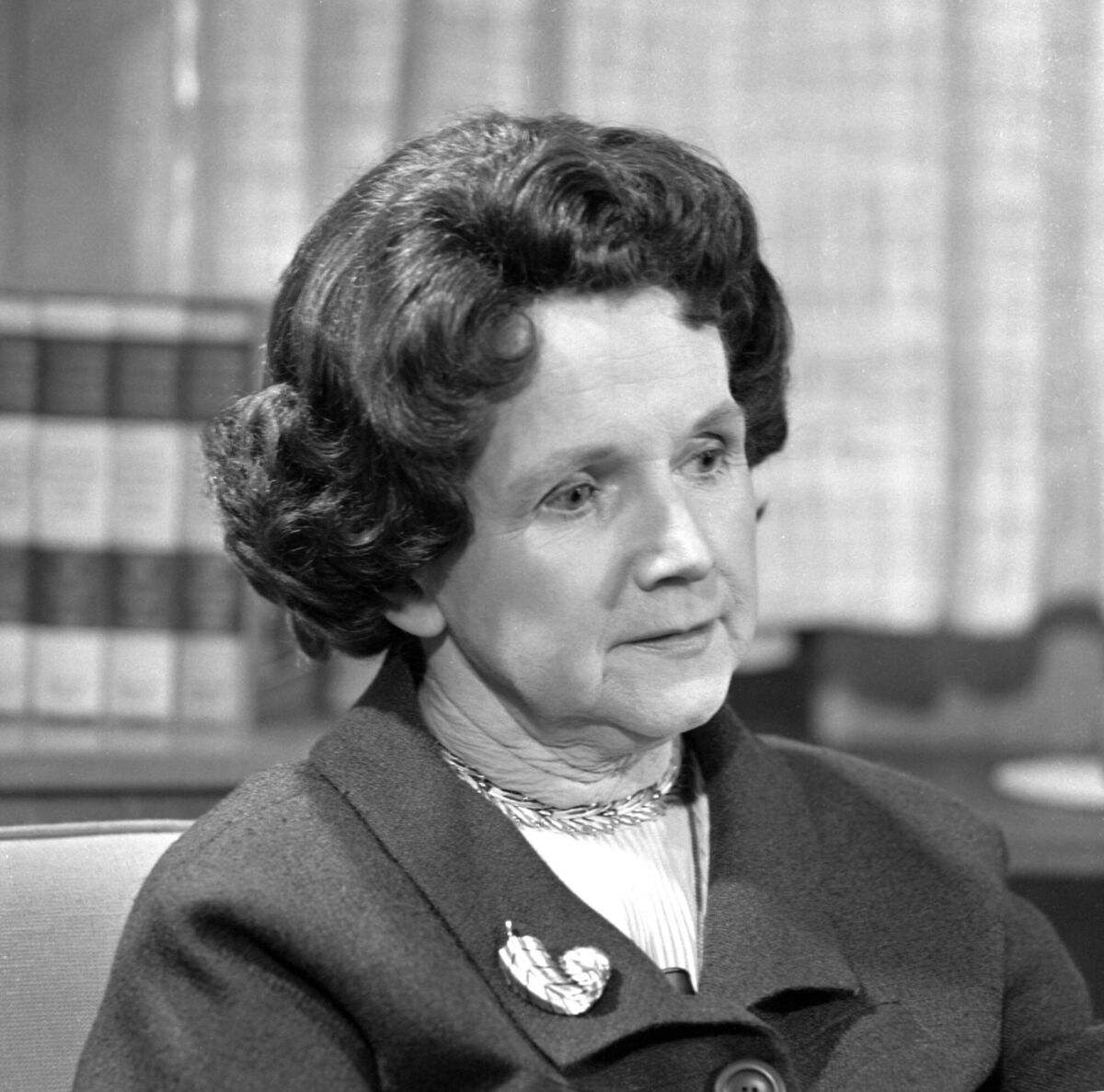
She described pesticides as the “elixirs of death” and argued they should instead be labelled as “biocides” as they constitute a deadly and indiscriminate assault on life itself.
Her book provoked a firestorm of controversy. Carson was denounced by the agri-chemical industry as a communist, a fanatic and, most memorably, as a “hysterical spinster”. While threatened with multiple lawsuits by chemical firms, none made it to court.
Carson’s meticulous research withstood hostile scrutiny and her book is now regarded as a seminal event in the evolution of the modern environmental movement.
Then US president John F Kennedy set up a scientific panel to investigate the claims in , which focused in particular on the devastating impacts of DDT on wildlife, especially birds. The panel’s report in 1963 vindicated her findings.
By 1972, DDT had been banned in the US by the newly-created Environmental Protection Agency. Carson’s writings had “altered the course of history”, in the words of one US senator.
“Only within the moment of time represented by the present century has one species — man — acquired significant power to alter the nature of the world”, Carson warned. She battled to complete while suffering from cancer from which she died less than two years after its publication.
Despite her efforts, over the intervening six decades, a tidal wave of ever more toxic chemicals have been unleashed by an industry that now sells over €230bn in agri-chemicals every year.
Consider the insecticide imidacloprid, which is 7,000 times more toxic than the now-banned DDT. A single teaspoon of imidacloprid contains enough poison to kill 1bn honeybees, were they directly exposed.
While overall volumes of pesticide usage have declined in recent decades, their increasing potency and toxicity has offset these reductions. It is no coincidence that around a quarter of the entire global insect population has disappeared since 1990.
A recent study in Germany identified a calamitous 75% drop in the number of flying insects in just a 25-year period.
“We are witnessing the largest extinction event on Earth since the late Permian and Cretaceous periods”, according to the authors of a major paper published in 2019.
To put that in context, the end-Permian event, known as the Great Dying, saw more than 90% of all life on Earth wiped out 252m years ago.
British insect expert Dave Goulson titled his 2021 book in tribute to Carson who, he said “would weep to see how much worse it has become” since her clarion call in 1962. Prof Goulson wrote:
The recently published State of the World’s Birds report by Bird Life International presented a profoundly grim assessment, with 49% of all bird species in decline and one in eight facing extinction. The expansion and intensification of agriculture globally is the leading cause of decline.
European farmland birds have been particularly hard hit, with 57% disappearing as a result of mechanisation, chemicals, and land clearance for crop production. In Ireland, the picture is equally bleak, with 63% of our bird species in decline and one in four seriously threatened.
Farmland species such as the curlew, lapwing, snipe, kestrel, and skylark have been most impacted by changes in Irish farming practices. Despite this, no new funding was made available in the recent budget for wildlife conservation.
The Bird Life International report also noted the growing impact of wildfires and droughts on bird populations, as a result of global warming, with these pressures set to ratchet up as global temperatures continue to increase.
#parkinsons pic.twitter.com/gd8zw3bLAm
— UCC PD Study (@pd_ucc) September 11, 2022
A recent assessment by the Intergovernmental Science-Policy Platform on Biodiversity and Ecosystem Services (IPBES), warned that the ongoing human assault on the biosphere means “we are eroding the very foundations of our economies, livelihoods, food security, health and quality of life worldwide”.
While modern agriculture is almost totally dependent on chemicals to control pests, new research is calling this rationale into question. A study on US soybean crops in 2019 found that the use of neonicotinoid pesticides delivered “negligible” benefits compared with their cost.
The widespread use of chemical pesticides also wipes out pollinators as well as predatory insects such as ladybirds who might otherwise help control the crop-eating “pests” such as aphids.
As in Carson’s day, the agri-chemical giants wield huge influence over both politicians and farmers, and they work hard to water down regulations that might in any way impact their business model.
Nature-friendly organic agriculture, which avoids all pesticides and chemical fertilisers, is rapidly growing in popularity, with new EU targets of a quarter of all land farmed organically by 2030. However, barely 1.7% of Irish land is organic, the second lowest in the EU27.
The EU’s Farm To Fork strategy aims for a legally-binding 50% reduction in pesticide usage this decade, in a bid to avert biodiversity collapse, but is being strongly resisted by agri-chemical interests.
The human race, Carson reminded us, “is challenged more than ever before to demonstrate our mastery, not over nature but of ourselves”.
- John Gibbons is an environmental writer and commentator

CONNECT WITH US TODAY



Be the first to know the latest news and updates