Paul Hosford: Not enough for Fine Gael to be anti-Sinn Féin, it needs to stand for something
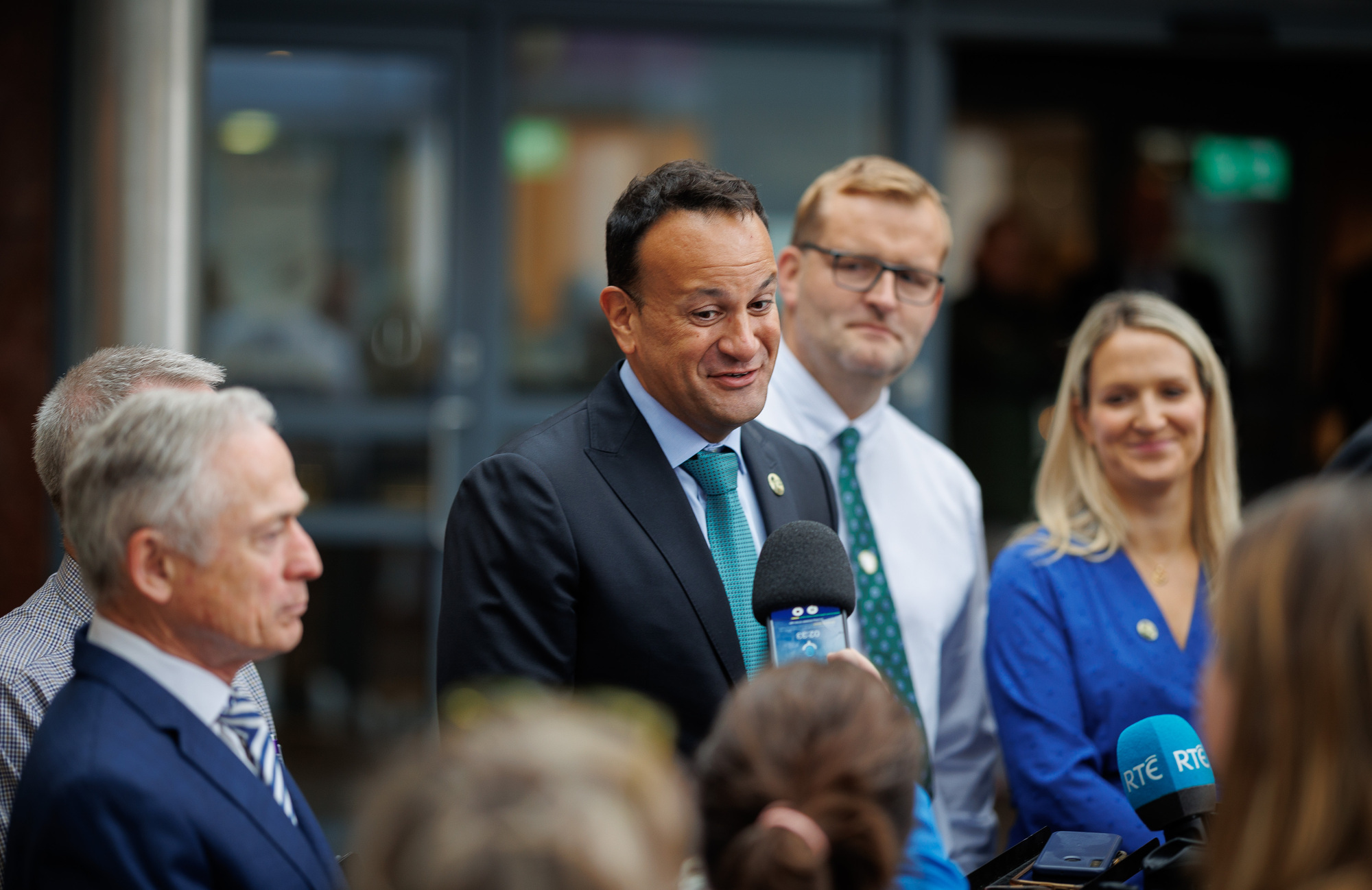
A senior Fine Gael source said. "We have to find a way to sell who we are." Picture: Dylan Vaughan

Sinn Féin is riding high in the polls, but there is no doubt that Leo Varadkar is even entertaining the idea of Mary Lou McDonald as Taoiseach.
The Tánaiste was unequivocal on Friday at his party's think-in in Kilkenny, saying that Ireland would be "outside the tent" in Europe alongside far-right Hungarian leader Viktor Orbán if Sinn Féin wins the next election.
"A Sinn Féin government would wreck our economy. We would see jobs, investment and wealth leave the country. The cake would get smaller, there would be less money for everyone and instead of being at the heart of the European Union, we would have a far-left Eurosceptic party."
It is a very strong statement, especially given that Fine Gael was in the EPP movement in Europe with Mr Orban's Fidesz party until last year. The remarks do not just crackle with a political difference, but rather speak to a growing antipathy between the two parties.
In some ways, it is understandable that Mr Varadkar feels this way. On the personal side, he has shipped as much personalised online criticism and abuse as any politician and many around him see this as proof of coordinated attempts to harm or destabilise his leadership.
On the political level, many within Fine Gael see the virtue in creating a binary choice electorally. By couching the conversation about elections in terms of there only being two options, Fine Gael can appeal to a broader base and hoover up those who may not agree with or be nervous of Sinn Féin.
While this strategy plays well online, it comes with some drawbacks. Notwithstanding the inherent weaknesses of two-party systems, it ignores that because of Ireland's electoral system, it's not a straight either/or. It also ignores that with the Dáil due to go to around 170 TDs, a party with an 85-seat majority would need to have huge support and run a near-perfect campaign.
But the bigger weakness those in Kilkenny saw in the plan is that Fine Gael has been in power for 11 years, and pivoting to be against something will hardly play on the doors, especially with Sinn Féin so popular.
"There are some people who think Sinn Féin will solve every problem. Telling them we're against that makes us sound like we've no ideas," a senior source said. "We have to find a way to sell who we are."
Others have pointed to last year's Dublin Bay South by-election as evidence that simply presenting the public with a choice that isn't Sinn Féin will not work because other parties can benefit from that narrative, as Labour did.
There is a perception in Fine Gael that Sinn Féin is able to promise the earth, moon and stars without any real scrutiny, but largely this is simply the advantage of being in opposition. Of course, it will be far more tested if and when it takes power.
But the question in Fine Gael is whether being the bulwark against that is an electoral strategy worth pursuing.
CONNECT WITH US TODAY



Be the first to know the latest news and updates