Dr Catherine Conlon: Walking is a boon for public health and emissions reduction
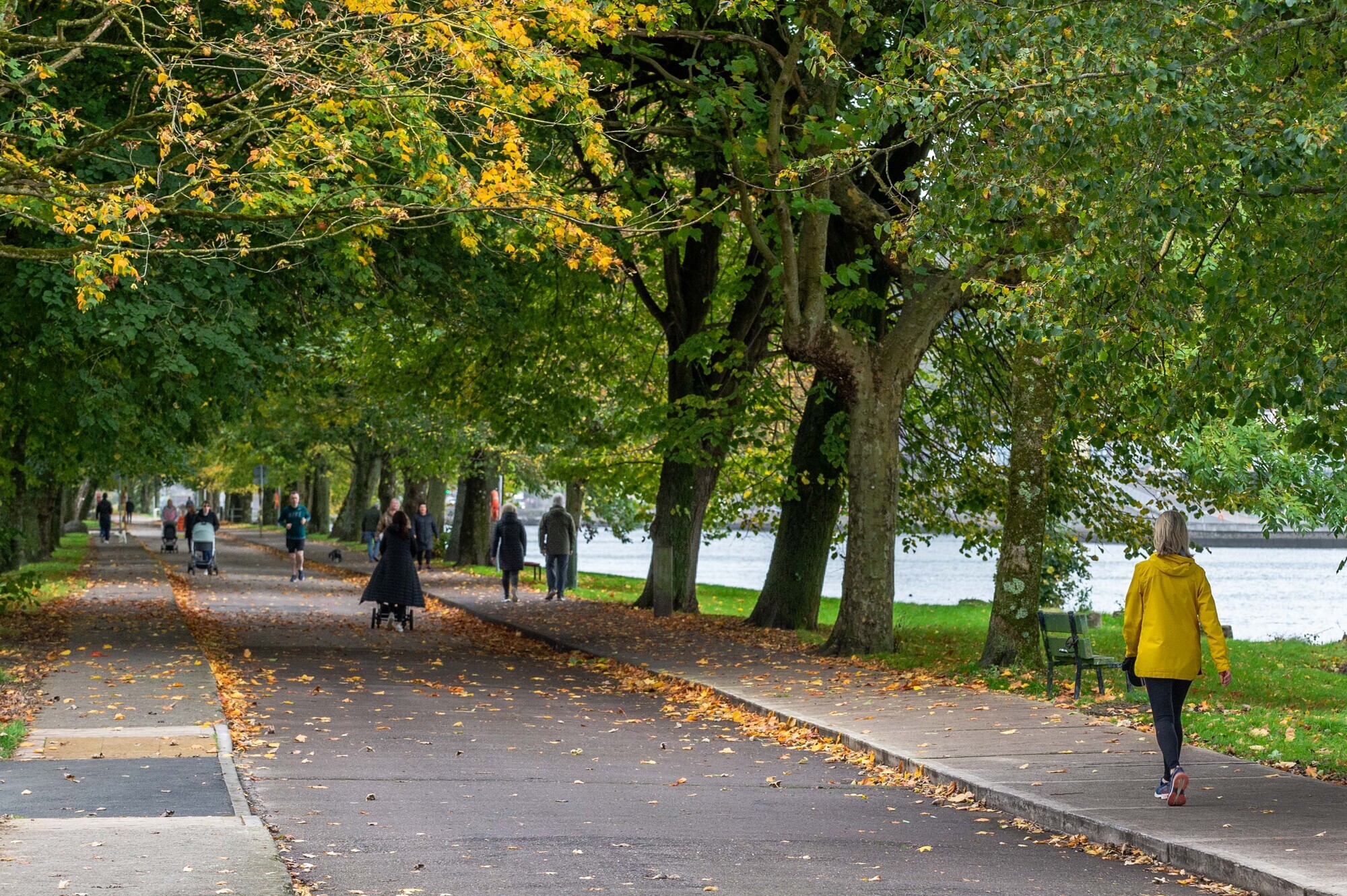
Active travel has the potential not only to slash carbon emissions and air pollution but, critically, increase longevity and enhance physical and mental health
Dr Catherine Conlon: Walking is a boon for public health and emissions reduction

Notably, the research found no definitive association with walking speed. Getting your steps in — regardless of the pace at which you walked them — was the link to a lower risk of death. Picture: Andy Gibson

The agreement reached to finally apply limits on Ireland’s carbon emissions will have to be revised upwards if Ireland is to meet its obligations by 2030. 

The targets as they are set out project a cut of 43% only — a shortfall that must be bridged. 

As it is, radical change is required to meet the current targets — at a pace and scale that is unprecedented. This does not only apply to the headline-grabbing targets finally agreed for agriculture. 

The transport sector is going to have to transform to have a chance of meeting its target of a 45% reduction in emissions by 2030.

Active travel is going to have to play a large part of that transformation.

Walking over the mountain from Ballinskelligs to St Finian’s Bay, there is little evidence of the threat of biodiversity collapse. 

The phenomenon of Gaia as proposed by James Lovelock — living organisms interacting with their inorganic surroundings on earth to form a synergistic and self-regulating community of organisms interacting with each other and their surroundings — appears to be all around me. 

The ditches are filled with ferns, foxgloves, fuscia, cornflowers, ripening blackberries — clacking with insects and throbbing with bees. After recent heavy rain, the only sounds are gurgling streams and the thrum of the Atlantic Ocean as mists come in off the bay and carpets of cobwebs glint with droplets of diffused light.

Walking in nature brings out the best in me — banishes worries to a distant place, allows endorphins to flood my brain and fills me with wellbeing. But something more — a creativity that allows thoughts to flow unhindered, ideas to swell and take shape, crevices in my mind to flood with solutions to conundrums and a sense of being part of that system that is synergistic, interdependent, and eternal.

Walking has the dual benefit of facilitating a move away from fossil fuels, reaching key emissions targets while being critical for both physical and mental wellbeing. 

Several studies published this year highlight the benefits of physical activity, in particular walking as we get older, to maintain health and wellbeing, as well as increasing longevity.

New research from the Irish Longitudinal Study on Ageing (Tilda) has confirmed that staying physically active increases the chances of living a longer life. The authors conclude that difficulty walking 100m and finding it hard to lift 10lb were both associated with increased risk of dying in the following four years.

Research published in the Lancet Public Health in March, combing evidence from 15 studies involving nearly 50,000 people from four continents, offered new insights into the amount of daily walking steps that will optimally improve adult’s health and longevity.

The study found that taking more steps a day helps to lower the risk of premature death. For adults 60 and older, the risk of premature death levelled off at about 6,000-8,000 steps per day, meaning more steps than that provided no additional benefit to longevity. 

Adults younger than 60 saw the risk of premature death stabilise at 8,000-10,000 steps per day.

Notably, the research found no definitive association with walking speed. Getting your steps in — regardless of the pace at which you walked them — was the link to a lower risk of death.

Several studies published this year highlight the benefits of physical activity, in particular walking as we get older, to maintain health and wellbeing, as well as increasing longevity. Picture: iStock

Fewer than half of adults in Ireland meet national physical activity guidelines of 30 minutes of physical activity, five times per week. On average, adults are sedentary for about five hours a day during the week, only slightly less at weekends.

Physical inactivity has been identified as one of the leading risk factors for poor health — in terms of increased risk of heart disease, diabetes, breast, and colon cancer as well as being a shared risk factor for dementia and mental health issues.

"The major takeaway is there’s a lot of evidence suggesting moving even a little more is beneficial. More steps per day are better for your health," said lead author Amanda Paluch. 

Research published in April in Communications Biology has reported a possible link between brisk walking and biological age, as measured by leucocyte telomere length — one of the biomarkers that scientists think we can use to assess the rate at which the human body gets older.

The ‘biological age’ essentially means how worn out the body’s cells are getting. A lifetime of walking at speed above a leisurely stroll could mean the equivalent of being 16 years younger — in terms of how worn out the body’s cells are.

As walking requires no training and no special equipment, the researchers suggest it could be used more often in treatments as a way of improving health.

Researchers from the University of Leicester at the National Institute for Health Research Leicester Biomedical Research Centre studied genetic data from 405,981 middle-aged participants and found a faster walking pace, independent of the amount of physical activity, was associated with longer telomeres.

Telomeres are the ‘caps’ at the end of each chromosome that work like the plastic aglets on the end of your shoelaces, but rather than preventing your shoelaces from unravelling, telomeres act to prevent your DNA from fraying and slow ageing.

With much of the summer left to enjoy, what better time to ditch the car and start new habits that will get us outside, build muscle strength and immunity, create opportunities to meet up with friends and neighbours.

Another study looked out how exercise alters our brain chemistry that could help prevent dementia. Researchers at the University of California, San Francisco, showed how physical activity can alter brain chemistry that maintains synapses — the junctions between nerve cells.

Staying active means the brain has more of a class of proteins that enhances the connections between neurons, according to Kaitlin Casaletto, lead author of the study published in January in Alzheimer’s and Dementia: The Journal of the Alzheimer’s Association. The positive impact was found even in people whose brains were "riddled with toxic proteins" that are associated with Alzheimer’s and other neurodegenerative diseases, the study found.

With energy prices soaring and a critical window over the next eight years to cut carbon emissions by half, now is the time to be proactive about active travel policy at population level. 

This has the potential not only to slash carbon emissions and air pollution but, critically, increase longevity and enhance physical and mental health as we challenge the norm in the way we move about and walk briskly into our middle and elder years.

As the climate doomism narratives begin to roll in — the climate justice and podcaster Mary Annaise Heglar offers these words of advice: "If you’re worried that it’s too late to do anything about climate change and we should all just give up, I have great news for you: that day is not coming in your lifetime. As long as you have breath in your body, you have work to do."

With much of the summer left to enjoy, what better time to ditch the car and start new habits that will get us outside, build muscle strength and immunity, create opportunities to meet up with friends and neighbours, reduce couch-potato surfing and snacking and expedite trouble-free dreamless sleep as the doom-laden winter approaches.

  • Dr Catherine Conlon is a public health doctor in Cork and former director of human health and nutrition at Safefood

CLIMATE & SUSTAINABILITY HUB

More in this section

Revoiced

Newsletter

Sign up to the best reads of the week from irishexaminer.com selected just for you.

Cookie Policy Privacy Policy Brand Safety FAQ Help Contact Us Terms and Conditions

© Examiner Echo Group Limited