Catherine Conlon: Why we must address raising of the backseat generation
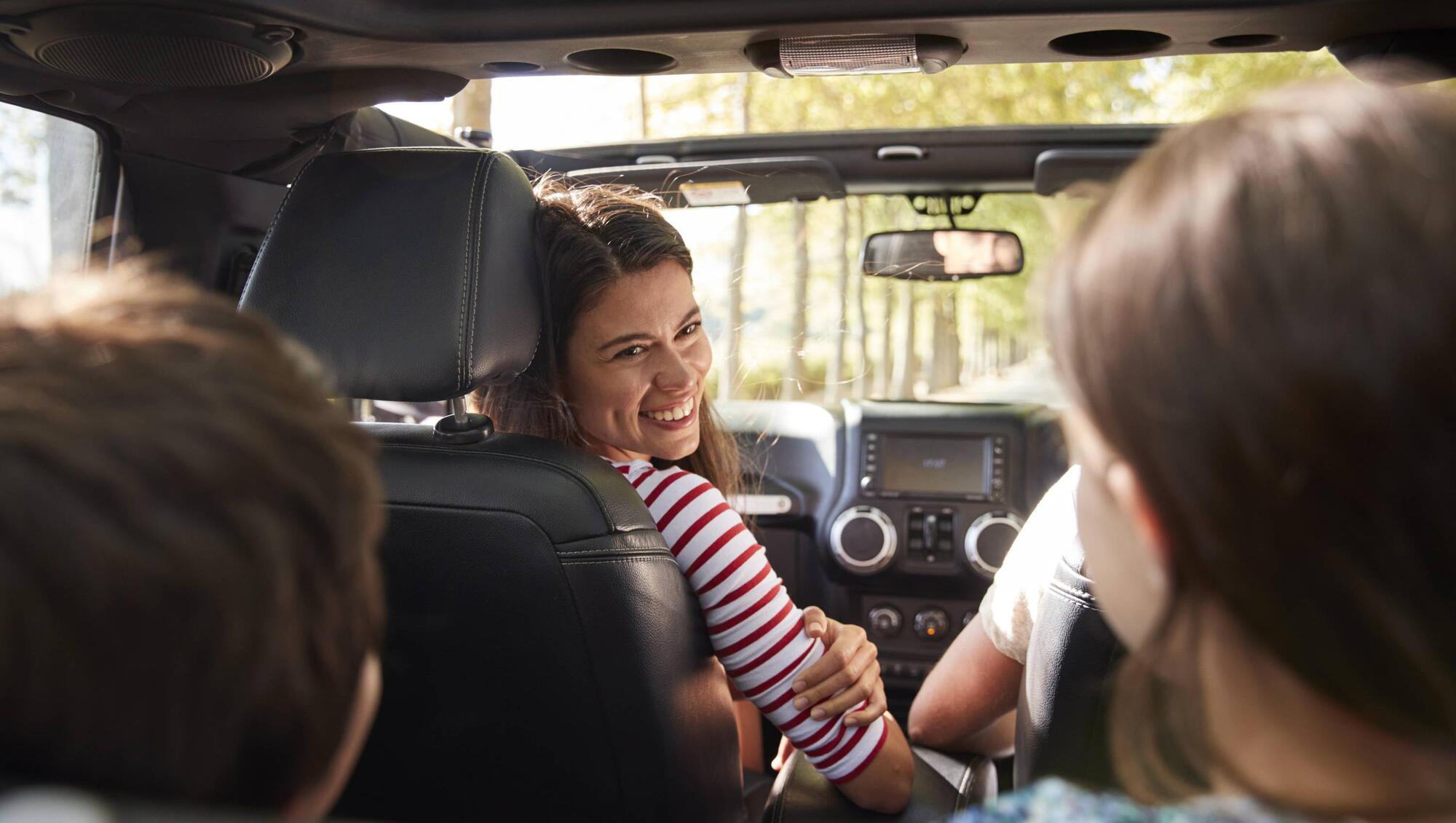
The ‘backseat generation’ is defined as those children who are escorted everywhere and 'whose time-space behaviour is characterised primarily by adult-organised activities'.
One in three young people in Ireland are engaging in ‘hazardous and harmful’ drinking, a new report from the Health Research Board (HRB) has revealed. A survey of 15–24-year-olds found that while young people are drinking later in life, more are engaged in hazardous drinking and are developing alcohol related problems.
Use of ecstasy and cocaine is also increasing — Irish young people now have the second-highest rates of use in Europe. The HRB state that there is a clear link between mental ill-health and substance use. Young adults with alcohol dependence are more likely to have severe anxiety, and cannabis users are six times more likely to report mental ill-health than non-cannabis users.
For as long as humans have been in cities and until only recently, streets were the main site where kids grew up. With larger families, the norm until the 1970s in Ireland saw kids spend their days outdoors. Neighbours kept a watchful eye on each other’s little ones. Local store owners, like John and Jimmy Noonan, in Charleville, knew the names of all the local kids, wandering in and out of their iconic toy shop, checking out their wares and saving up for their favourite toy. The closure of the shop at the end of this month, after nearly 50 years in business, is a sign of that loss of autonomy for youngsters, protected from the vagaries of boundless freedom to wander and play and dream.
While many retailers campaign against car removal initiatives, in fact, they have driven their customers out of town centres
As fast-moving and parked cars increased along streets, children’s playgrounds were lost.
Dr Lia Karsten, associate professor of urban geography at the University of Amsterdam says that “children can be classified into ‘indoor children’ and children of the ‘backseat’ generation.’” Play has become much more of an indoor activity, frequently involving an electronic screen. Karsten suggests ‘indoor children’ are typically lower-income kids living in car-dominated neighbourhoods, without the means to fill their free time with programmed pursuits.
Dr Karsten defines the ‘backseat generation’ as those children who are escorted everywhere and "whose time-space behaviour is characterised primarily by adult-organised activities".
They are largely middle-class kids who are driven from home to school, football to music lessons, music to swimming and on and on. I have memories of exactly this roundabout with four young children and teenagers in primary and secondary school.
But whether ‘indoors’ or ‘backseat’ the cause is the same — lack of safety and space due to a rise in the number and size of cars. "Children and cars are competitors," Karsten states. "An age group that was once thought of as resilient is now treated as vulnerable, in need of constant management and supervision. Within a few generations, their ability to wander the streets has quickly diminished and for many, completely disappeared."

With lack of spaces to play children are pushed to ‘safe’ places — the playground, the play-gym, after-school programmes — the only spaces children enjoy physical activity and social interaction. What is different here is the replacement of independent roaming with supervised movement, often from the backseat of the car.
No longer do children have the capacity to manage themselves. Street design prioritises passing cars over people living in the community. Faded, unraised and poorly lit crossings make crossing the road a game of Russian roulette that no self-respecting parent would dream of allowing their child to negotiate unsupervised. Considering how the deck is stacked, few could fault parents for shuttling kids from place to place, instead of letting them use their own two feet.
Along with mounting concerns about the sedentary lifestyle of the backseat and indoor generation of children (less than 14% of children meet the national physical activity guidelines of at least 60 minutes a day of moderate to vigorous activity), there is increasing concern about their diminishing social capital.
Karsten states that when getting outside becomes a much less spontaneous act, kids have fewer chances to create new bonds with those outside their scheduled lives and existing social circles, leading to greater levels of isolation and loneliness. This isolation is particularly devastating to childhood development.
Social relationships are seen as critical to the maintenance of health and a lack of them often correlates with feelings of loneliness. Loneliness in turn is linked to higher levels of stress which over long periods of time, is linked to risk of chronic disease and cognitive deterioration. By building cities in which freedom of movement for children is restricted, the resulting social isolation risks leaving lasting effects on physical as well as mental wellbeing.
Supervised play is better than no play but what is missing in play prescribed by parents, is risk. Risk, whether we like it or not, is integral to the development of a young mind.
Who does not remember long summer days in parks, fishing in rivers, playing rounders, climbing trees, frequently ending up in scrapes and unsafe play in areas deemed ‘out of bounds?’ In my locality, my children were banned from the local quarry — I know that they all spend long hours of play in there, despite my warnings. But taking risks is crucial to the development of the ability to bounce back from minor setbacks, to learn to assess ‘risk’, make mistakes and learn something along the way.
Many of today’s children are so heavily supervised and thought of as so vulnerable, that virtually all risk is removed from their day-to-day lives. Dealing with risk is no longer seen as part of growing up. Missed opportunities for kids to evaluate danger are now being linked to poor coping strategies for dealing with adversity as they grow older. The ‘bubble wrap’ generation’ is an indictment of the removal of the tasks that would otherwise improve children’s ability to assess and address risk. Lenore Skenazy in her best-selling book , says that "after a lifetime of overprotection, these young adults are overwhelmed by sudden independence" (when they reach college).
Many teenagers spend their prime years dependent on others for their transport needs, counting the days until they qualify for a driver’s licence. Dutch teens, conversely, spend those years experiencing the freedom and autonomy promised by the car, without its added stress and danger, as they negotiate Dutch cities by bike. Adolescents in the Netherlands regularly rank among the happies and the healthiest, with the lowest rates of obesity and antidepressant usage on Earth. They also cycle an impressive 2,000 km per year.
Is this a coincidence? You tell me.
It is time to restore the freedom to roam to kids and teenagers alike and in doing so crucially build self-confidence and lifetime resilience. This can be achieved by reorganising cities and towns with wide pavements, protected cycle paths, bus corridors and single land traffic with 30kph speed limits. Cities full of people, young and old, walking perambulating, cycling, socialising, eating, drinking, dancing, and playing. Towns and cities where the cars move from being the protagonist in the landscape to one part of a shared space, as we move towards healthier, sustainable, urban communities.
CONNECT WITH US TODAY



Be the first to know the latest news and updates