John Gibbons: Climate clock ticks towards midnight and we've run out of excuses

Train coaches are seen toppled over following mudslides triggered by heavy rains at New Haflong railway station on the Lumding-Silchar route at Dima Hasao district, in northeastern Assam state, India.
“I get all the news I need on the weather report”. That line is from a classic Simon & Garfunkel song from 1970 capturing the zeitgeist of an era, real or imagined, where the most you had to worry about was what to wear to the beach.
Half a century later, and now the weather itself is the news. The release this week by the UN World Meteorological Organisation (WMO) of its ‘State of the Global Climate in 2021’ was just the latest in a seemingly endless series of dire warnings emanating from the scientific community about the rapidly deteriorating global climate system.
The most direct and visible manifestation of this dangerous climatic disruption is in the escalation of extreme weather events around the world, with a heavy human toll as well as economic damages in 2021 running into hundreds of billions of euros. For those vested interests who have long argued that tackling climate change is “too expensive”, letting it spiral out of control is not proving to be much of a bargain either.
This report is “a dismal litany of humanity’s failure to tackle climate disruption”, according to UN secretary-general, António Guterres. Four crucial climate indicators, namely greenhouse gas concentrations, sea level rise, ocean heat and ocean acidification all breached new record levels in 2021. If these sound technical or abstract, think of them instead as the four horsemen of the coming climate apocalypse.

Were it not for the enormous heat-trapping potential of the world’s oceans, much of the Earth’s land surface would already be too hot for human habitation. Luckily for us, some 90% of all the heat trapped by greenhouse gases last year were absorbed by the oceans.
However, our luck is beginning to run out, with ocean acidification now at its highest level in millennia and threating to unravel marine ecosystems. Further, the ocean itself is heating, with additional warmth now penetrating as far as 2,000 metres deep.
Warming on this scale is “irreversible over time scales of centuries to millennia”, according to the report. Human actions have, in the space of an average lifetime, fundamentally altered the chemistry of both the global atmosphere and oceans, with far-reaching consequences we are only now beginning to truly grasp.
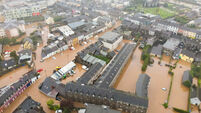
Last year saw a series of climate-fuelled extreme weather events sweep the planet, from deadly floods across much of central Europe and in Henan, China to an unprecedented ‘heat dome’ that shattered temperature records in Canada and the US.

Meanwhile, over a billion people across India and Pakistan are still suffering under almost unbearable heatwave conditions that have persisted since March. Birds have recently been dropping out of the skies in western India as a result of heat exhaustion.
All these extreme events have occurred against a backdrop of global average surface temperature increase of just over 1.1ºC, but only nine days ago, the WMO warned there is an evens chance of one year in the next five breaching the 1.5ºC guard-rail.
This is science fact, not hype. Yet, in what must the greatest communications failure in history, most people in Ireland, even if they understand the basic science, still cling to the mistaken belief that this remains a crisis for people in faraway places or at some future time.
Physics is, however, indifferent to our indifference. As the climate clock ticks towards midnight, we are out of excuses – and we’re nearly out of time.


CLIMATE & SUSTAINABILITY HUB
CONNECT WITH US TODAY



Be the first to know the latest news and updates