Colette Finn: The unfairness of the meritocracy
Five of the six women on Cork City Council have formed a women’s caucus, writes Colette Finn
Colette Finn: The unfairness of the meritocracy

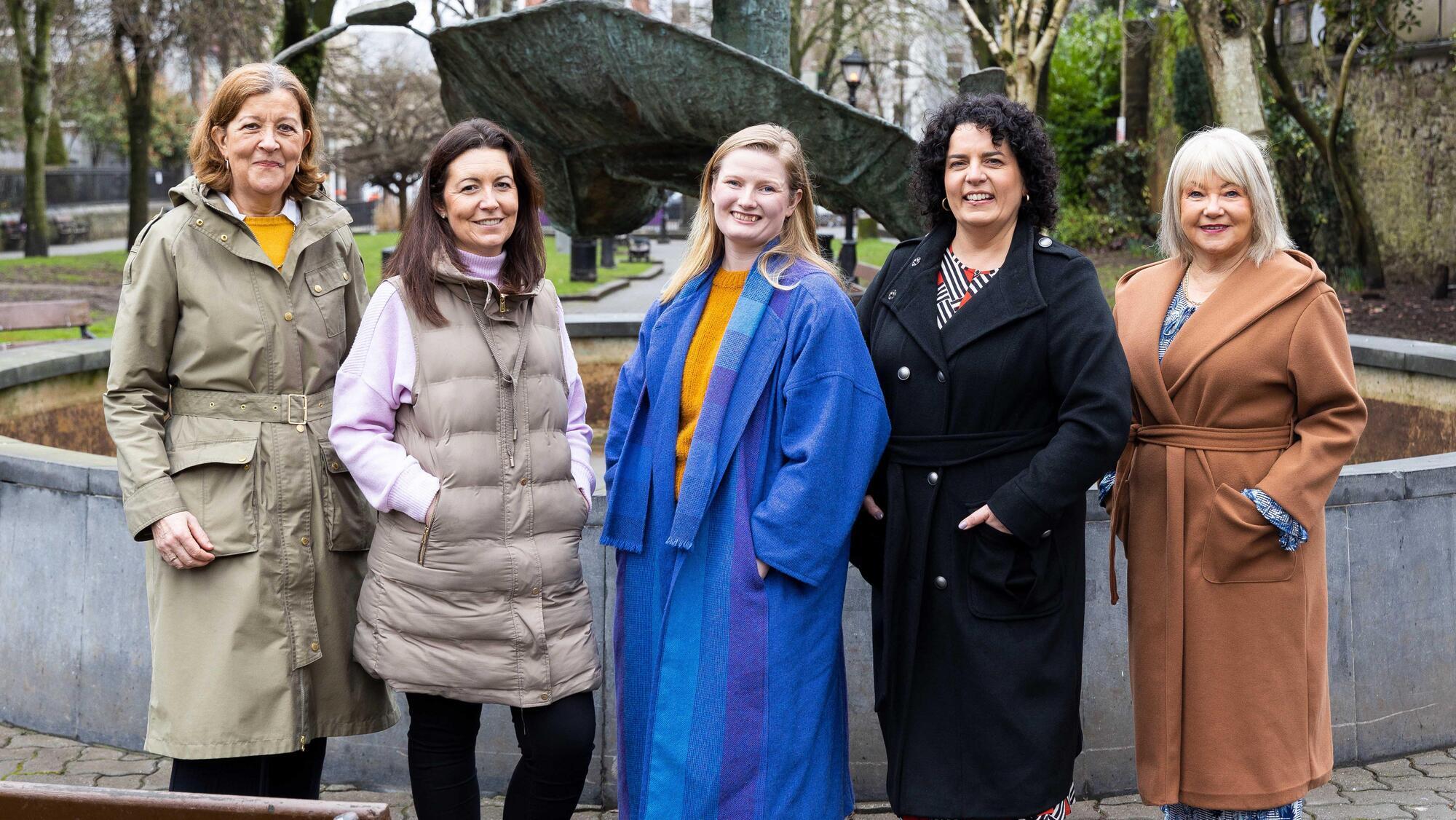
(Left to right) Councillor Colette Finn; Cllr Fiona Kerins; Cllr Lorna Bogue; Cllr Mary Rose Desmond, and Cllr Deirdre Forde of Cork City Council’s Women’s Caucus. File photo: Michael O'Sullivan

IN MARCH I was described as being “furious” at a city council meeting by this paper. Was I furious? Yes, I was. I was furious at the sexist language of a male councillor and I called it out for what it was. 

I said that Cork City Council was a “boy’s club”. I have spent over a decade convincing women that they need to be in politics at every level, from the local to the national. Our city is not a “boy’s club” and cannot be represented by one.

Women tend to operate in local politics — whether it is in the local residents’ association, sports club, or musical society. When we come together as human beings, inevitably we must involve ourselves in local politics. It is the nature of human systems that we don’t always agree on the who, what, when, or where. 

We have to form groups to make decisions. Committees are formed. This can be an inclusive committee where all comers are welcome to join or an exclusive committee where you must be asked to join. Some women shy away from joining a committee. They cede power and ultimately have decisions made for them.

This form of representation becomes unintentionally biased against them. The boy’s club looks at the world through their own lens and assumes it is everyone’s experience. The default person is a man and systems are designed around that experience. 

In her book Invisible Women, Caroline Criado Perez has documented the negative outcomes for women with a system that is solely based on assumptions that everyone is a man. A study commissioned by Transport Infrastructure Ireland, Travelling in a Woman’s Shoes, documents the way our transport system has been designed around men to the detriment of women. 

In a system designed by men for men, there is a certain inevitability that sexist language is used to exclude women, to ignore them, to belittle them. Such language and the assumptions and structures that encourage it do make me furious — but it is change that I am truly committed to pursuing.

The foundation of the State

We are now exiting the decade of centenary commemorations — the period 1913-1923. This commemorates the series of events that led to the foundation of our State. Unfortunately, there was considerable violence which inevitably prevented us from having a proper debate about who would make our State, who would be given power, who would be invited to participate. 

We know how events turned out. A state was created and governments were formed which were almost exclusively male and heavily influenced by one religion. One woman was appointed to the first cabinet — Constance Markiewicz (1919-1921). 

It is incredible that it took another 58 years before another woman, Maire Geoghegan Quinn (1979-1981), was appointed a minister. Do we think that in those 58 years there was not one other woman capable of becoming a minister?

Why did this happen if this State was founded by republicans who sought to cherish all the nation’s children equally? Why was it that you were promoted if you were a boy but not a girl? It is this inequality that we must examine. It is not the only criterion where there is inequality but it is the largest. After all, more than 50% of the population are women.

Women's invisible work

When I meet women and ask what they work at, women working in the home invariably tell me they don’t work. What they mean is they do work but they don’t get paid for this work. 

In her book The Invisible Job — How Sharing Home and Parental Responsibilities Leads to Happier Lives, Paula Fyans describes the work involved in running a home in business terms. She writes it from the perspective of how to divide the work involved and remain happily married. I think she has helped to articulate the invisibility of work done in the home, of child-rearing, house management, and all that entails.

She has also shown the extent to which the partner, who has the normal and recognised paid work, the career, is on a zero-hour contract when it comes to work in the home. On the other hand, the unpaid worker is usually the project manager for the lives of everyone else in the home. 

How is this recognised and valued? How are people, mainly women, who are present to such an incredible degree in our lives, to such an important degree, made invisible?

Meritocracy

In our boys’ clubs, there is often talk of merit. Of achieving by merit. The fabled meritocracy that we are told we live in. Look around. Does it feel like it? Is this a meritocracy? Is this fair? 

Those who argue for a meritocracy would argue that income, gender, ethnicity, religion, being able-bodied, being from a migrant background, or being a member of the Traveller community is irrelevant to your chances of getting elected. They argue that people should be elected on merit. They argue that they are elected on nothing but merit. 

Yet if you are poor, female, non-Christian, have a disability, are a person of colour, are a member of the Travelling community — are you considered to be of merit? I think most fair-minded people will understand that it is just not that simple.

Many people of incredible value are excluded from this meritocracy. So much so that we must question these strange assumptions and where they come from.

The word meritocracy was invented as an ironic term by Michael Young in the 1950s. He foresaw the replacement of inherited privilege with educational/income privilege. It is used to mask the ascendency that labour movements sought to deconstruct. 

Without an equality lens, where all groups have a seat at the table, then that ascendency will continue to exist just with different masks. In Ireland, we have been a peaceful, if imperfect democracy for over 100 years. With the candidate gender quotas, we started to address the under-representation of women in our decision-making forums. But it is not as simple as that.

Democracy is like a fragile flower

White feminism and the movement and tendency towards whiteness mask the continuation of an older ascendency that continues to lurk beneath the surface of our democracy. How can society be represented by people if they do not mirror the diversity of that society — how do we recognise everyone in society as being capable of holding power?

As we observe events in Ukraine, we should ask ourselves how did it come to this? My view is that democracy is like a fragile flower. It needs to be nurtured and strengthened. It needs to be appreciated by the widest number of people so that everyone feels it is their job to protect it.

My ambition in getting elected to Cork City Council is to make it less of a boys’ club and more of a representative chamber for the people of Cork. Some 50% of the people of Cork City are women. Therefore, in my eyes, 50% of elected representatives should also be women.

Five of the six women on Cork City Council have formed a women’s caucus. We have come together from different parties to highlight the issue of the under-representation of women in politics. We are educating our male colleagues on the effect of male-dominated forums and the chilling effect this can have on female participation. 

Diversity

Our life experience and to be female is to have a materially different experience to our male colleagues. Does this false meritocracy blind us to the misrepresentation that exists? Do we think the best people, the ones with merit, happen to be coincidentally male? Or white? Or middle class?

Respect, space, and perspective should inform our democracy to be as inclusive as possible. As with the small local politics of the residents’ association, sports club, or musical society, it can be inclusive or exclusive. Exclusive decision-making is unfair because it excludes those deemed unsuitable. 

In the democracy that I want to see develop in Ireland, it should be as inclusive as possible. Anything else is inherently unstable and moves towards an authoritarian model. A boys’ club will govern for the benefit of those in the club and is ultimately undemocratic.

As an environmentalist, I see the dangers of monocultures in our natural world. The biodiversity crisis is a collapse in the complexity and diversity of the natural world, a diversity that gives us this extraordinary natural world that supports human life. 

A male-dominated world is also a monoculture, one that is also in crisis, and the answer is the same — we need social and representational diversity for the good of everyone.

  • Colette Finn is a Green Party councillor on Cork City Council

More in this section

Revoiced

Newsletter

Sign up to the best reads of the week from irishexaminer.com selected just for you.

Cookie Policy Privacy Policy Brand Safety FAQ Help Contact Us Terms and Conditions

© Examiner Echo Group Limited